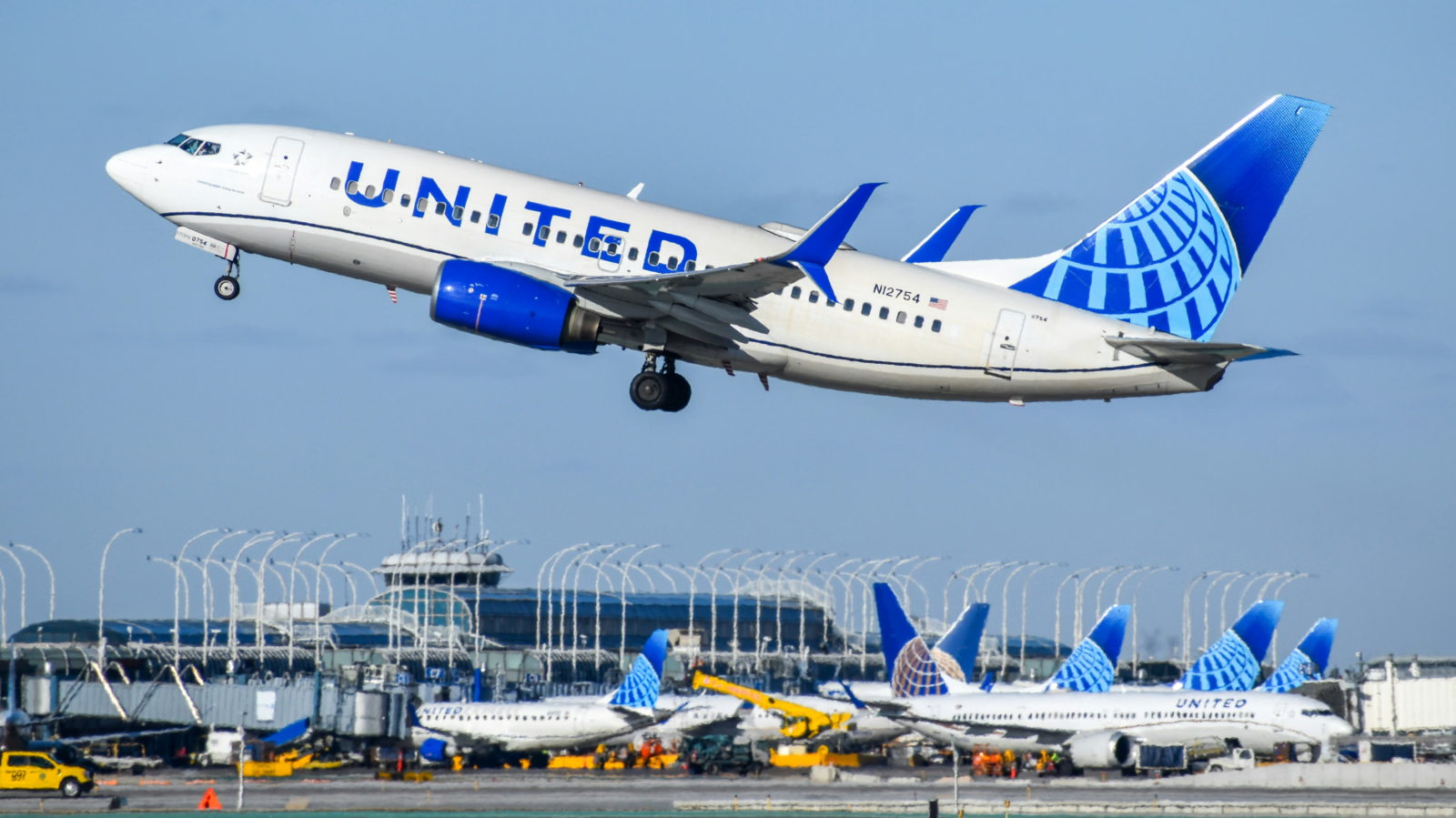
Neo Financial and United Airlines launched the United MileagePlus Neo World Elite Mastercard for Canadian residents on April 15, 2026, ending six weeks of waitlist speculation that began with the March 9 announcement. The card carries an $89 CAD annual fee, the lowest in Canada's premium-travel-card tier, and earns United MileagePlus miles directly into the same account a U.S. flyer would use. American travelers can't apply, but the launch tells you something about where MileagePlus is heading on both sides of the border.
What Neo Confirmed at Launch
Neo Financial's April 15 announcement landed every detail the March waitlist had withheld. The card earns 1.25 MileagePlus miles per dollar on United and Star Alliance ticket purchases, 1.0 on groceries and dining, and 0.75 on everything else. The welcome offer is up to 20,000 miles: 5,000 on first purchase plus 15,000 after $3,000 CAD in spend during the first three months. Cardholders get a 5,000-mile renewal bonus every account anniversary.
The benefit stack at $89 CAD includes one free checked bag on United-operated flights, priority boarding in Group 2, a NEXUS application fee credit, and DragonPass lounge access after Mastercard registration. Income eligibility is $80,000 CAD personal or $150,000 CAD household, the standard World Elite Mastercard threshold in Canada. Neo also offers a secured version of the card for applicants with limited or rebuilding credit, with identical earn rates and travel perks.
The Neo Rewards merchant network is the differentiator. Cardholders earn bonus rates at more than 10,000 Canadian partners through Neo's existing partner app, layered on top of the MileagePlus earn. That feature has no direct analog on the Chase-issued United cards in the U.S.
According to Neo's launch materials, the $89 CAD fee makes this the lowest-priced premium travel card in Canada. The product it pressures most directly is the TD Aeroplan Visa Infinite ($139 CAD). Canadian Star Alliance flyers previously had to route through Aeroplan to earn currency that worked on United metal. The Neo card removes that detour.
What U.S. United Flyers Actually Have to Work With
The relevant U.S. cards remain the Chase-issued lineup, which was refreshed mid-2025 with higher fees and rebuilt credit stacks. The current 2026 spec:
- United Gateway Card. No annual fee. 2x on United purchases, gas stations, local transit. Entry-level option for occasional United flyers who want to start earning MileagePlus on non-flight spend.
- United Explorer Card. $95 annual fee, waived first year. Free first checked bag on United, priority boarding, two United Club passes annually, Global Entry/TSA PreCheck/NEXUS credit. The volume play for U.S. United flyers in the 2-to-4-trip range.
- United Quest Card. $350 annual fee (up from $250 at the 2025 refresh). 3x on United, 2x on travel and dining and select streaming, 1x elsewhere. $200 annual United TravelBank credit, free first and second checked bag for cardholder and one companion, 10,000-mile award discount after $20,000 in annual spend, 25 percent back on inflight food and beverage. The sweet-spot card for flyers who put 4-plus United segments a year on the same itinerary.
- United Club Infinite Card. $695 annual fee. Unlimited United Club membership for cardholder and up to two guests, $200 Renowned Hotels and Resorts credit, $150 rideshare credit, $200 JSX credit, $240 Instacart credit plus Instacart+ membership, 10,000-mile award discount with another 10,000 earned at $20,000 in spend. Worth it for flyers who'd otherwise pay $650+ a year for a United Club membership directly.
The 2025 refresh moved every fee higher, but loaded the cards with credits that net out positive for active United flyers. Neo's $89 CAD product sits in a different category entirely. It doesn't include lounge access in the same way (DragonPass is two passes annually, not unlimited Club access), and the 0.75-mile base rate is below what the U.S. cards earn off-United.
Why United Picked Canada and Why It Matters for U.S. Cardholders
Chase doesn't issue cards in Canada. United needed a Canadian partner to tap a market where Air Canada and Aeroplan dominate the loyalty conversation, and Neo Financial brought three things to the table: a national digital banking license, a young customer base, and the existing Neo Rewards merchant network. The partnership announcement positioned Neo's mobile-first acquisition model as the reason United picked the fintech over a traditional Canadian issuer.
The strategic read for U.S. flyers is in two pieces. The first is that MileagePlus is expanding its issued-card footprint, which puts more miles into circulation. The second is that more miles in circulation creates pressure on award availability and on the dynamic pricing United already uses across MileagePlus redemptions.
This isn't speculation about a future devaluation. United's two-tier earning structure went live April 2, 2026 — we covered it in United MileagePlus two-tier earning live April 2: one month in. That change cut earning rates by roughly 40 percent for members without a co-branded credit card and effectively forced cardholding as the only path to full earn. Adding the Neo card to the global lineup compounds the trend: United wants more cardholder relationships, and the program is moving in a direction where holding a co-branded card is the baseline for full participation, not a perk.
The MileagePlus award pricing question is the one to watch. Saver-level award availability on premium-cabin transatlantic and transpacific routes has been tightening through 2025 and into 2026, particularly on partner-operated flights through Star Alliance. If you have a specific United redemption in mind and the award space exists today, the operator move is to book it. The 5,000-Canadian-cardholder cohort that joins the program from Neo's first wave isn't the cause of any tightening, but the broader expansion trend it represents is real.
The Practical Take for U.S. Readers
If you live in the U.S. and fly United, the Neo card changes nothing about which card you should be carrying. The Chase lineup is the only path available, and the post-refresh Quest at $350 remains the sweet spot for most flyers in the 4-to-8-segments-a-year range. The Club Infinite at $695 is the right call only if you'd otherwise pay for United Club membership, which means roughly 6-plus United departures a year through hub airports where the Clubs are.
If you're a dual-resident or you have family booking award travel from Canada, the Neo card is now a viable way to feed a Canadian-credited MileagePlus account at a $89 CAD entry point. The Neo Rewards merchant network adds earning on Canadian everyday spend that the U.S. cards don't replicate.
The bigger story underneath the launch is that United is building a global MileagePlus card portfolio. Canada is the first non-U.S. issuer, and partners with smaller MileagePlus footprints in Europe and Asia may follow if Neo's first-year numbers come in clean. For U.S. cardholders, the watch items remain unchanged: dynamic pricing trending up, partner award space tightening, and the strategic premium on burning miles for high-value redemptions before they get more expensive.
This article contains affiliate links. If you apply through our links, we may earn a commission at no cost to you, which helps us continue sharing points and miles strategies with the community.
Some of the links in this article are affiliate links. We may receive a small commission at no extra cost to you if you apply through these links. This helps us keep the site running and continue creating free content.