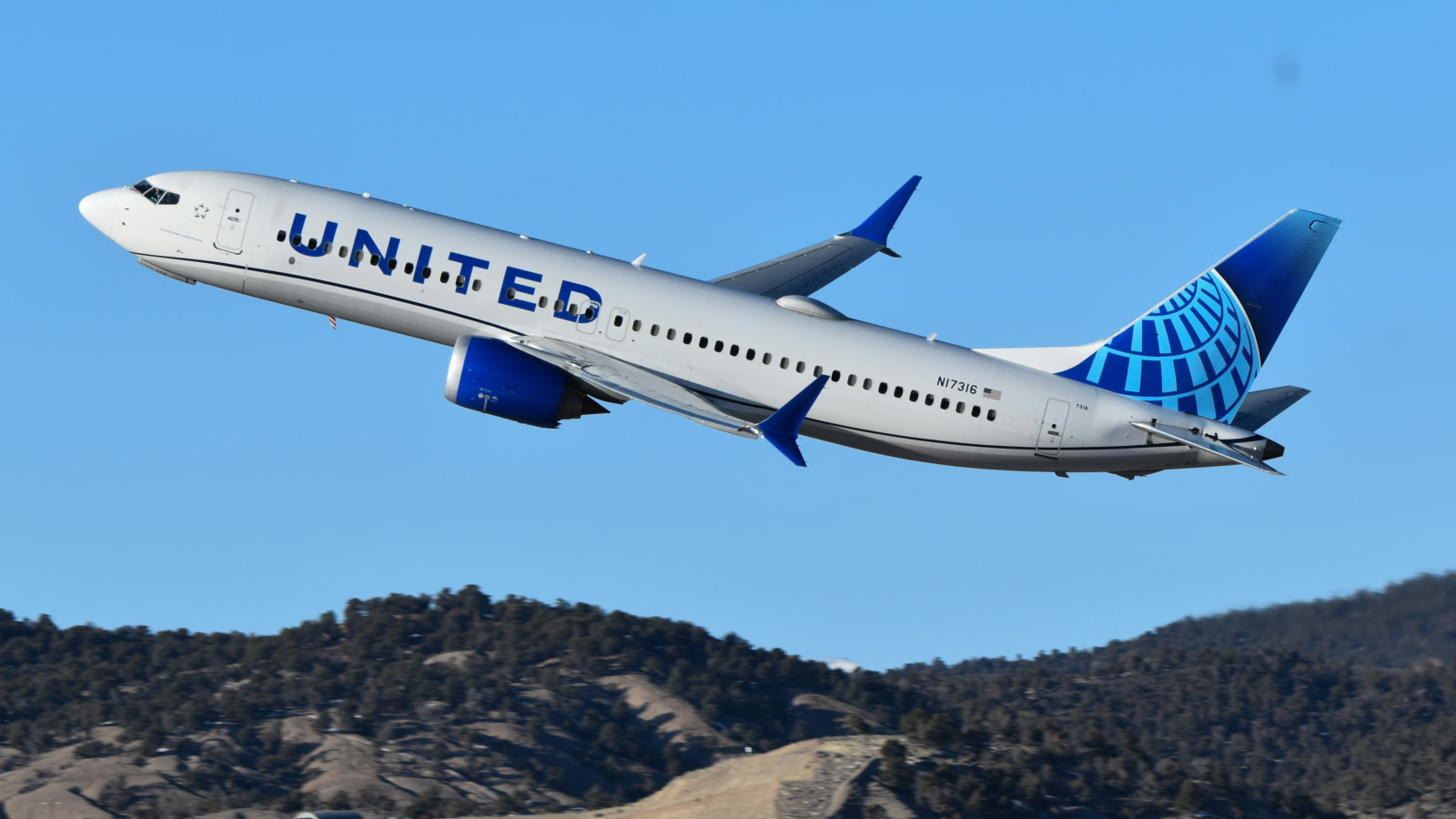
United's two-tier MileagePlus earning structure went live April 2, 2026, six weeks after the carrier announced the overhaul in a February 19 memo to agents and members. The shift cut base earning from 5 miles per dollar to 3 for members without a co-branded United credit card, doubled cardholder earning to 6 miles per dollar at the entry tier, and zeroed out miles on basic economy fares for anyone without a card or status. A month in, the early data is showing exactly what United bet on: more card applications, more bookings via the United Card, and a vocal but bounded backlash from non-cardholders.
This is the most aggressive cardholder-vs.-everyone-else split any U.S. legacy carrier has run. Delta dropped basic-economy mile earning in 2019 and American followed in December 2025, but neither has split the regular earning chart by credit card status. United's program is now the cleanest expression of where airline loyalty is heading.
What Took Effect April 2
The new earning chart applies to all paid tickets on United-operated flights issued on or after April 2, 2026. For partner flying credited to MileagePlus, nothing changed; partner earning still runs off fare class and distance.
For members without a United credit card, paid-ticket earning runs 3 miles per dollar at the general tier (down from 5), 5 at Premier Silver (down from 7), 6 at Gold (down from 8), 7 at Platinum (down from 9), and 9 at 1K (down from 11). For United credit card holders, every tier earns three more miles per dollar than the non-cardholder rate at the same status: 6, 8, 9, 10, and 12 miles per dollar from general through 1K.
The other side of the change is on the redemption end. Every United cardholder now gets a minimum 10% discount on award flights booked with miles. Cardholders who also hold Premier status get at least 15% off. United confirmed the discount applies to tickets issued April 2 or later and stacks across all award inventory, including Saver and dynamic awards.
Basic economy is the harshest line in the new structure. A general member without a United card now earns zero miles on basic-economy fares. Elite members without a card still earn miles but at compressed rates (2 per dollar at Silver, 3 at Gold, 4 at Platinum, 6 at 1K). Premier Qualifying Points still accrue on basic economy, so status qualification isn't blocked, but the redeemable-miles ledger is.
Eligible Cards
Any active United co-branded card qualifies a member for the higher tier. The card has to be open and in good standing; it does not have to be the one used to buy the ticket. The qualifying list:
- United Gateway Card ($0 annual fee)
- United Explorer Card ($95)
- United Quest Card ($250)
- United Club Infinite Card ($525)
- United Business Card ($99)
- United Club Business Card ($450)
Eligible United debit cards also qualify, per United's program terms.
How the First Month Played Out
The Points Guy, One Mile at a Time, and AwardWallet all published "now in effect" coverage in early April flagging that the cliff was real and that bookings made before April 2 retained the old earning rates. United did not grandfather existing PNRs flown after April 2; the cutoff is ticket-issuance date, not travel date, which caught a portion of FlyerTalk regulars who had assumed otherwise.
The reaction from non-cardholders has been pointed. Travel-On-Points called it "a devaluation for most." Touring Tony's April rant, headlined "United Bank & Distrust," captured the sentiment among loyalists who feel pushed into a co-branded card to maintain the earning they used to get from flying. The Points Guy ran a separate piece titled "Why I love the United MileagePlus changes as a cardholder," which is roughly the segmentation United is now leaning into: the program rewards cardholders publicly and openly, and asks everyone else to either get a card or accept reduced earning.
What United wanted out of the change is straightforward, and it appears to be working. Co-branded airline cards generate billions in annual contractual payments from issuers (Chase, in United's case). Pushing flyers onto a Chase-issued United card boosts those payments and increases swipe revenue on every dollar a cardholder spends, on or off United. The April rollout was not designed to be popular among non-cardholders. It was designed to be unmissable.
Whether the Math Now Favors a United Card
The break-even calculation for the United Gateway Card is the easiest. The card has no annual fee, and holding it doubles your earning rate on United flights (3 to 6 miles per dollar at the general tier) and adds the 10% award discount. For anyone flying United even once a year, the math is automatic.
The United Explorer Card at $95 a year is the more contested decision. The extra 3 miles per dollar versus a non-cardholder covers the fee at roughly $2,640 in annual United spending, assuming a 1.2-cent-per-mile valuation. For most travelers, the Explorer's free first checked bag (worth $35 each way, $70 round trip per person on the cardholder's reservation) clears the fee in one or two trips before the earning differential is even in play. Two United Club one-time passes, 25% back on inflight purchases, and primary rental car coverage round out the value.
The case against a United card hasn't gone away. If you already carry a premium travel card like the Chase Sapphire Preferred, Sapphire Reserve, Capital One Venture X, or Amex Platinum, you're already earning transferable points at strong rates on travel spend, and those points transfer to United at 1:1 from Chase and Bilt. The non-cardholder loses the new 10% award discount, but keeps the flexibility to redeem across multiple airline programs.
What to Watch Next
Two follow-on changes are already scheduled. United confirmed in December 2025 that PlusPoints upgrades shift to dynamic pricing in February 2027, replacing the current fixed chart. And United has been telegraphing further integration of MileagePlus accounts across cardholder households, including the parent-child account linking feature that rolled out alongside the April earning changes.
The bigger watch is whether Delta and American respond. Delta has the infrastructure to split earning by card status tomorrow, given that its SkyMiles ecosystem is already the most credit-card-aligned in the industry, but hasn't moved publicly. American is further behind on basic economy parity and would likely have to follow United's lead within 12 to 24 months if loyalty revenue patterns confirm what United is betting on.
For frequent United flyers, the practical takeaway is settled. The Gateway is free, doubles earning, and adds the award discount. The Explorer pays for itself on checked bags. If you don't fly United often and don't want another card, Chase Ultimate Rewards or Bilt points transferred to MileagePlus on demand remain the cleanest workaround. The two-tier structure isn't going away, and it's now the model the rest of the industry is studying.
This article contains affiliate links. If you apply through our links, we may earn a commission at no cost to you, which helps us continue sharing points and miles strategies with the community.
Some of the links in this article are affiliate links. We may receive a small commission at no extra cost to you if you apply through these links. This helps us keep the site running and continue creating free content.