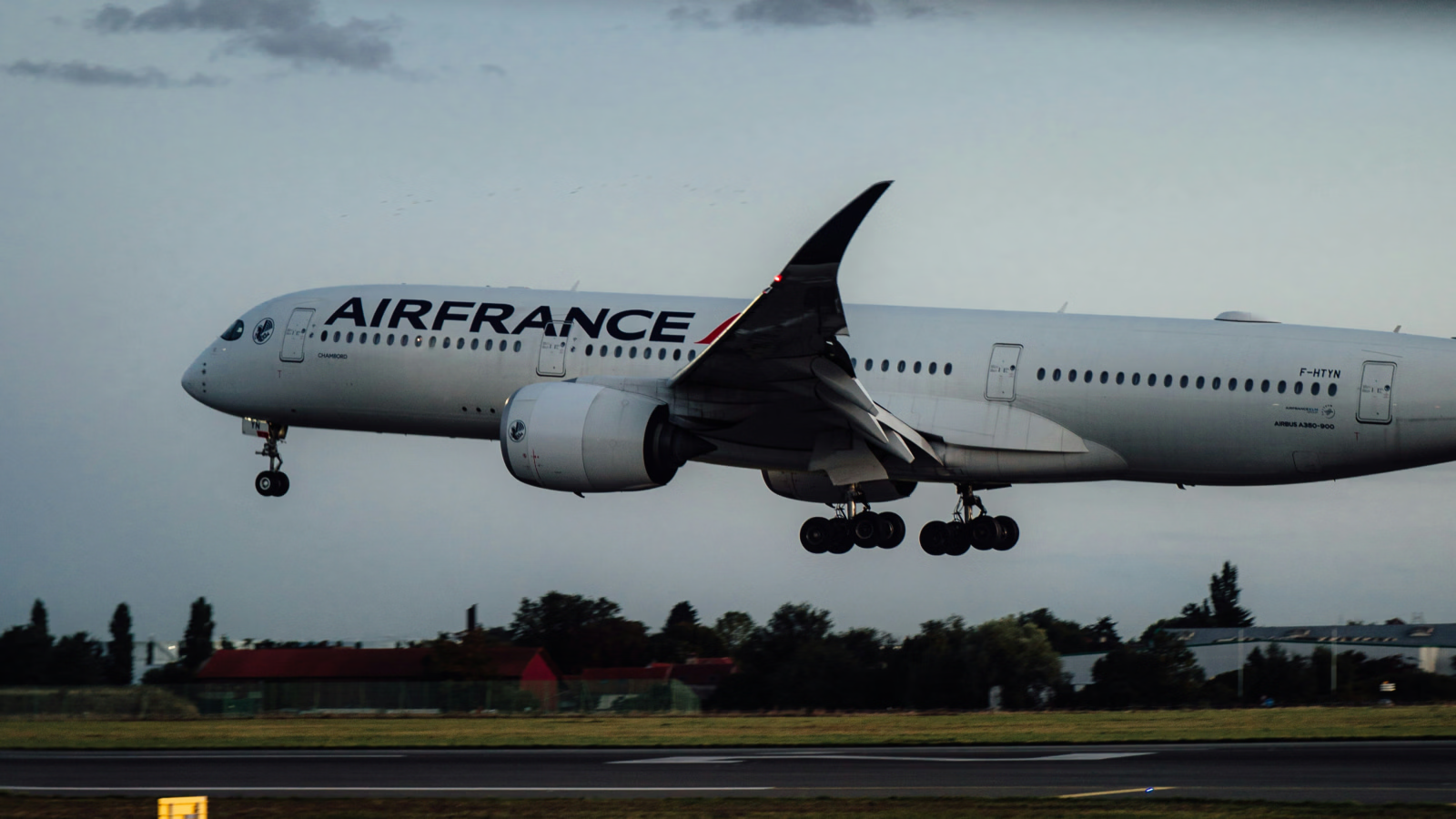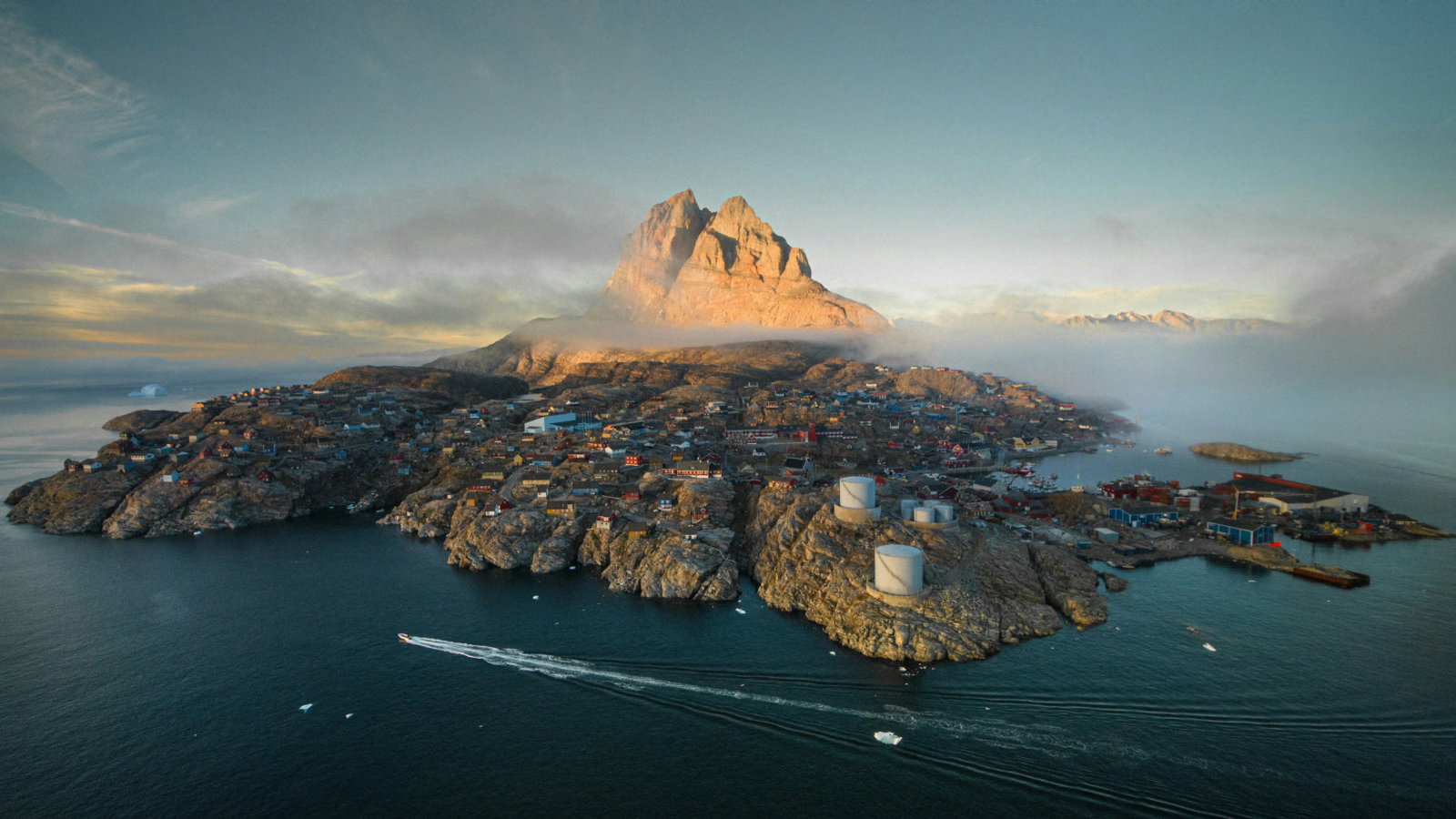
United's Newark to Nuuk route is the first scheduled nonstop service between the United States and Greenland's capital, and it's been operating since United launched it in mid-2024 after Greenland's new Nuuk International Airport opened to international jets in late 2024. For MileagePlus members, the route is one of the more interesting redemption opportunities in the program right now. It's a short Atlantic flight (roughly four hours), it goes to a destination that nothing else in the U.S. network reaches directly, and award pricing has settled into a range that compares favorably with what you'd spend connecting through Reykjavik or Copenhagen. This guide walks through how the route works in 2026, what the points pricing looks like, how to fund a redemption from transferable currencies, and whether the trip itself is worth your time.
Quick Answer
United operates seasonal nonstop service from Newark (EWR) to Nuuk (GOH) on a Boeing 737-family narrow-body, typically June through September. Award pricing runs roughly 30,000 to 50,000 MileagePlus miles one-way in economy. Chase Ultimate Rewards and Bilt both transfer to United at 1:1.
The Route as It Stands in 2026
The flight is operated by United on a single-aisle 737, with a block time around four to four-and-a-half hours depending on direction and winds. United launched the route as a seasonal summer service when Nuuk's new airport opened the door to direct trans-Atlantic narrow-body operations. Before that, no U.S. carrier flew nonstop to Greenland's capital, and the only practical way in was a connection through Kangerlussuaq, Reykjavik, or Copenhagen.
In 2026, the route remains a seasonal product, running roughly from late spring through early fall. Schedules and aircraft assignments can shift between summers, so check United.com directly before counting on specific frequencies. The detail to keep in mind is that this is not a year-round operation. If you're planning a winter trip to see the aurora, you'll be routing through Reykjavik or Copenhagen the old way.
The premium cabin on the route is United's first class on its 737 fleet rather than Polaris business class, since Polaris is a wide-body product. That's an important distinction for anyone budgeting miles. First class on a four-hour 737 is a recliner seat with better catering, not a lie-flat suite. Plan the miles spend accordingly.
Why This Route Exists at All
The route exists because of one piece of infrastructure: Nuuk's new international airport, which opened in late 2024 with a runway capable of handling narrow-body jets on trans-Atlantic operations. Greenland's old Nuuk airport could only handle turboprops, which is why every previous attempt to reach the capital from the U.S. required connecting through Kangerlussuaq, a former U.S. military base hundreds of kilometers from the city.
That changed in November 2024 when the new airport became operational. Within months, United had announced a seasonal Newark service, taking first-mover status on a route that has no direct competitor from any other U.S. airline. SAS launched a Copenhagen-Nuuk service in 2025, and Air Greenland continues to operate its domestic and Denmark-facing schedule, but for U.S. travelers, United is the only one-stop-shop into Greenland.
The strategic logic is straightforward. Greenland is the kind of destination that attracts a particular kind of traveler in numbers small enough to make a wide-body uneconomic but large enough to fill a narrow-body. Newark is United's Atlantic gateway, so the connecting network feeds the route from across the U.S. without United having to base a separate operation anywhere else. It's a textbook case of right-sized aircraft serving a niche market.
Booking with MileagePlus
MileagePlus pricing on the route varies, but the bands you'll see in 2026 are useful to know going in.
One-way economy awards on the route generally run 30,000 to 50,000 MileagePlus miles plus modest taxes and fees. Round-trip economy lands in the 60,000 to 100,000 mile range depending on travel dates, with peak summer dates (late June through early August) clustering at the high end and shoulder dates (early June, late September) at the low end.
First class on the 737, when available as a saver award, has been pricing around 60,000 to 80,000 miles one-way. That's a steep spend for a four-hour recliner seat, and most readers will get better value out of using miles in economy on this route and saving the premium-cabin miles for an actual lie-flat product on a longer flight. United's award calendar on United.com is the cleanest way to spot saver space, and the calendar view will show you which dates are pricing at the lower end of the band.
The standard MileagePlus dynamic pricing caveats apply. If the cash fare on a particular date is high, the award price will follow. The 30,000-mile floor is real and shows up on shoulder dates, but it's not the price you'll see if you wait until two weeks before departure to book a peak summer flight. Booking three to six months out is the sweet spot for finding saver space on summer routes, and Greenland is no exception.
Transferring Points to United
If you don't already have a MileagePlus balance large enough to cover the trip, you have a few clean paths to get there.
Chase Ultimate Rewards transfers to United at 1:1. That means a Chase Sapphire Preferred, Chase Sapphire Reserve, Ink Business Preferred, or any other Ultimate Rewards-earning card can fund a MileagePlus award directly. Chase is the most flexible source for most readers because Ultimate Rewards earns broadly and the transfer is instant.
Bilt Rewards also transfers to United at 1:1. If you're paying rent through Bilt and accumulating points on that spend, those points can fund a MileagePlus award the same way Chase points can.
Marriott Bonvoy transfers to United at 3:1, which means 60,000 Bonvoy points convert to roughly 20,000 MileagePlus miles. That's a poor rate, and Bonvoy points are almost always more valuable as hotel nights than as airline miles. Skip this path unless you have a Bonvoy balance you can't otherwise use.
A practical pairing worth flagging: the Chase Sapphire Preferred (60,000 to 80,000-point welcome bonuses are common) plus a few months of normal spending can fund a round-trip economy award on this route from scratch. That's a reasonable entry point if you're new to points and have Greenland on your list.
What's Actually in Nuuk
Nuuk is Greenland's capital and largest city, with a population of about 18,000. For context, that's smaller than most American suburbs. It's a real city, not a resort outpost, and it punches above its weight on cultural amenities for its size.
The travel calendar runs on daylight. June and July offer the midnight sun, which means functional daylight all night. Late August and September bring darker evenings and the first chances at the aurora before the route closes for the season. Daily highs in summer sit around 50 to 60 degrees Fahrenheit, so pack like you're going hiking in the Pacific Northwest in October.
Accommodations are limited but real. Hotel Hans Egede is the city's main upscale option and has been Nuuk's flagship property for years. Hotel Aurora is the mid-range alternative. Both fill up months in advance during the summer season, so book lodging at the same time you book the flight, not after. Greenland's hotel inventory is small enough that a single tour group can fill a property.
Activities cluster around the terrain and the water: iceberg-watching boat tours, glacier and fjord excursions, hiking in the hills around the city, and Inuit cultural museums. The Nuuk Art Museum and the Greenland National Museum are both worth a half-day each. The local food scene is small but interesting, with Greenlandic ingredients (musk ox, halibut, reindeer) appearing on menus you wouldn't see anywhere else.
Is This Trip Worth It?
The honest answer depends on what kind of traveler you are.
For aviation enthusiasts and aurora hunters, this is one of the more interesting U.S. routes flying today. It opens up a destination that almost no American travelers have visited, and the trip-report value alone is substantial. If you're someone who tracks routes and flies for the experience as much as the destination, the route delivers.
For points-and-miles enthusiasts, the MileagePlus pricing makes this a reasonable redemption. You're not getting the headline value of a 110,000-mile Polaris ticket to Tokyo, but you're getting access to a destination where the alternative cash fare or connecting routing would cost meaningfully more in time and money. It's a fair value, not a sweet spot, and that's a fine reason to book.
For luxury travelers, the trip is going to underwhelm. Nuuk's hospitality infrastructure is modest by international standards. The best hotel in the city is good, not great. If your trips are anchored on five-star properties and Michelin-starred dining, Greenland is not currently set up to deliver that, and the route does not change that fact.
For families with younger kids, the route is workable but the destination requires planning. Activities skew toward the outdoorsy and the cultural, both of which work well for school-age kids with the right gear, less well for toddlers.
Iceland Versus Greenland
A common question for readers considering this route is whether to choose Greenland over Iceland, which United also serves seasonally from Newark to Reykjavik.
Iceland is the more developed option. The tourism infrastructure is mature, the road network supports a self-drive itinerary, and the cost of a trip is lower across the board. Reykjavik is a real city with a deep restaurant scene, and you can fill a week without running out of accessible day trips.
Greenland is the wilder option. The infrastructure is thinner, the costs are higher, and the trip requires more planning and tolerance for things going sideways. What you get in exchange is a destination that very few American travelers have visited, scenery that doesn't exist anywhere south of the Arctic Circle, and a trip that feels like genuine exploration rather than a tourism product.
Most readers will find Iceland easier and Greenland more memorable. For a first trip to the high north, Iceland is the safer pick. For a second trip, or for travelers who already know they want the harder, stranger version, Greenland is the call.
Trip Planning Logistics
A few practical items to flag before you book.
Greenland uses the Danish krone (DKK), not the euro and not its own currency. Most cards work, but a no-foreign-transaction-fee card is worth carrying. English is widely spoken in Nuuk, particularly in tourism-facing businesses. Greenlandic and Danish are the official languages.
The route is short enough that jet lag is mild on the way out and minimal on the way back. Nuuk is in the Atlantic/Nuuk time zone (UTC-2 in summer), three hours ahead of Eastern time. Most travelers find the adjustment easier than a trip to mainland Europe.
Trip insurance matters more for this destination than for most. Nuuk is remote, and medical evacuation from Greenland is expensive and slow. Premium card travel coverage on the Chase Sapphire Reserve, Capital One Venture X, and similar products typically applies, but read the medical-evacuation terms before you go and consider a dedicated travel insurance policy if you have any health conditions that might require evacuation. This is one of the cases where the cheap option is not the right option.
Combining Nuuk with another stop is also common. Most U.S. travelers we know who've done the trip have paired it with a few days in Reykjavik or Copenhagen on either end. United's network supports those connections from Newark.
The Bottom Line
United's Newark-to-Nuuk route is a quietly interesting MileagePlus redemption opportunity in 2026. It's not the most aspirational use of miles in the program, but it's the only way to fly nonstop from the U.S. to Greenland's capital, and the pricing is fair for what you're getting. If you're an aviation enthusiast, an aurora hunter, or a traveler who's already done the more obvious points trips and is looking for something genuinely different, the route delivers. Book at the saver level when you find it, plan the hotels at the same time you book the flight, and treat the trip as the start of a different kind of travel portfolio.
This article contains affiliate links. If you apply through our links, we may earn a commission at no cost to you, which helps us continue sharing points and miles strategies with the community.
Some of the links in this article are affiliate links. We may receive a small commission at no extra cost to you if you apply through these links. This helps us keep the site running and continue creating free content.