The Great First-Class Gamble: Is It Actually Worth Your Points?
Key Points
- International first class costs 110,000 to 200,000-plus points one-way while comparable business runs 70,000 to 100,000, and the experience gap has narrowed enough that the premium rarely pencils out.
- The right cents-per-point question is not what the cash fare would be but whether you'd have actually paid that fare, which for most travelers means the real comparison is upgrading from a $1,400 coach seat, not a $14,000 first-class one.
- The rule of thumb that holds up in April 2026 is that two business-class trips usually beat one first-class trip on the same point balance, except for once-in-a-decade products like Emirates First or Singapore Suites where the experience is the trip.
TL;DR
First class on points is the redemption everyone in the hobby chases and very few people should actually book. Run the numbers in April 2026 and most travelers come out ahead splitting their points across business-class trips instead.
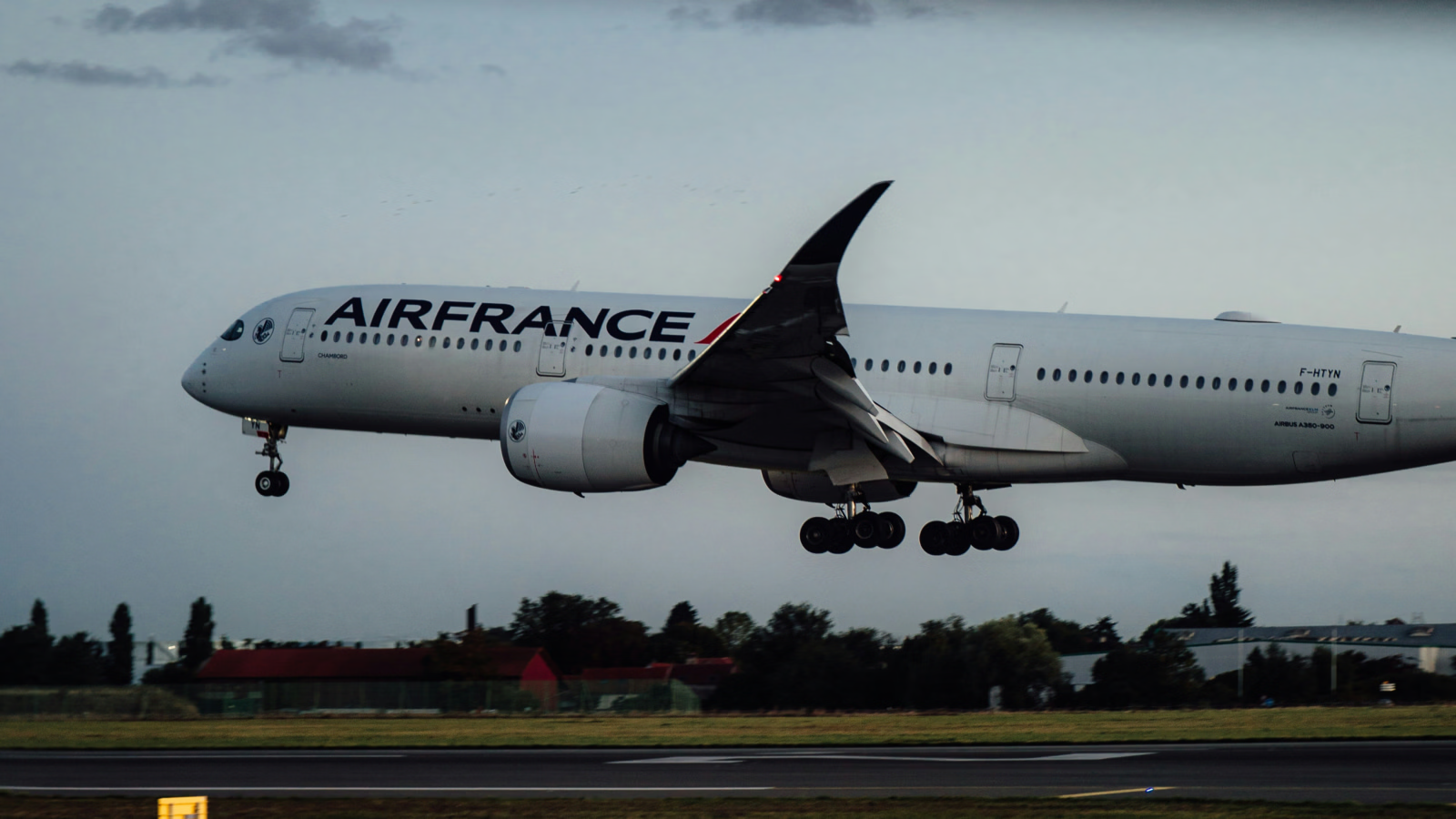
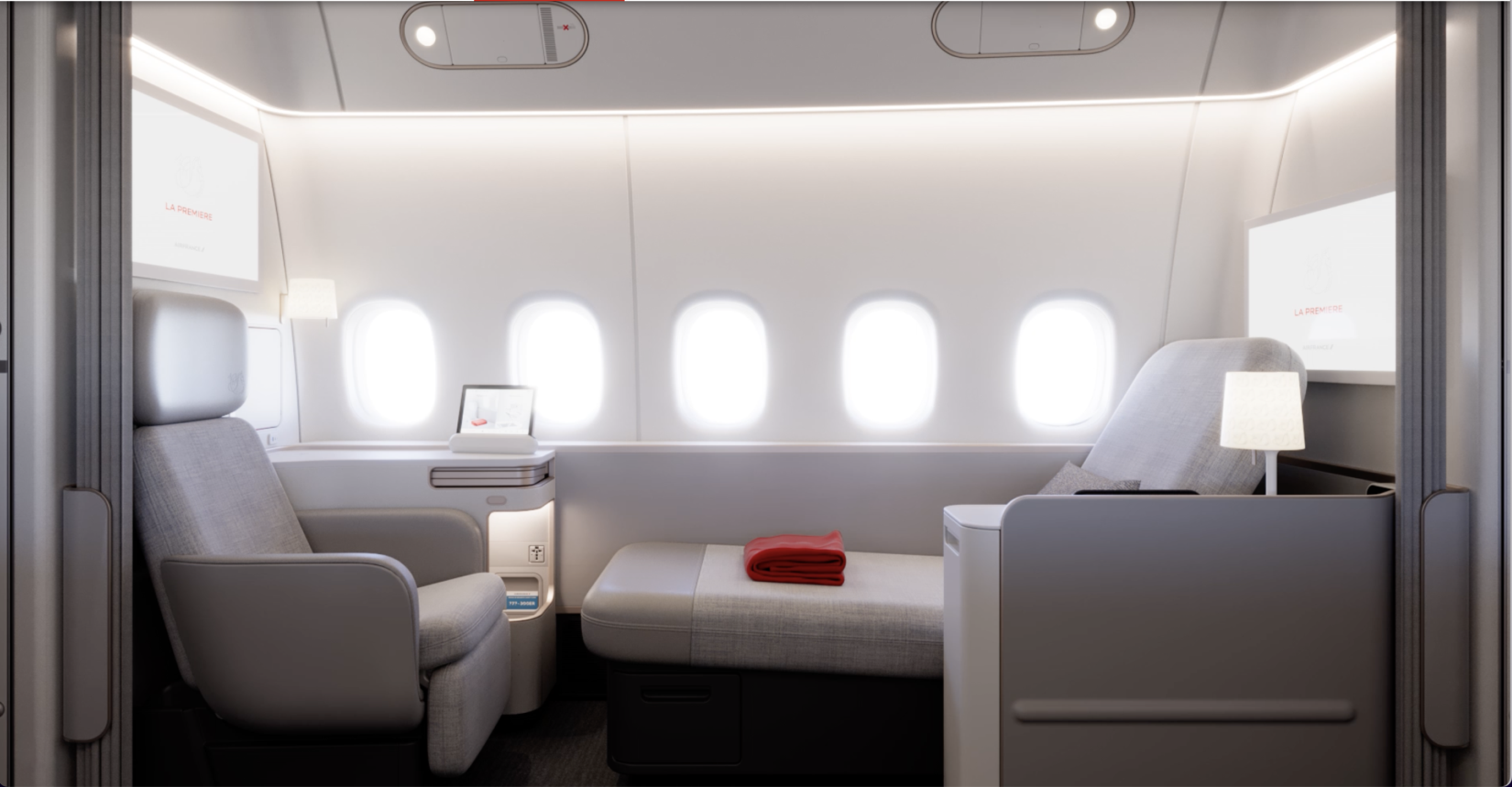
The story of points and miles in 2026 looks like this: airlines are pouring billions into building first-class cabins that look like Manhattan studio apartments, and the points blogs are pouring just as much energy into convincing you those seats are the holy grail of redemptions. Air France just dropped $550 million on its new La Premiere suites. Emirates flies a shower at 35,000 feet. Singapore has a double bed. The pitch writes itself: 100,000 points for an $18,000 seat is the best math in the hobby.
I want to push back on that. Not because first class is a poor product (the seats really are extraordinary), but because the points-and-miles math people use to justify it is one of the most confused conversations in the space. The cents-per-point number you see on every blog is right and almost completely beside the point.
The Cents-Per-Point Trap
Here's the framing you've seen a hundred times. Singapore Suites JFK to Frankfurt costs around 93,500 KrisFlyer miles. The retail fare is north of $7,500. That's eight cents per point, which makes it sound like you've found a ten-dollar bill on the sidewalk.
The hidden assumption: that you would have paid $7,500 in cash if the points hadn't existed. Almost no one would. The honest comparison is what you'd have actually bought. Which for most of us is a $1,400 economy ticket, or maybe a $3,200 business-class seat if we'd been flexible.
Run the math against a realistic alternative and the picture changes. If you'd have bought economy at $1,400 anyway and you're spending 93,500 points to upgrade the experience, that's a 1.5 cent-per-point redemption. Exactly what you'd get cashing out Chase points through the portal. Suddenly the "incredible" Singapore Suites redemption is a normal one. You're paying 93,500 points for the difference between coach and a private suite, which is real value, but it's the value of the upgrade, not the value of the cabin.
I'm not saying it's the wrong trade. Sometimes it's a great one. I'm saying call it what it is.
What First Class Actually Costs You
Points sitting in your account are not free. They have an opportunity cost. Every 100,000 points you burn on a first-class seat is 100,000 points that could have funded two business-class round-trips, or four economy trips with a partner, or a week in a Park Hyatt suite, or a year of free Hyatt nights, or sat in your account compounding through transfer bonuses you didn't know were coming.
The hobby tends to talk about points like they're free money you're getting away with spending. They aren't. They're a form of pre-paid travel currency. The real question is which trip you would have chosen if someone wrote you a check for the equivalent dollar value.
I sit there with a balance, look at the calendar, and ask: what produces the best year of travel? The answer for me is almost never one extraordinary first-class flight. It's two or three business-class trips, a couple of nice hotel redemptions, and a domestic flight or two thrown in. That's a year I remember. One Singapore Suites flight is a story; a year of well-spent points is a life.
When First Class Is Actually the Move
There's a real case for first class on points and I don't want to talk anyone out of it when it fits. Two situations make the math work.
First: a genuinely differentiated product on a once-in-a-decade trip. Emirates First on the A380 with the shower, Singapore Suites with the double bed for an anniversary trip, Air France La Premiere for a 50th birthday. These are products with no business-class equivalent, and the experience is the point of the trip. Spend the points. Don't second-guess it. Just don't pretend you're "saving" $14,000. You're spending 100,000 points on a memory.
Second: when business award space has dried up and first is the only path home. You're trying to get back from Tokyo on a Sunday night in August, every business seat is gone, and there's a single first-class seat at 30,000 more miles. Take it. The marginal cost of upgrading from "no flight" to "first class" is the entire reason you saved the points.
Outside those two situations, business class on a competent international airline (ANA, Qatar, KLM, Air Canada, Lufthansa, JAL, even American on the right metal) gets you flat-bed sleep, a real meal, and lounge access, at roughly half the points cost. The remaining premium for first is mostly food theatre and door-to-door car service.
Ryan's Rule of Thumb
Two business trips per first-class trip. If 100,000 points buys you one first-class flight or two business-class flights, take the two business flights every time unless one of those situations above applies.
The airlines are gambling that the first-class arms race will keep growing. Maybe they're right and the seats keep getting more extravagant. Maybe the points cost keeps creeping up faster than the cash fare. Either way, the points-and-miles play has not changed: pick the redemption that produces the best year, not the most impressive screenshot.
If you've been sitting on a balance trying to manufacture an excuse to book first class, here's mine: don't. Book the trip you actually want to take.
This article contains affiliate links. If you apply through our links, we may earn a commission at no cost to you, which helps us continue sharing points and miles strategies with the community.
Some of the links in this article are affiliate links. We may receive a small commission at no extra cost to you if you apply through these links. This helps us keep the site running and continue creating free content.