Priority Pass in 2026: Complete Guide to Lounge Access via Credit Cards
Key Points
- Priority Pass costs $99 to $469 per year standalone, but most travelers get it bundled with a premium credit card and never pay directly.
- The 2024 to 2025 program changes cut restaurant and dining credits at most US Priority Pass partner restaurants for cards issued by Amex, Capital One, and Citi.
- The Chase Sapphire Reserve, Amex Platinum, Capital One Venture X, Citi Strata Elite, and Hilton Aspire all include Prestige-tier Priority Pass, but guest policies and dining-credit access vary widely.
TL;DR
Priority Pass has 1,500-plus airport lounges worldwide. In April 2026, most Amex, Capital One, and Citi cards no longer include US restaurant credits. Chase Sapphire Reserve still does. Match the card to your travel cadence.
Priority Pass is the largest independent airport lounge network in the world, and for most readers, the question isn't whether to buy it. The question is which credit card already includes it. The standalone Prestige tier runs $469 a year. The Chase Sapphire Reserve, Amex Platinum, and Capital One Venture X all bundle it for what amounts to a small fraction of their annual fee. But the program looks different in 2026 than it did three years ago. Restaurant credits got cut at most issuers, guest policies tightened, and crowding at popular US lounges pushed some networks to add capacity controls. This guide walks through how the program works now, which cards still deliver real value, and when paying out of pocket actually makes sense.
How Priority Pass Works in 2026
Priority Pass is a membership program operated by Collinson Group. You buy access (directly or through a credit card) and that membership gets you into more than 1,500 lounges in over 700 airports. The lounges themselves are run by airlines, third-party operators like Plaza Premium and No1 Lounges, or independent local providers. Priority Pass doesn't own the lounges. It licenses access to them.
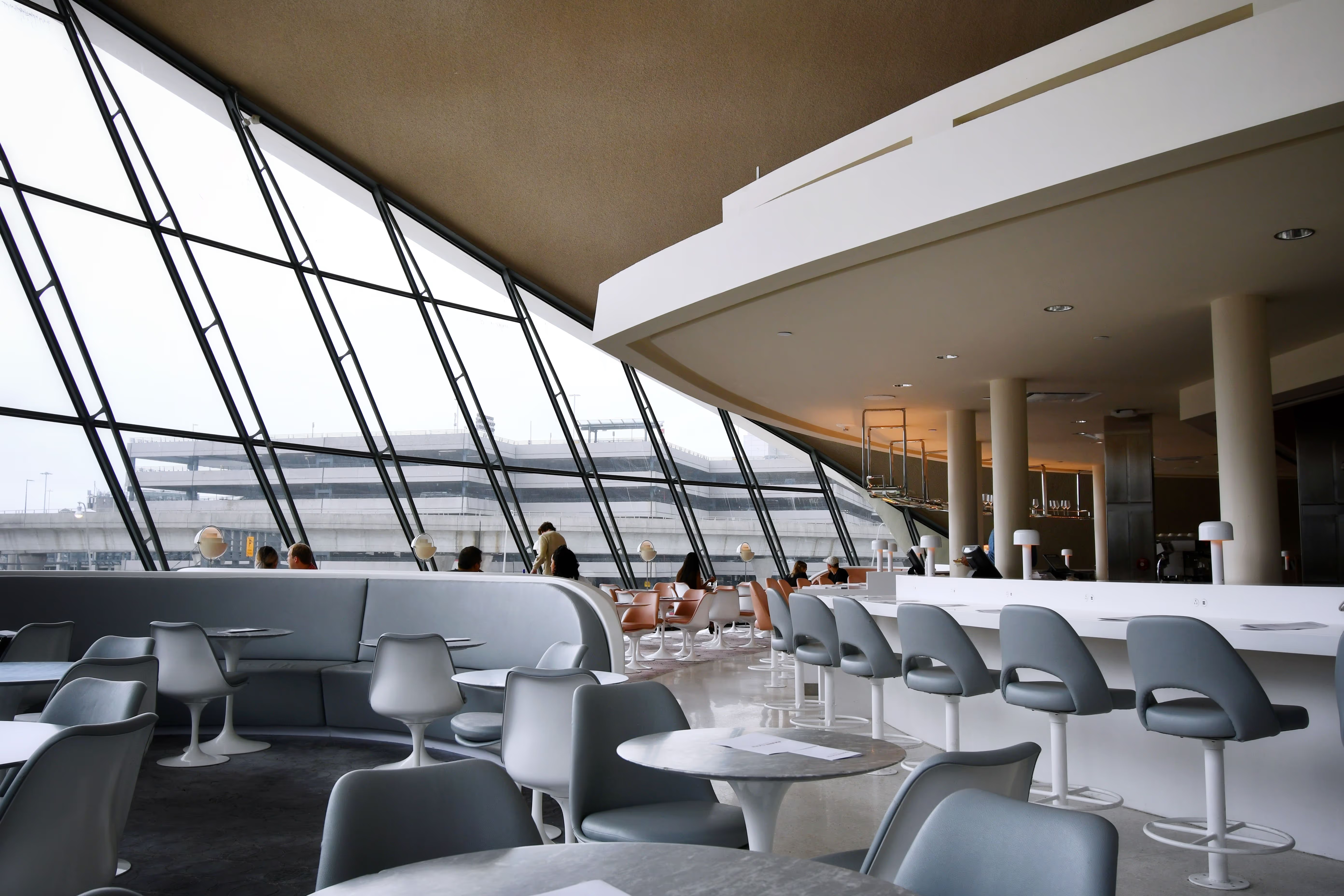
What that means in practice: quality varies. The Plaza Premium at Vancouver International is excellent. The Wingtips Lounge at JFK Terminal 4 has been overcrowded for years. Same membership card, very different experiences. The app shows real-time capacity at most US locations now, which helps. Plan around the bad ones; lean into the good ones.
A standard visit gets you up to three hours inside the lounge. Most include hot food, alcoholic drinks, Wi-Fi, showers (at international lounges, less commonly domestic), and a place to charge your laptop. The food quality range is wide. At Cathay Pacific's lounges in Hong Kong, you're eating dim sum to order. At a US regional contract lounge, you might get a steam-tray buffet and bottled juice.
The Three Membership Tiers
If you want to buy Priority Pass without a credit card, here's the pricing as of April 2026:
Standard ($99 per year). No free visits. Each lounge entry costs $35. Each guest costs $35. Useful only if you visit a lounge once or twice and want the predictability of the membership rate over the day-pass walkup price.
Standard Plus ($329 per year). Ten free lounge visits included. Beyond that, $35 per visit. Guests are $35 each. Aimed at people who travel four to six times a year and want certainty.
Prestige ($469 per year). Unlimited free lounge visits for the cardholder. Guests are still $35 each. This is the tier most credit cards bundle in.
The math on standalone Prestige rarely works once you have a card that includes it. A Capital One Venture X costs $395 a year, includes Prestige Priority Pass for two cardholders, and gives you a $300 annual travel credit and 10,000 anniversary miles worth roughly $185. The credit card costs less than the lounge membership and includes a lot more.
Cards That Include Priority Pass
Five mainstream cards include Prestige-tier Priority Pass in April 2026. Each has different guest rules, different dining-credit policies, and different annual fees. The differences matter.
Chase Sapphire Reserve
Annual fee: $795 as of the June 2025 refresh. Priority Pass: Prestige with unlimited visits. Guests: two free guests per visit, then $35 each. Restaurant credits: still included at participating Priority Pass dining locations, which is now the rare exception among premium cards.
The Sapphire Reserve refresh in mid-2025 raised the annual fee from $550 to $795 and added a portfolio of new credits: a $300 dining credit at Sapphire Reserve Exclusive Tables restaurants, $250 in StubHub or Viagogo statement credits, and $300 in DoorDash credit split across the year. If you'll use those credits, the effective annual cost lands closer to break-even than the headline number suggests. Priority Pass with restaurant access remains one of the card's quieter advantages now that most other issuers have stripped that benefit. For a deeper look at the refreshed card and break-even math, our Sapphire Reserve review goes into the calculation.
American Express Platinum
Annual fee: $695. Priority Pass: Prestige with select restrictions, including no restaurant credits at any Priority Pass dining location since August 2024. Guests: $35 each. Centurion Lounge access is included separately, which is the bigger lounge benefit on this card.
The Platinum makes more sense as a Centurion Lounge card than a Priority Pass card now. Priority Pass on the Platinum means lounges only, full stop. If your travel pattern hits airports with Centurion Lounges (Atlanta, Dallas, Denver, Houston, JFK, LAS, LAX, Miami, Philadelphia, Phoenix, San Francisco, Seattle, plus Hong Kong and London Heathrow), the Platinum's lounge value comes mostly from Centurion. The Priority Pass piece is a backup.
Capital One Venture X
Annual fee: $395. Priority Pass: Prestige. Guests: two free guests per cardholder, then $45 each. Restaurant credits: removed in October 2024.
The Venture X is the lowest-fee path to Priority Pass among premium cards, and the guest policy is the most family-friendly. Two free guests means a couple plus a child, or a pair of friends, gets in without per-head fees. The trade is that Capital One also runs Capital One Lounges in DFW, Denver, IAD, and LaGuardia, which are excellent but limited geographically. If your home airport is one of those four, the Venture X is competitive with cards costing twice as much.
Citi Strata Elite
Annual fee: $595 (launched late 2025 to replace the Citi Prestige). Priority Pass: Prestige tier with four lounge visits per year free for the cardholder, then $35 per visit. Guests: $35 each. Restaurant credits: not included.
The Strata Elite is a different shape than the others on this list. Citi capped lounge visits at four per year, so it's not really a Prestige experience for frequent travelers; it's closer to Standard Plus. For someone who hits a lounge four times a year and wants the rest of the Strata Elite benefits (1.5x ThankYou Points on most spending, $200 annual hotel credit), the lounge is a side benefit, not the reason to carry the card.
Hilton Honors Aspire
Annual fee: $550. Priority Pass: Prestige with unlimited visits. Guests: two free guests per cardholder. Restaurant credits: removed in 2024.
The Aspire is unusual because it's a hotel co-brand card that includes Priority Pass at all. If you stay at Hilton properties enough to use the free annual night and the $400 Hilton Resorts credit, the Priority Pass is essentially free. If you don't, the rest of the card doesn't justify the fee.
What Changed in 2024 and 2025
Two changes reshaped Priority Pass's value proposition for US cardholders.
First, restaurant credits got cut. Priority Pass lets partner restaurants in airports without lounges count as a "lounge visit." Historically you'd swipe your membership and get a $28 to $35 credit toward your meal. American Express dropped restaurant access for Platinum and Business Platinum cardholders in August 2024. Capital One followed in October 2024 for Venture X. Citi never fully restored restaurant credits when it relaunched its lounge benefit on the Strata Elite. Chase Sapphire Reserve and a handful of smaller cards still include restaurant credits, but the network is thinner now because some restaurants exited the program after the issuers pulled out.
Second, guest policies tightened. Capital One raised the Venture X guest fee from $0 (originally) to $45 per guest beyond the two free ones. Chase moved Sapphire Reserve guest fees from $27 to $35 in 2025. Hilton Aspire kept its two-free-guest policy. Citi never offered guest credits on the relaunched program. The pattern: guest access used to be a lever issuers competed on, and now it's tighter across the board.
These changes don't make Priority Pass worthless. They reduce the standalone value enough that the math now leans heavily toward the cards that retain dining credits or include adjacent lounge networks (Centurion on Amex, Capital One Lounges).
Alternatives to Priority Pass
If your travel pattern doesn't fit the Priority Pass model, four other lounge networks deserve a look.
Amex Centurion Lounges. Included with the Platinum, Business Platinum, and Delta Reserve cards. Limited to 14 US airports plus Hong Kong and London. Centurion Lounges are higher quality than the median Priority Pass lounge: full bars, hot meals to order, and design that doesn't feel like a hotel conference room. Capacity controls now apply: no entry within three hours of your departure on flights you didn't book on an Amex card.
Delta Sky Club. Included with the Delta Reserve (personal and business). Sky Clubs are useful only if you fly Delta, which is most of the point. The Reserve has restricted access to same-day Delta flights only since February 2025 and capped Sky Club visits at 15 per year unless you spend $75,000 on the card annually.
United Club. Included with the United Club Infinite Card. Less granular than Sky Club's restrictions but limited to United and Star Alliance flights. If you fly United regularly out of a hub like ORD, IAH, or EWR, this network can outperform Priority Pass on consistency.
Polaris Lounges. Available only to United Polaris business-class international passengers. Not a credit card benefit. Mentioning them because confused travelers sometimes assume the Polaris experience extends to all United flights. It doesn't.
Star Alliance Gold. If you hold Gold status with any Star Alliance airline (United Premier Gold, Air Canada Aeroplan 35K, Lufthansa Senator), you get access to Star Alliance partner lounges when flying any Star Alliance airline internationally. Domestic US flights don't count. This is a different value proposition than Priority Pass: earn-it status versus pay-for-it membership.
The Real-World Value Math
The break-even on Priority Pass depends on how often you use lounges and what you'd otherwise spend on airport food and drinks.
A Prestige membership at $469 a year breaks even at roughly 13 visits if you value each visit at $35 (the standalone walk-in rate). For a quarterly traveler (four trips a year, each with one lounge visit), the standalone membership doesn't pencil. For a monthly traveler (twelve trips a year), it's close to break-even. For a weekly business traveler, the math is overwhelming.
Almost no one should buy the membership directly, though. The Capital One Venture X bundles Prestige Priority Pass into a $395 annual fee that already includes a $300 travel credit and 10,000 anniversary miles. If you'd otherwise pay $469 for Priority Pass standalone, the Venture X is cheaper and gives you the travel credit. The card pays for itself before you account for the lounge benefit.
The exception: the credit card path requires good credit and willingness to carry another card. If you've already maxed your annual credit applications under Chase's 5/24 rule, or you're consolidating wallets and don't want a sixth premium card, the standalone membership exists as a fallback. It's just rarely the optimal call.
For occasional travelers (two to three trips a year), Priority Pass barely matters. The math says skip it; bring snacks and use the airline app to find empty gates. For frequent travelers (fifteen to thirty trips a year), the question is which lounge network fits your route map, and Priority Pass usually wins on coverage even when it loses on quality at any single lounge.
Is Buying It Standalone Worth It
For most readers, no. The credit card path beats the standalone path every time you'd qualify for both.
The exception lands in two cases. First: you can't or won't carry a premium credit card, and you fly often enough that lounge access matters. Standard Plus at $329 a year covers ten visits, which is right around the break-even where the math works. Second: you fly internationally and your home airport is poorly served by the US-focused premium card networks. Priority Pass's strength is global coverage, and standalone membership is a reasonable fit if you live abroad or travel internationally on a budget that doesn't include $400-plus annual card fees.
For everyone else, the calculation is the card, not the membership. Pick the card that matches your travel pattern: Capital One Venture X if your home airport has a Capital One Lounge or you travel internationally on points; Chase Sapphire Reserve if you want restaurant credits and Chase transfer partners; Amex Platinum if Centurion Lounges hit your routes. Priority Pass is the side dish in all three cases. Treat it that way when comparing.
The honest answer most articles don't give: lounge access is a quality-of-life upgrade, not a money-saver. You spend money to make airport time more pleasant. Whether that's worth it depends on how often you're at airports and how much you hate the food courts. Run the math, but don't talk yourself into a card just because Priority Pass shows up on the benefits list.
This article contains affiliate links. If you apply through our links, we may earn a commission at no cost to you, which helps us continue sharing points and miles strategies with the community.
Some of the links in this article are affiliate links. We may receive a small commission at no extra cost to you if you apply through these links. This helps us keep the site running and continue creating free content.