Introduction
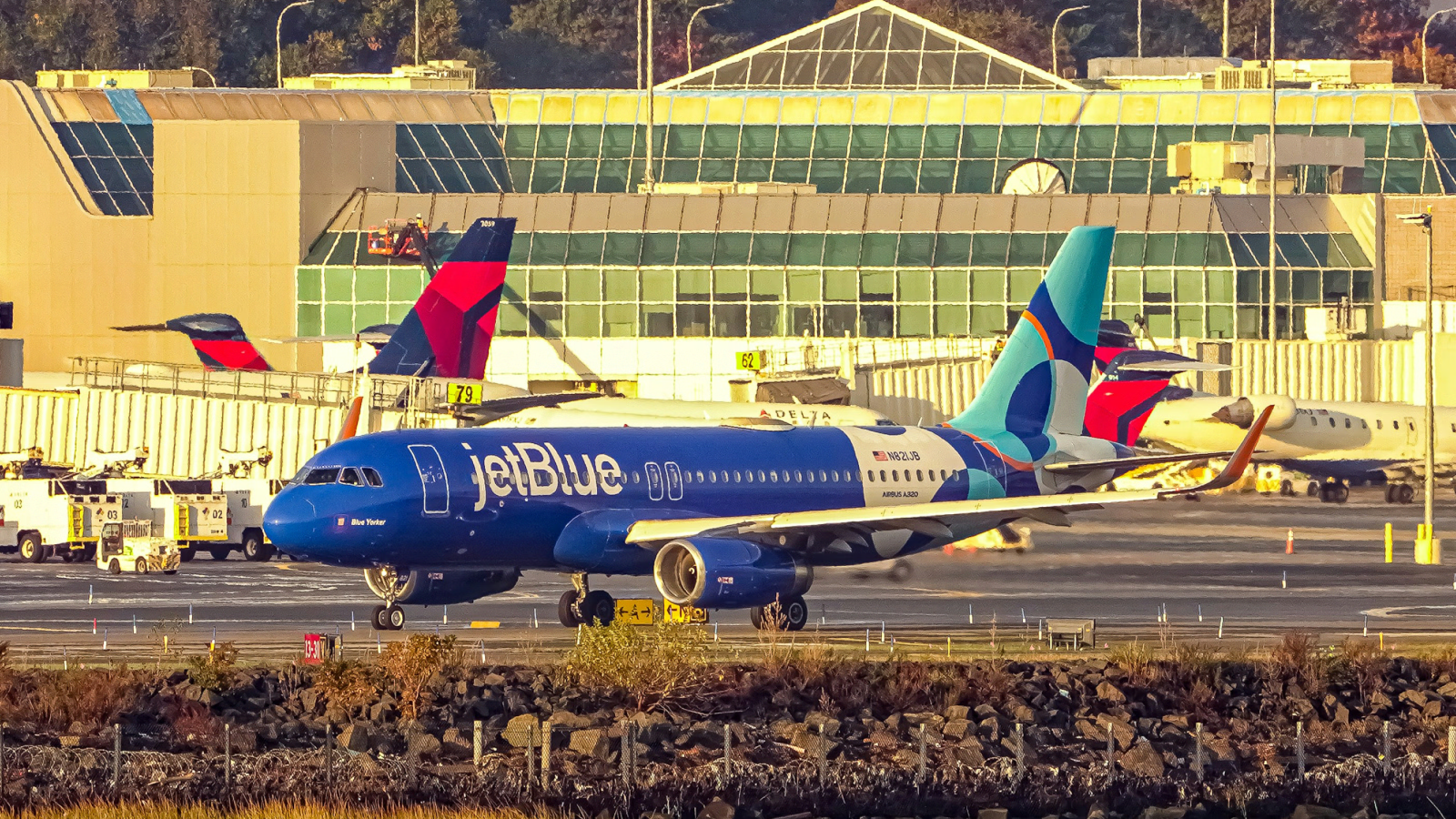
The JetBlue Plus Card is the upgraded co-brand for JetBlue loyalists. Issued by Barclays at $99 per year, the card earns 6x TrueBlue points on JetBlue purchases, includes a free first checked bag for the cardholder and up to three companions on the same reservation, and adds a 5,000-point anniversary bonus. For cardholders based at JetBlue hubs (JFK, BOS, FLL, MCO) who fly three or more round trips per year, the math works cleanly. For occasional JetBlue flyers, the no-fee Barclays JetBlue Card is the better pick.
This review covers what the Plus card includes, when the $99 fee pays back, and how it compares to alternatives.
Last updated: April 2026.
Quick summary
Best For: JetBlue loyalists based at hub cities who fly three-plus round trips per year. Standout Benefit: Free first checked bag for cardholder and up to three companions; 6x TrueBlue points on JetBlue purchases. Biggest Drawback: TrueBlue points are revenue-based and don't transfer to other programs, capping the redemption ceiling at roughly 1.4 cents per point. Current Offer: Welcome bonus typically 50,000 to 70,000 TrueBlue points after $1,000 in three months.
Earning structure
- 6x TrueBlue points on JetBlue purchases (flights, JetBlue Vacations, in-flight purchases).
- 2x at restaurants and at grocery stores.
- 1x on everything else.
The 6x on JetBlue is the highest co-brand earn rate among major U.S. airline cards. For a cardholder spending $3,000 a year on JetBlue tickets, that's 18,000 TrueBlue points (worth roughly $250 at typical 1.4 cpp redemption value).
Bundled benefits
The benefits that justify the $99 fee for hub-based JetBlue flyers:
Free first checked bag
Free first checked bag for the cardholder plus up to three companions on the same reservation when paying with the card. JetBlue typically charges $35 for the first checked bag and $45 for the second. For a family of four taking one round trip per year, the free checked bag benefit alone returns $140 to $160 in implicit value.
This is the headline benefit. Three round trips per year on JetBlue with a checked bag covers the $99 annual fee on baggage savings alone.
50 percent off in-flight purchases
Food, drinks, and Wi-Fi purchases on JetBlue flights run 50 percent off when paid with the card. Modest savings (typically $5 to $15 per flight), but stacks with the checked bag savings.
5,000-point anniversary bonus
5,000 TrueBlue points each anniversary, worth roughly $70 in implicit redemption value. Reduces the effective fee from $99 to roughly $30.
Mosaic status path
Spending $50,000 in a calendar year on the JetBlue Plus Card grants Mosaic elite status (JetBlue's mid-tier status). Mosaic members get free expedited security at JetBlue check-in, free first and second checked bags, no change or cancellation fees, and additional bonus points.
For the high-spend JetBlue cardholder, the spend-based Mosaic path is one of only two ways to earn the status (the other being flying enough to qualify on flight activity alone). For the median cardholder, $50,000 in JetBlue Plus Card spending isn't realistic, and Mosaic isn't reachable through this card.
Pros and cons
Pros
- Free first checked bag covers the annual fee at three round trips per year.
- 6x earning on JetBlue is the highest co-brand earn rate in the U.S. market.
- 50 percent off in-flight purchases stacks with checked bag savings.
- Welcome bonus is reachable on $1,000 in three-month spend, the lowest minimum among major airline cards.
Cons
- TrueBlue points don't transfer to other programs. Redemption ceiling is roughly 1.4 cents per point on JetBlue flights, with no way to access partner premium cabins or hotel programs.
- Foreign transaction fees apply (3 percent), which limits the card's usefulness on international JetBlue routes.
- Mosaic status path requires $50,000 in card spend, unreachable for most cardholders.
How the JetBlue Plus compares
vs. JetBlue Card (no annual fee). The no-fee Barclays JetBlue Card earns 3x on JetBlue, 2x at restaurants and grocery, 1x elsewhere, with no checked bag benefit and no anniversary bonus. For occasional JetBlue flyers (one to two round trips per year), the no-fee card is the right choice; the $99 fee on the Plus card doesn't get offset at that travel volume. For three-plus round trips per year, the Plus card pays back through the checked bag savings.
vs. Chase Sapphire Preferred ($95). The Sapphire Preferred earns 2x on travel and 3x on dining, with 1:1 transfers to Hyatt, United, and Air Canada Aeroplan. Booking JetBlue flights through Chase Travel earns 5x Ultimate Rewards points (worth 8.5 cents per dollar at transfer-partner rates) but doesn't give checked bag benefits or in-flight discounts. For JetBlue-loyal travelers who fly enough to use the checked bag, the Plus card wins. For travelers who fly multiple airlines, the Sapphire Preferred is more flexible.
vs. American Airlines AAdvantage Platinum Select ($99). Same fee tier, similar benefits (free first checked bag on AA, 2x earning, welcome bonus). The right pick comes down to which airline you fly more.
Who should get the JetBlue Plus
Get it if:
- You're based at a JetBlue hub (JFK, BOS, FLL, MCO).
- You fly three or more round trips per year on JetBlue, with a checked bag.
- You're committed to JetBlue as your primary East Coast airline (the program doesn't transfer to other airlines).
Hold the no-fee JetBlue Card instead if:
- You fly JetBlue occasionally (one to two round trips per year).
- You don't typically check a bag.
- You want a lower-commitment way to start earning JetBlue TrueBlue points.
Hold a transferable-points card (Chase Sapphire Preferred, Capital One Venture) instead if:
- You fly multiple airlines, not just JetBlue.
- You want to redeem points across hotels and other airlines, not just JetBlue.
Bottom line
The JetBlue Plus Card is one of the strongest co-branded airline cards in the U.S. market for the specific cardholder profile it targets: JetBlue-loyal travelers based at hub cities who fly three-plus round trips per year. The free checked bag plus 6x earning on JetBlue offsets the $99 fee on baggage savings alone, with the 5,000-point anniversary bonus and 50 percent in-flight discounts compounding the value.
For everyone else, the no-fee JetBlue Card or a transferable-points card is the better choice. Match the card to your actual JetBlue flight volume, and the right answer is straightforward.
This article contains affiliate links. If you apply through our links, we may earn a commission at no cost to you, which helps us continue sharing points and miles strategies with the community.
Some of the links in this article are affiliate links. We may receive a small commission at no extra cost to you if you apply through these links. This helps us keep the site running and continue creating free content.