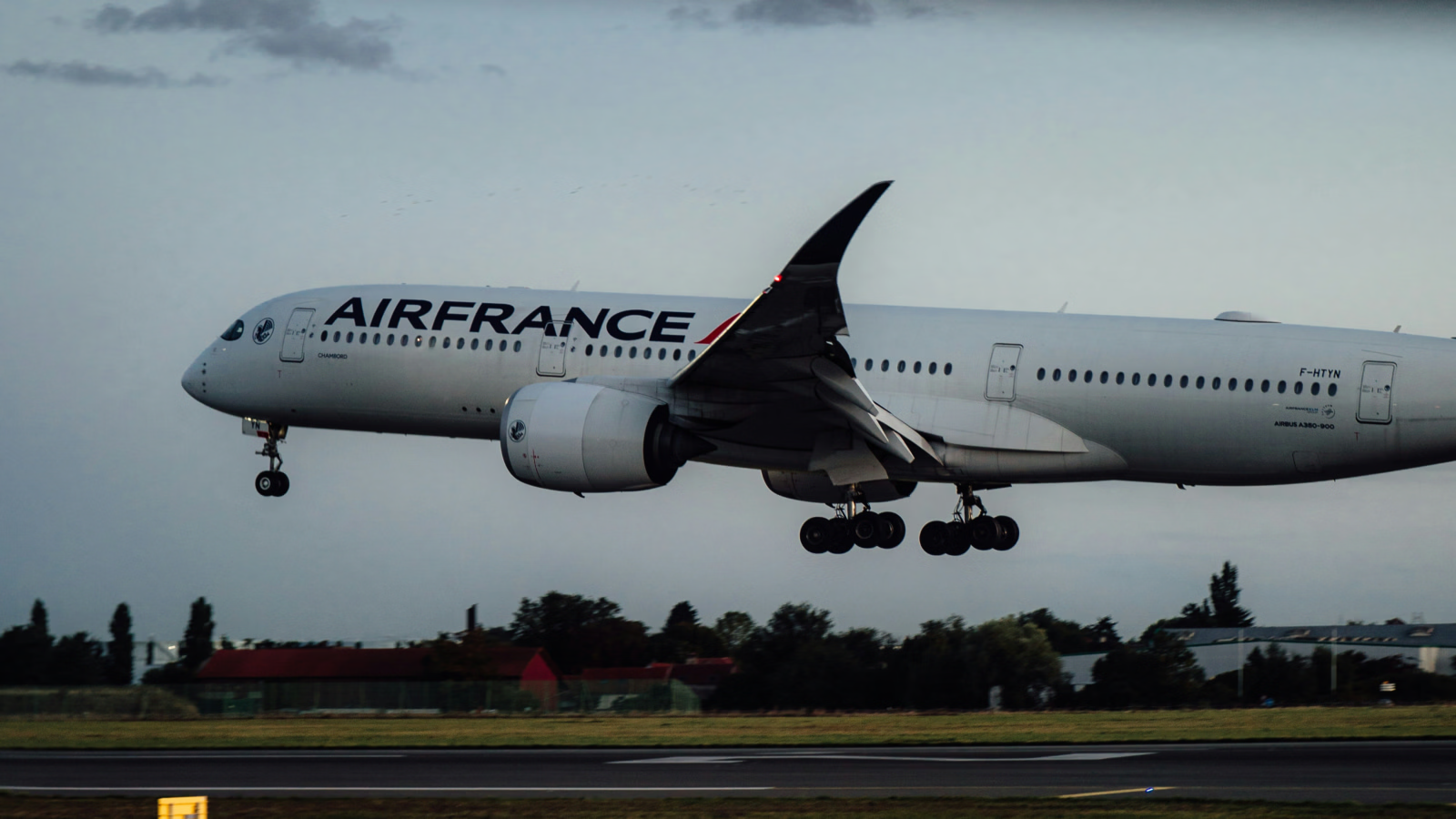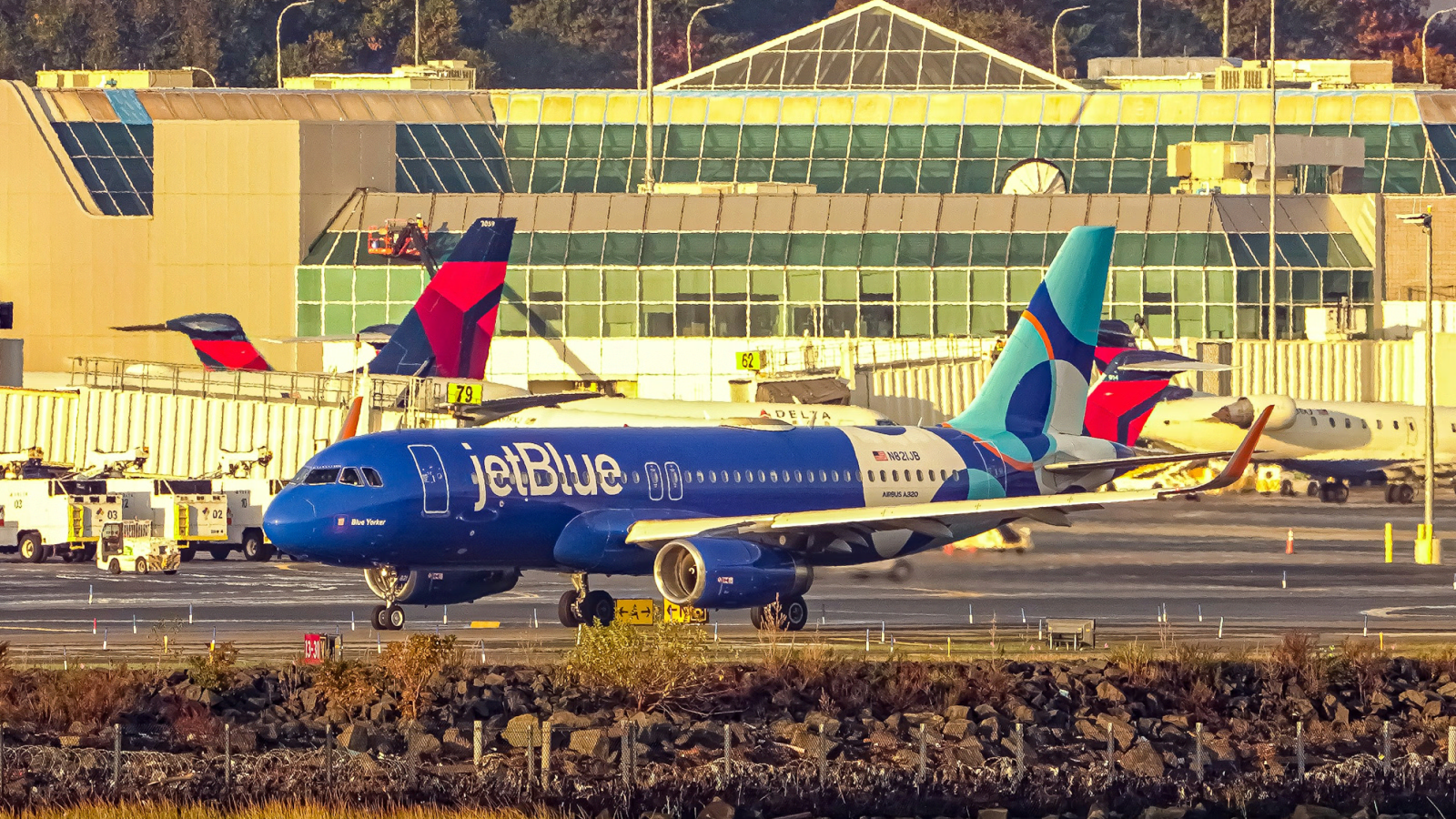
If you searched "$25 holiday flights with Amazon Prime" and ended up here, let me save you time. That was a one-shot marketing splash in December 2023. Amazon released 3,000 round-trip tickets at $25 across three days, they were gone in minutes, and the promo has not come back. I get an email about once a quarter asking when it's running again. It isn't.
What's still here is the Amazon Prime Student plus StudentUniverse partnership. For the right student traveler it earns its keep. For most students, though, it's a fine perk on top of a membership you'd want anyway, not a reason to sign up by itself.
Here's the honest math, the cases where it actually beats Google Flights, and what I'd do with the points-and-miles side of student travel in 2026 if I were starting over.
Quick Answer
Amazon Prime Student costs $7.49/month or $69/year after a six-month free trial, and gives verified college students access to a co-branded StudentUniverse portal that typically books flights 10-30% below public fares for travelers under 26. The $25 holiday flights from December 2023 were a one-time event. The ongoing discounts are real, modest, and often beat (but sometimes lose to) the same routes on Google Flights and Skyscanner with flexible dates.
What Amazon Prime Student Actually Is and What It Costs
Prime Student is Amazon's discounted membership for verified college students. Verification runs off your .edu email plus a current enrollment check. Once you're in:
- Six-month free trial, no credit card required
- After trial: $7.49/month or $69/year (regular Prime is $14.99/month or $139/year)
- Free two-day shipping, often one-day in major metros
- Prime Video, Prime Reading, Amazon Music ad-free tier
- Twitch Prime including a free monthly channel subscription
- Unlimited photo storage in Amazon Photos
- Discounts at Whole Foods if you have one nearby
- Access to the Prime Student x StudentUniverse travel portal
- Rotating extras like Audible Plus trials and Grubhub+ promos
Eligibility runs for up to four years or until you graduate. Two-year and four-year program students both qualify. The $69 annual rate is what most students should pay, not the monthly. That's an effective $5.75/month and you're locked in for the year, which is the right move if you'll use it more than five months out of twelve.
The StudentUniverse Partnership: What You Actually Get
StudentUniverse is a travel agency owned by FlightHub Group that specializes in student and youth fares. They negotiate private rates with airlines, hotels, and tour operators for travelers between 18 and 26, plus full-time students of any age. The Prime Student integration gives you a portal with additional discounts on top of what StudentUniverse already offers the public.
The ongoing perks still here in 2026:
- Student fares on partner airlines, generally 10-30% below the same flight on the public-facing site
- Hostel and budget hotel discounts through partners like Hostelworld
- Tour and activity discounts via GetYourGuide and similar
- Trip protection add-ons priced for student budgets
A few things to be clear about. The discount is on cash fares, not award redemptions. You earn whatever miles your chosen airline's program offers on that fare class, same as any other booking. And the "exclusive" portion is real but narrow: it shows up most on international routes and legacy carriers, not on the ultra-low-cost domestic fares where you'd think a student would shop.
The 2023 $25 Flights Promo, In Historical Context
Quick recap for anyone who came in via an old SEO result. From December 5 to December 7, 2023, Amazon released 1,000 round-trip tickets per day at a flat $25, priced through the Prime Student x StudentUniverse portal, available only to verified Prime Student members. Total inventory: 3,000 tickets. They were claimed within minutes each day.
The math worked because Amazon was eating the difference as a customer acquisition cost, not because StudentUniverse can normally produce $25 flights. Amazon hasn't repeated it since. Most likely it was a holiday-season marketing splash to drive Prime Student sign-ups, and the conversion data didn't justify a repeat. If it comes back, it'll be a deal-alert story, not a "this is how the program works" story.
Real Math: Prime Student + StudentUniverse vs. Google Flights
Here's the test I run when a student asks me whether the portal is worth it. Pick the same route, same dates, same one-stop-acceptable filter, and compare four places: the StudentUniverse portal as a Prime Student member, Google Flights, Skyscanner with the "compare across whole month" view, and the airline's own site.
A representative spread on a JFK-to-London round trip booked six weeks out, economy, one checked bag:
- StudentUniverse via Prime Student portal: $578 on a British Airways routing
- Google Flights cheapest: $612 on the same routing
- Skyscanner cheapest day in the same week: $529 on Norse Atlantic
- British Airways direct: $619
StudentUniverse beats the legacy-carrier public price by about $40. It loses to Skyscanner's flexible-date search, which surfaces a no-frills carrier the student portal doesn't index. Takeaway: if you're locked into specific dates and a specific carrier (study abroad return, parent's wedding), the portal saves you money. If you're date-flexible and willing to fly Norse, Play, or another no-frills option, broader search wins.
Run that comparison every time. The portal is a tool, not a default.
Ongoing Student Discounts You Can Actually Use Today
Beyond flights, the ongoing benefits worth pulling out of the stack:
- Discounted student fares with airlines including American, Delta, United, Virgin Atlantic, British Airways, KLM, Air France, and many European carriers
- Hostel rates that match or beat Hostelworld's public site, especially on multi-night bookings
- Tour discounts through GetYourGuide, often 5-10% off
- Insurance through partners like World Nomads at student rates, useful for study-abroad trips
- Flight-plus-hostel packages; sometimes cheaper than booking separately, sometimes not
I'd call out the hostel piece specifically. For a student doing a Eurail-style summer trip, stacking the StudentUniverse hostel rates, Hostelworld student rates, and an ISIC card can save a couple hundred dollars across a three-week trip. The flight portion is where the savings get noisier.
Alternatives Worth Knowing
The Prime Student plus StudentUniverse stack is one tool. These are the others that should be in the bag:
- ISIC card ($25/year). The International Student Identity Card has a broader and older discount network than StudentUniverse, especially in Europe and Asia. Museums, transit passes, hostels, attractions. The discounts are small (5-15%) but they accumulate on a long trip.
- Skyscanner and Google Flights with flexible dates. This is the single most underused student-traveler tool. Search "everywhere" from your home airport. Search a whole month, not a specific date. The under-26 portal will never index an obscure carrier; flexible-date public search will.
- Ultra-low-cost carriers. Frontier, Spirit, Breeze, Avelo for domestic. Norse Atlantic and Play for transatlantic. The Frontier Discount Den ($59.99/year) is worth running the math on if you fly home from college more than three times a year; bag-included fares with the membership routinely beat student-portal prices on the same routes.
- Megabus, FlixBus, Greyhound. For trips under 500 miles, a $20 bus often beats a $120 flight once you add bags and airport-transit time. Boston-to-DC, LA-to-Vegas, Chicago-to-Detroit: bus or train wins more than students expect.
- Amtrak Student Advantage ($30/year for under 25, 15% off all fares). For the Northeast Corridor or the Pacific Surfliner, this beats every flight option.
- Hostelworld student rates layered on top of any portal you're using.
The note I'd add: don't think of these as substitutes. The students who travel well stack them. Prime Student portal for the legacy-carrier flight, ISIC at the museum, Megabus for the connecting city, Hostelworld student rate for the bed.
The Points-and-Miles Play for Students
Here's where I get more opinionated. If you're going to spend $69/year on Prime Student for the travel angle, you should also be running a credit-card setup. Most students don't, and they're leaving real money on the table.
The starter stack I'd build, in order:
Discover it Student Cash Back. 5% cash back on rotating categories up to $1,500/quarter, 1% everywhere else, and Discover matches all the cash back you earn in your first year. That match is the killer feature: earn $300, Discover writes you a check for another $300. No annual fee. First card I'd put in a student's hand if their credit is thin.
Capital One Quicksilver Student. 1.5% flat on everything, no annual fee, no foreign transaction fees. The "no FTX fees" line matters for any student going abroad. This is the card for the abroad semester or spring break in Mexico.
Chase Freedom Student. 1% back, no annual fee, plus a $20 statement credit annually for maintaining good grades. The hidden value: this is your Chase relationship-builder card. Open it, use it lightly for a year, then graduate to the Chase Sapphire Preferred. Once you're holding a Sapphire Preferred, your Freedom Student cash back converts to Chase points that transfer to Hyatt (1:1, where the math gets interesting), United, Southwest, and others. That conversion is where the points-and-miles game starts paying off.
Bilt Mastercard. If you're renting off-campus, Bilt earns points on rent with no transaction fee. No annual fee. Transfers to Hyatt, American, United, Air Canada Aeroplan, and a long list of partners. A renter paying $800/month gets 9,600 Bilt points a year on rent alone, enough for a free night at a category-1 Hyatt. Free hotel night for paying rent you were going to pay anyway.
That's the play. Not "fly the $25 holiday flight" (those aren't coming back). The play: free Prime Student trial, $69/year if you keep it, run StudentUniverse against Google Flights for every booking, stack a Discover or Cap One Quicksilver Student for cash back, add Bilt if you're renting, and build toward a Chase Sapphire Preferred for your first year out of school.
When Prime Student Pays for Itself Beyond Just Travel
Even if StudentUniverse never saves you a dime, Prime Student at $69/year is still an easy yes for most college students. Shipping alone usually justifies it. A student who orders four to five textbooks, plus dorm supplies, plus a couple of impulse Amazon purchases a month, gets $100-plus in free expedited shipping over an academic year. Add Prime Video for the dorm common room, the occasional Whole Foods discount, and the streaming-music tier, and the membership pays for itself before you ever open the travel portal.
That framing matters. You're not buying Prime Student for the flights. You're buying it for shipping and entertainment, and the flights are a bonus you should check but not depend on.
Common Mistakes I See
A few patterns that come up over and over:
- Assuming the student fare is always the best fare. It isn't. Run the comparison.
- Paying $7.49/month instead of $69/year. If you'll use Prime Student more than five months, the annual rate saves $20.88/year. Pay annually.
- Letting the free trial roll into a paid month you forgot about. Set a calendar reminder for month five. Decide consciously whether to keep it.
- Forgetting to re-verify enrollment. Amazon asks again at certain intervals. Ignore the prompt and your account drops to regular Prime at $14.99/month.
- Not stacking a credit card with the booking. If a 5% Discover quarterly travel bonus is active, use that card; another 3.5% on top of the StudentUniverse discount is free money.
- Signing up but not using the six free months. Six months is long. Use the trial. If it's not paying off by month five, cancel.
What I'd Actually Do
If I were back in college today and someone handed me $100 to spend on travel infrastructure for the year, here's the order:
- Sign up for Prime Student. Free for six months. Decide in month five whether to pay $69/year.
- Apply for the Discover it Student Cash Back. The cash-back match in year one alone is worth more than any travel-portal discount.
- If renting off-campus, add the Bilt Mastercard. Points on rent for free.
- Use the StudentUniverse portal as one of four search tools alongside Google Flights, Skyscanner, and the airline's own site. Pick whichever wins for that specific trip.
- Buy the ISIC card ($25) if I'm going abroad for more than two weeks.
- Look at the Frontier Discount Den if I'm flying home from school three or more times a year on a route Frontier serves.
The $25 holiday flight isn't coming back. The student travel game is still very much winnable in 2026. It just looks like running four search tabs, stacking a credit card behind the booking, and being honest about which "exclusive" student discounts actually beat the public market. Most of the time, Prime Student is worth the $69 for reasons that have nothing to do with flights. Treat the travel portal as the bonus it is, not the headline.
This article contains affiliate links. If you apply through our links, we may earn a commission at no cost to you, which helps us continue sharing points and miles strategies with the community.
Some of the links in this article are affiliate links. We may receive a small commission at no extra cost to you if you apply through these links. This helps us keep the site running and continue creating free content.