Delta Premium Select sits in an awkward, useful spot in Delta's cabin lineup. It's a true premium-economy cabin, not just extra-legroom economy, and it shows up almost exclusively on long-haul international flights. The real question isn't whether it's nicer than the back of the plane. It is. The question is whether the price gap over Comfort+ is worth what you get, and whether the gap under Delta One makes it the smarter buy when business class is out of reach. The answer depends on flight length, your SkyMiles balance, your Medallion status, and how you'd otherwise spend that upgrade money.
What Delta Premium Select actually is
Delta runs four cabin tiers on its widebody international fleet: Main Cabin, Delta Comfort+, Delta Premium Select, and Delta One. Premium Select is the third tier from the top. It's a physically separate cabin with its own seats, its own service flow, and its own crew assignments, not a row block within economy.
Comfort+, by contrast, is extra-legroom economy. Same seat, same meal tray, same cabin, four extra inches of pitch. Premium Select is the next jump up, and it's a bigger one.
Here's what the seat actually gives you on most widebody aircraft: 38 inches of pitch, 18.5 to 19 inches of width, around 7 inches of recline, a deployable footrest, and a flip-down legrest. Compare to Main Cabin at 31 to 32 inches of pitch and 17.4 inches of width, and Comfort+ at 34 inches and roughly 18 inches. Delta One sits above this with lie-flat beds and direct aisle access. Premium Select is meaningfully better than Comfort+, and meaningfully worse than Delta One. That's the whole pitch.
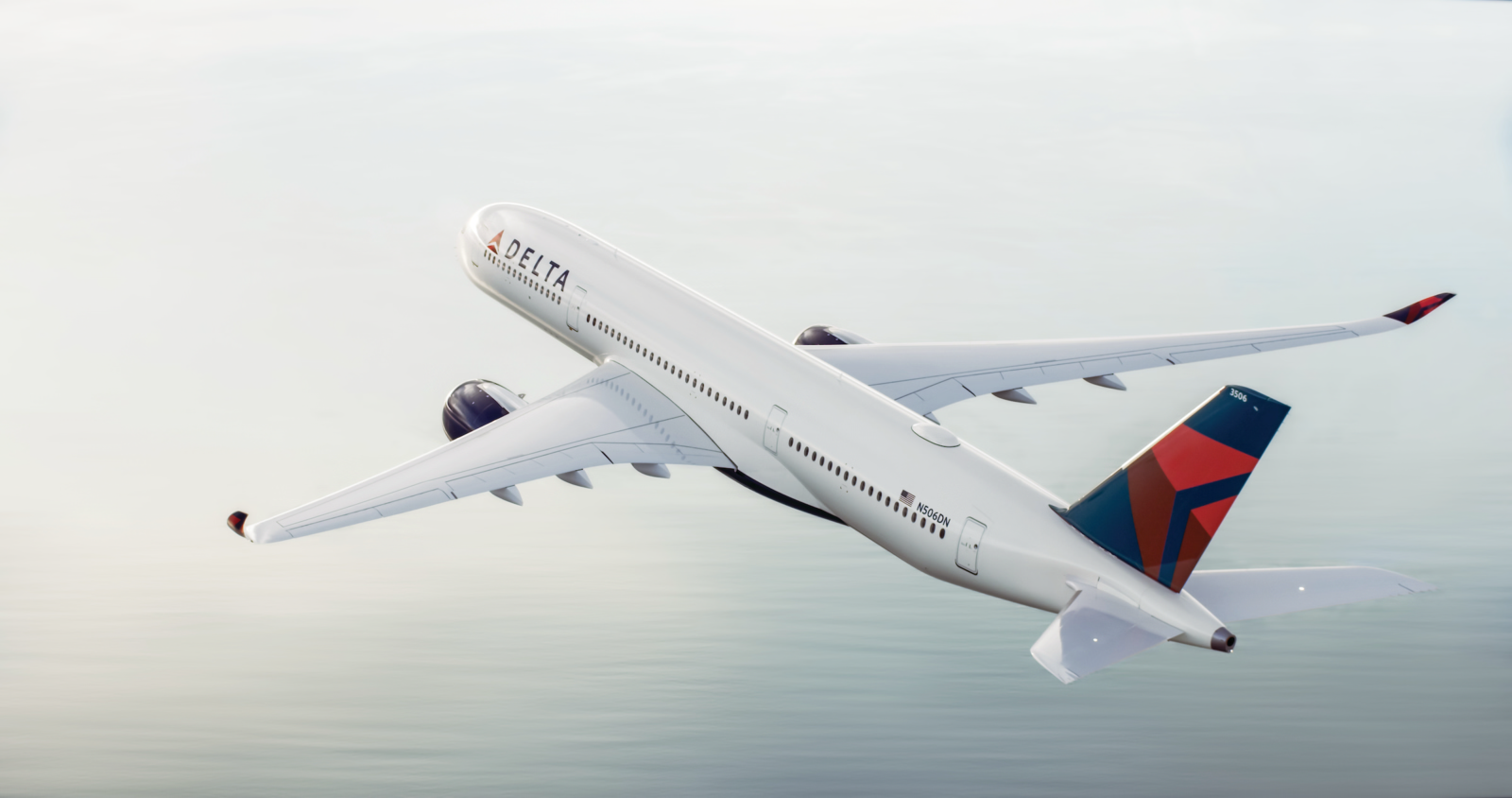
You'll find the best version of this product on the A330-900neo (2-3-2 layout), the A350-900 (2-4-2), and the retrofitted 767-400ER (2-2-2, every seat aisle or window). The 767-400ER is the standout if you're traveling as a couple, because the 2-2-2 layout means you can grab a pair without anyone climbing over you to reach the aisle. The 757-200 also flies a Premium Select cabin on some transatlantic routes, but with smaller screens and no footrest, so if your aircraft matters to you, check the equipment type before you book. Delta does swap aircraft within the same route on occasion, so the seat map you see at booking isn't always what you fly.
What comes with the seat
The seat is the headline. The service is the supporting argument.
You get Sky Priority check-in, security where available, priority boarding (Zone 2, after Delta One and elite tiers), and priority baggage handling. Premium Select passengers get two checked bags free, each up to 70 pounds, versus the 50-pound limit in Main Cabin. If you tend to pack heavy or fly with sports equipment, that allowance alone is worth real money on multi-segment trips.
On long-haul international flights, you get a multi-course meal served on real plates with real flatware, complimentary alcohol including wine and spirits, a snack basket between services, and a destination-themed menu (bibimbap on Korea routes, beef with garlic-ginger sauce and soba on Japan routes, that kind of thing). The amenity kit includes eyeshades, socks, a LE LABO facial mist, and lip balm. The seatback entertainment screen is 13.3 inches on the A330-900neo, A350, and 767-400ER, and noise-canceling headphones come with the seat. Wi-Fi is free for SkyMiles members across the cabin.
None of this is Delta One. The seat doesn't lie flat. There's no aisle access from every seat in the 2-3-2 and 2-4-2 layouts. The meal is a meal, not a tasting menu. But compared to Comfort+, the difference is the kind you actually feel ten hours into a flight.
Where it flies
Premium Select is a long-haul international product first and a domestic product second. The cabin shows up on transatlantic routes to most major European hubs, transpacific routes to Tokyo, Seoul, and Shanghai, South American routes including Brazil and the newer South America expansions, and select transcon routes between New York and Los Angeles or San Francisco. It does not appear on the typical domestic narrowbody, where Comfort+ is the domestic equivalent.
If you're flying transcon and considering Premium Select, the upgrade math is different from international. The flight is 5 to 6 hours. Comfort+ handles that fine for most people. Premium Select on transcon is closer to a "nice to have" than a "you'll arrive a different person" upgrade. Save the spend for the international segment where it does more work.
The cash math
Here's where it gets interesting. Round-trip transatlantic pricing typically looks like this in 2026: Main Cabin $700 to $1,200, Comfort+ around $300 to $600 more than Main Cabin, Premium Select around $1,500 to $2,500 more than Main Cabin, and Delta One starting around $5,000 and going up from there.
Run that as ratios. Premium Select usually costs about double Comfort+ all-in, and roughly 30 to 40 percent of Delta One. Comfort+ buys you 3 inches of pitch over Main Cabin. Premium Select buys you 7 inches of pitch over Main Cabin, plus a different meal, a different cabin, a different bag allowance, and a different boarding zone. The Comfort+ to Premium Select jump delivers more, dollar for dollar, than the Main Cabin to Comfort+ jump on long flights.
The Premium Select to Delta One jump is bigger again, but the price gap is also bigger. If Delta One is $3,000 more than Premium Select on your route, you're paying 2 to 3 times what Premium Select costs for a lie-flat seat. That's a real comfort upgrade, but the value-per-dollar is steeper. Premium Select tends to be the better cash buy unless Delta One is unusually cheap (rare) or you genuinely need to sleep flat to function on arrival.
The points math
SkyMiles redemptions for Premium Select on transatlantic routes typically run 70,000 to 100,000 one-way, or 140,000 to 200,000 round-trip. Transpacific runs higher, often 160,000 to 220,000 round-trip. Compare to economy at roughly 40,000 to 60,000 one-way and Delta One at 100,000 to 160,000 one-way (sometimes higher on dynamic-pricing days).
At those prices, Premium Select redemptions tend to come in at 1.5 to 2.0 cents per mile when you compare the mile cost to the cash fare you would have paid. Economy redemptions on the same routes often clock 1.0 to 1.2 cents per mile. Premium Select is one of the few SkyMiles sweet spots left in 2026.
Two caveats. First, SkyMiles is dynamic, so prices vary day to day. Always check the cash fare you'd actually pay and divide by miles to confirm cents per mile before pulling the trigger. Second, if you hold a Delta cobrand card with TakeOff 15, you get 15 percent off the mileage portion of the award, which improves the math by another notch.
If you have transferable points (Amex Membership Rewards, Chase Ultimate Rewards, Capital One miles, or Citi ThankYou Points), check what those buy through Star Alliance and Oneworld partners before defaulting to SkyMiles. Aeroplan to Lufthansa Premium Economy, ANA to United Premium Plus, or Virgin Atlantic for Delta's own routes can sometimes beat the SkyMiles number outright.
Status-based upgrades
Delta Medallion members get a few paths to Premium Select that don't require paying for it outright.
Gold, Platinum, and Diamond Medallions can request complimentary upgrades from Main Cabin or Comfort+ to Premium Select on Delta-operated international flights, processed in status order based on availability. Diamond Medallions get the best shot, but availability on popular routes is thin, so don't book Main Cabin assuming you'll clear.
The Delta SkyMiles Platinum and Reserve cards (and the business equivalents) offer Complimentary Upgrades on domestic flights to Premium Select where it operates, processed after Reserve cardholders and after elite tiers. On the domestic transcon Premium Select routes, this is genuinely useful.
Delta also offers a paid "Upgrade with Miles" option from Main Cabin to Premium Select at variable mileage rates. This rarely beats just booking the Premium Select award outright, but it's worth checking if you're already ticketed in Main Cabin and Premium Select space opens up.
When Premium Select is worth it
Buy it when the flight is 8 or more hours, the route is international widebody, and the alternative is Comfort+. The seat and service difference on a transatlantic or transpacific is the kind you notice from the moment you board until you walk off, and at roughly double the Comfort+ price, the value-per-dollar holds up.
Buy it on points when SkyMiles availability sits in the 70,000 to 100,000 one-way range for transatlantic and the cash fare is north of $2,000. That's 1.5 to 2.0 cents per mile, which is strong SkyMiles value.
Buy it with TakeOff 15 in hand. A Delta cobrand card pays for itself fast if you're regularly redeeming for Premium Select awards.
When to skip it
Skip it on transcon flights of 5 to 6 hours unless the price gap over Comfort+ is small. Comfort+ handles that flight length fine.
Skip it when the cash gap over Main Cabin exceeds $1,800 to $2,000 round-trip. At that point, you're approaching the lower end of Delta One pricing on some routes, and lie-flat starts to look like the better marginal spend.
Skip it when your transferable points open a better partner option. Aeroplan to Lufthansa Premium Economy, ANA to United Premium Plus, and Virgin Atlantic Flying Club for Delta-operated flights can sometimes beat SkyMiles outright on cents-per-mile basis.
Skip it as a Medallion if your route has decent complimentary upgrade clearance history. If you're Diamond and you're flying Delta long-haul international weekly, Premium Select shows up free often enough that paying for it on top is suboptimal. Same logic applies if you're a Reserve cardholder flying the transcon routes, where the complimentary upgrade hits more often than people expect.
How it stacks up against the rest of the category
Premium economy is now offered by most major international carriers, and Delta Premium Select sits roughly middle of the pack in the category.
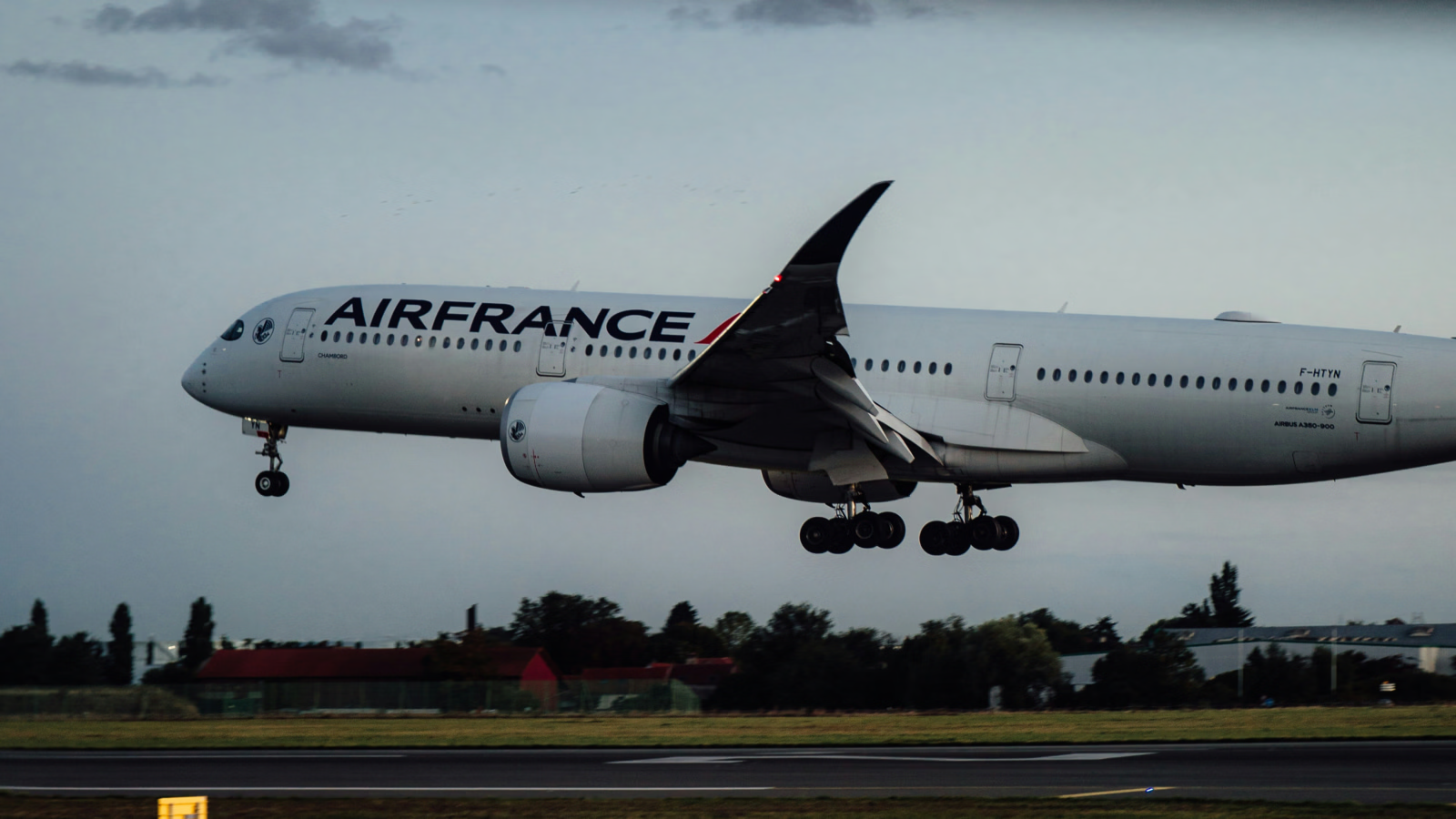
American Premium Economy delivers similar seat dimensions and a comparable meal service, with slightly less consistency across the fleet. United Premium Plus offers a marginally better seat on its 787 fleet but a less refined dining experience. Lufthansa Premium Economy gets consistently strong food reviews and comparable seat width. British Airways World Traveller Plus is comparable in seat but has smaller cabins on some aircraft, which can mean less attentive service. Air France Premium Economy and JAL Premium Economy generally rate higher on food and finishes, with JAL at the top of the category.
Delta Premium Select is competitive, not class-leading. Where it wins is consistency: across the Delta widebody fleet, the product behaves more or less the same way. Where it loses is in seat width (18.5 to 19 inches versus 21 on Virgin Atlantic Premium) and in the meal service, which is good but not exceptional.
If you're choosing between Premium Select and a partner premium economy on Delta points, run the cents-per-mile math and pick the better number. SkyMiles availability on partners can sometimes outpace what's available on Delta metal.
The bottom line
Premium Select is the upgrade I'd recommend most often for long-haul international travelers who can't or won't pay for Delta One. The seat is meaningfully better than Comfort+, the service is meaningfully better than Main Cabin, and the points redemption value is one of the better SkyMiles sweet spots in 2026.
The case to make it your default international cabin: 8+ hour flight, Comfort+ alternative, cash gap under $1,500 over Main Cabin, or a SkyMiles redemption at 1.5 cents per mile or better. The case to skip: short transcon, large cash gap, transferable points that buy you a better partner option, or Medallion status with strong complimentary upgrade clearance on your route.
Run the math on your specific flight before you book. The right answer changes by route, by date, and by what's in your wallet.
This article contains affiliate links. If you apply through our links, we may earn a commission at no cost to you, which helps us continue sharing points and miles strategies with the community.
Some of the links in this article are affiliate links. We may receive a small commission at no extra cost to you if you apply through these links. This helps us keep the site running and continue creating free content.