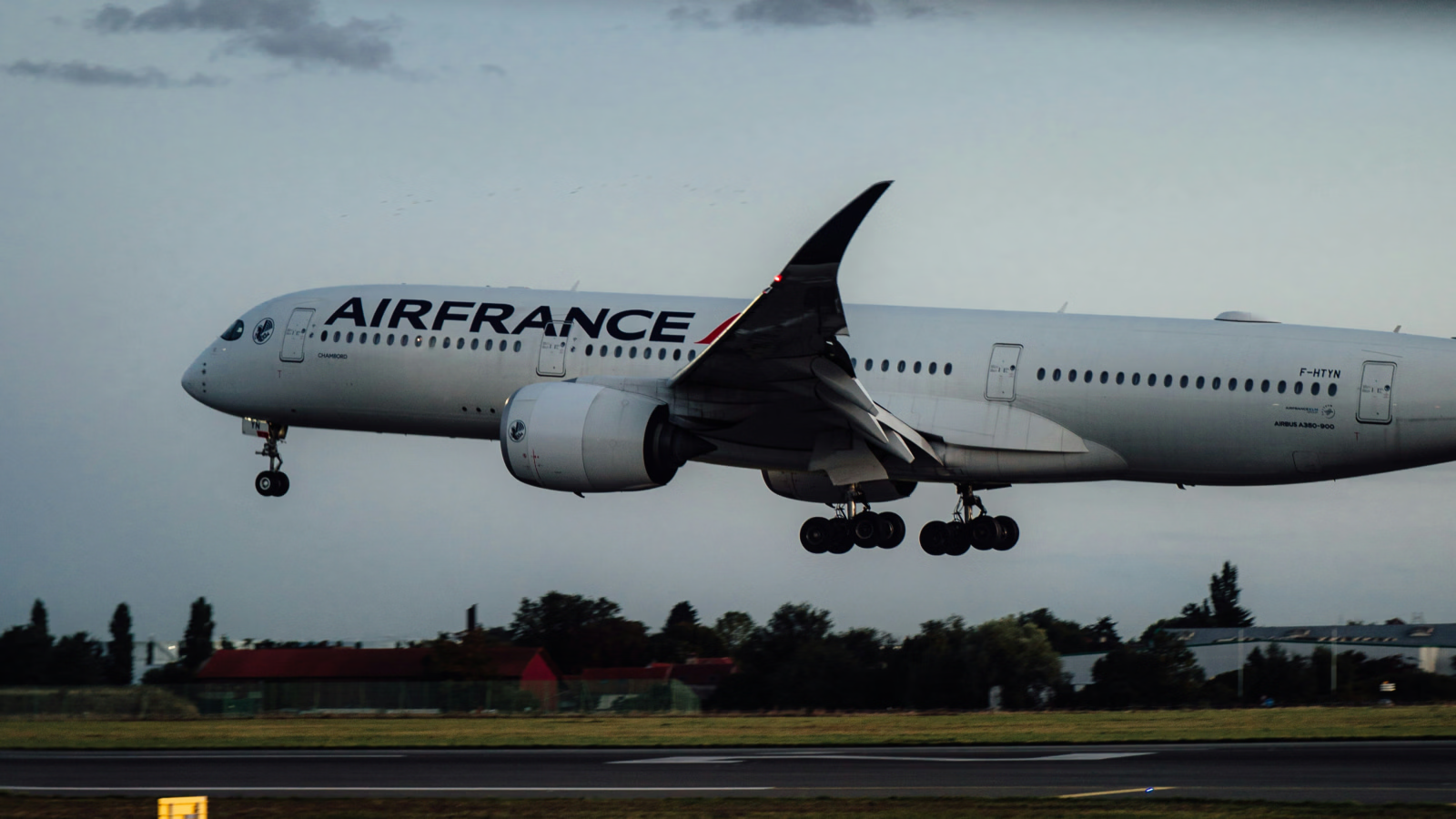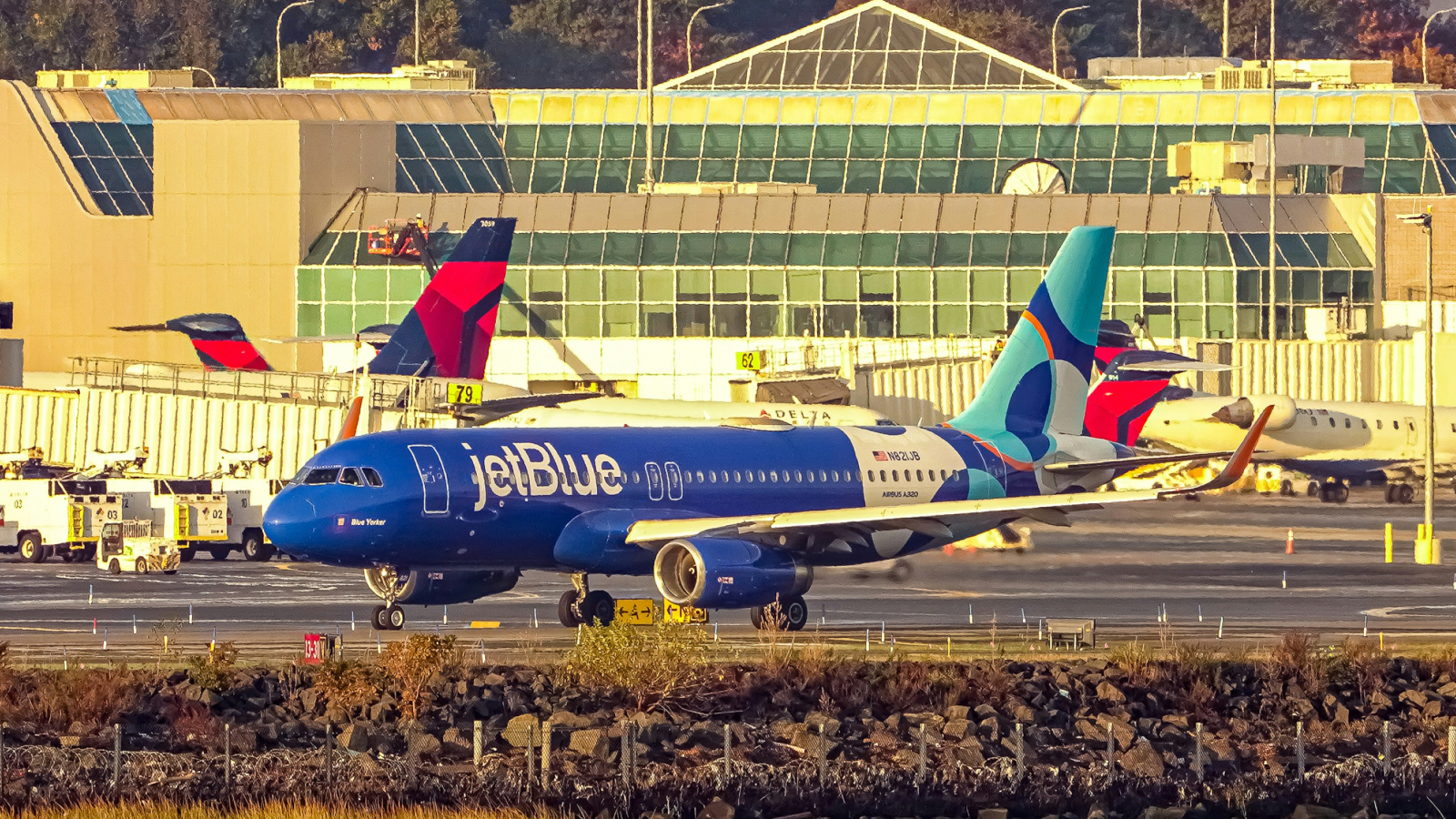
Delta and Uber's earning partnership, which launched in April 2025 and replaced Delta's prior tie-up with Lyft, now sits in a recognizable form heading into mid-2026: SkyMiles members who link their accounts earn between one and three miles per dollar on Uber rides and Uber Eats orders. The structure has held since launch, though Uber's product naming has shifted underneath it, and the math around whether the partnership actually beats using a strong transferable-points credit card has not gotten more favorable. This guide walks through what the partnership pays today, how it stacks with Delta cobrand cards, and the honest comparison against the alternative most readers should actually run.
The headline is straightforward. Link a Delta SkyMiles account inside the Uber app and eligible spend on Uber and Uber Eats starts earning SkyMiles automatically, with no separate redemption step. The earning tiers are layered by Uber product, which is where the program rewards higher-priced rides at higher rates. The catch worth flagging up front: SkyMiles earned through Uber do not count toward Medallion status, per Delta's published earning rules. They are redemption currency only.
What the Partnership Pays Today
As of May 2026, Delta confirms the following tiered earning structure on its SkyMiles-Uber landing page. One SkyMile per dollar on standard Uber rides in the US, Puerto Rico, and US Virgin Islands. One SkyMile per dollar on Uber Eats orders in the same regions. Two SkyMiles per dollar on Uber Premier, the rebranded successor to what Uber previously called Uber Black and Uber Black SUV in most markets. Three SkyMiles per dollar on Uber Reserve, the scheduled-ride product Uber positions for airport runs and prebooked trips.
A few mechanics matter. Account linking is required before any miles post. Link inside the Uber app under Account, Rewards, then Delta SkyMiles, or from a banner Delta shows logged-in SkyMiles members. Miles post within a few days of the trip and appear in the SkyMiles activity feed with an Uber line item. Cancelled rides do not earn. Tips count toward the dollar total on rides. Uber Eats earning is on the merchandise total before fees and tax, per Delta's terms.
The geographic limit is real. Only US, Puerto Rico, and USVI activity earns. Uber rides booked outside those territories, including in Canada and Mexico, do not generate SkyMiles even with linked accounts. For readers who travel internationally and use Uber heavily abroad, that is a meaningful gap.
One more wrinkle worth knowing about: the Uber Premier tier covers Premier and Premier SUV in the markets where Uber has rolled the rebrand out, while a small number of markets still display the older Uber Black naming. Delta's terms treat both labels as the same earning tier for partnership purposes, but the SkyMiles activity line item will use whichever name Uber assigned to that specific trip. Readers comparing receipts to SkyMiles posts should not be alarmed by the inconsistent naming.
Stacking the Partnership With a Delta Cobrand Card
The partnership earns on top of whatever the payment method earns. That is where the strongest case for the Delta-Uber relationship lives, because Delta's American Express cobrand cards already treat ride-share as travel.
The Delta SkyMiles Gold, Platinum, and Reserve American Express cards earn additional SkyMiles on Uber spend through their travel category. The Reserve currently pays the highest cobrand multiplier on direct Delta purchases, while the Platinum and Gold offer their respective multipliers on broader travel that includes ride-share. Stacked with the partnership, the practical result for a Delta Reserve cardholder paying for an Uber Reserve ride is the partnership's three SkyMiles per dollar plus the card's travel-category earn, landing in the range of four to five total SkyMiles per dollar depending on the card. Standard Uber rides on a Delta Gold land closer to three total SkyMiles per dollar after stacking.
That sounds appealing on its own. The honest comparison is what most readers will not see promoted: how that same Uber spend would earn on a strong transferable-points card.
The Honest Math: SkyMiles Versus Transferable Points
This is the part where the partnership stops being a slam dunk. SkyMiles redeem at an average of roughly 1.1 to 1.3 cents per mile across saver and standard award pricing, with the upper range available mostly on premium-cabin redemptions booked far in advance. Independent valuations from points-tracking sites have held that range steady through 2026. For purposes of math, call it 1.2 cents per SkyMile.
Take a $20 standard Uber ride paid on a Delta Gold card. The partnership pays one SkyMile per dollar, so 20 SkyMiles. The Gold's travel category pays its respective travel multiplier on ride-share, adding another 20 to 40 SkyMiles. Round the stack to 50 SkyMiles on the ride. At 1.2 cents per mile, that is roughly 60 cents of redemption value, or a return of about three percent on the ride.
Now run the same ride on a Chase Sapphire Reserve. The card earns three Ultimate Rewards points per dollar on travel, including Uber, for 60 points on a $20 ride. Ultimate Rewards points transfer at one-to-one to partners like Hyatt, where the cents-per-point valuation routinely exceeds 1.8 cents, and to airline partners such as United, Air Canada Aeroplan, and Virgin Atlantic. Even at a conservative 1.5 cents per UR point, 60 points is 90 cents of value, a return of about four-and-a-half percent on the ride.
The Sapphire Reserve also offers monthly DoorDash credits and Lyft multipliers, which are separate utility. The Amex Platinum gives the cardholder a monthly Uber Cash credit of $15, growing to $35 in December, applied automatically to Uber and Uber Eats. None of those credits earn SkyMiles through this partnership, because Uber Cash spend is treated as a credit and does not register dollars billed to the linked SkyMiles account.
The upshot is that for the average SkyMiles member running standard UberX trips, the partnership is a small bonus on top of card earning, not a category-multiplier-changing event. The math gets more interesting only at the higher tiers.
Where the Partnership Actually Wins
Three reader profiles get real value out of this partnership. The first is a Delta loyalist already holding a Delta cobrand card and not chasing a transferable-points strategy. For that reader, every SkyMile earned through Uber pushes the next award redemption closer without changing wallet behavior. The partnership is pure additive yield.
The second is a frequent Uber Reserve user. The three-SkyMiles-per-dollar tier on Reserve is meaningful at higher fares. A $90 airport Reserve trip pays 270 SkyMiles from the partnership alone, plus another two to five SkyMiles per dollar from a Delta cobrand card's travel category. The stack can push past five total SkyMiles per dollar, which at 1.2 cents per mile is a return of roughly six percent, before considering the Reserve's reliability premium for scheduled airport service.
The third is the reader running multiple Uber Premier rides per week, often a business traveler whose employer reimburses ride costs. The two-SkyMile-per-dollar Premier tier compounds quickly when ride volume is high, and reimbursable spend is effectively free earning.
Outside those profiles, the math points elsewhere. A reader taking one or two UberX rides a month, with no Delta cobrand card and no Medallion ambition, will earn maybe 30 to 60 SkyMiles a month from the partnership. That is under a dollar of redemption value. The choice of payment card matters far more.
What the Partnership Does Not Do
The Medallion question comes up often enough to deserve a direct answer. Following Delta's 2023 shift to revenue-based status earning, only Medallion Qualifying Dollars from Delta flight purchases and qualifying spend on Delta cobrand cards count toward elite status thresholds. SkyMiles earned through partner activity, including Uber, do not. A reader chasing Diamond Medallion cannot ride their way there.
The partnership also does not retroactively credit pre-link activity. Uber trips taken before account linking are not eligible. Delta's terms explicitly exclude prior-period spend, and there is no manual credit request path for Uber rides the way there is for some Delta flight mileage requests.
International Uber spend does not earn, as covered above. Uber for Business accounts have separate rules, and some corporate setups disable SkyMiles linking entirely depending on how the employer configures the account.
The Periodic Promo Windows
Delta and Uber have run promotional periods since launch where standard earning tiers double or where new linkers earn a one-time bonus after a qualifying trip. These have shown up roughly twice a year, typically tied to summer travel and the fourth-quarter holiday window. Delta announces them through SkyMiles email newsletters and the Uber app's rewards tab. Medallion members have, in some cases, received advance access to the promo windows by a few days, per past Delta communications.
The promo windows do shift the math. A doubled standard rate of two SkyMiles per dollar on UberX, stacked with a Delta cobrand card's travel category, lands in territory where the partnership is competitive with a Sapphire Reserve return on the same ride. Readers who use Uber heavily should watch SkyMiles emails and consider front-loading larger Reserve trips into known promo windows.
Two of the past promotions are worth flagging as templates for what to expect again. The August 2025 summer travel promo offered double SkyMiles on all Uber Reserve trips for linked accounts, with no cap, running for six weeks. The December 2025 holiday promo paid a one-time 500 SkyMile bonus to members who linked their accounts and completed at least one Uber Eats order of $25 or more, plus an Uber Cash credit applied to the next ride. Both were announced through SkyMiles email roughly two weeks before the start date, and both have appeared in similar form once a year since launch.
How to Link Your Accounts
The process takes under two minutes. Open the Uber app, tap Account in the bottom navigation, then Rewards, then look for the Delta SkyMiles tile under partner programs. Enter the SkyMiles number and the name on the SkyMiles account. The app verifies the link with Delta in real time and confirms. From that point forward, eligible US, Puerto Rico, and USVI activity earns automatically.
Readers who do not see the linking tile should update the Uber app to the latest version. The integration rolled out broadly in mid-2025 and is now standard, but older app versions sometimes miss the partner rewards section.
The link can be unlinked from the same screen. Some readers running multiple SkyMiles accounts within a household will want to confirm which account is linked before a high-fare ride, since only the linked account earns. Uber does not currently support multiple SkyMiles accounts on a single Uber profile.
The Comparison Worth Running
For most readers, the decision is not "should I link the accounts." Linking is free, takes two minutes, and earns something rather than nothing. The decision is which card to use for Uber spend going forward.
A reader holding both a Delta cobrand card and a strong transferable-points card should pay for Uber Reserve and Uber Premier trips with the Delta card to capture the higher partnership tiers stacked against the cobrand multiplier, and pay for standard UberX with the transferable-points card to capture the better redemption-value math. A reader holding only one of the two should run the cents-per-point comparison on their actual redemption pattern: heavy Delta flyers come out ahead with the cobrand stack, while readers who redeem for hotel awards or non-Delta airline flights through transfer partners come out ahead with the alternative.
The partnership is real value layered on top of base ride spend. It is not, on its own, a reason to switch credit card strategies. Treat it as a bonus to capture, not a category multiplier to optimize around.
One last practical note. The Amex Platinum's monthly Uber Cash credit is the most common point of confusion for readers running this comparison. The Uber Cash credit pays for the ride from a balance Uber holds in the rider account. From Delta's perspective, that portion of the trip was not paid by the linked SkyMiles member out of pocket and does not earn miles. If a $30 Uber ride is covered entirely by a $35 Platinum credit, the SkyMiles activity post shows zero miles earned on that ride. Members who care about partnership earning should plan to pay at least partially out of pocket on rides they want to credit, or accept that the Uber Cash credit is doing the value lifting that month and forgo the partnership earning on those specific trips.
Run the comparison against your own usage. Link the accounts either way. Then pick the payment card with the best after-redemption return on the ride mix you actually take.
This article contains affiliate links. If you apply through our links, we may earn a commission at no cost to you, which helps us continue sharing points and miles strategies with the community.
Some of the links in this article are affiliate links. We may receive a small commission at no extra cost to you if you apply through these links. This helps us keep the site running and continue creating free content.