
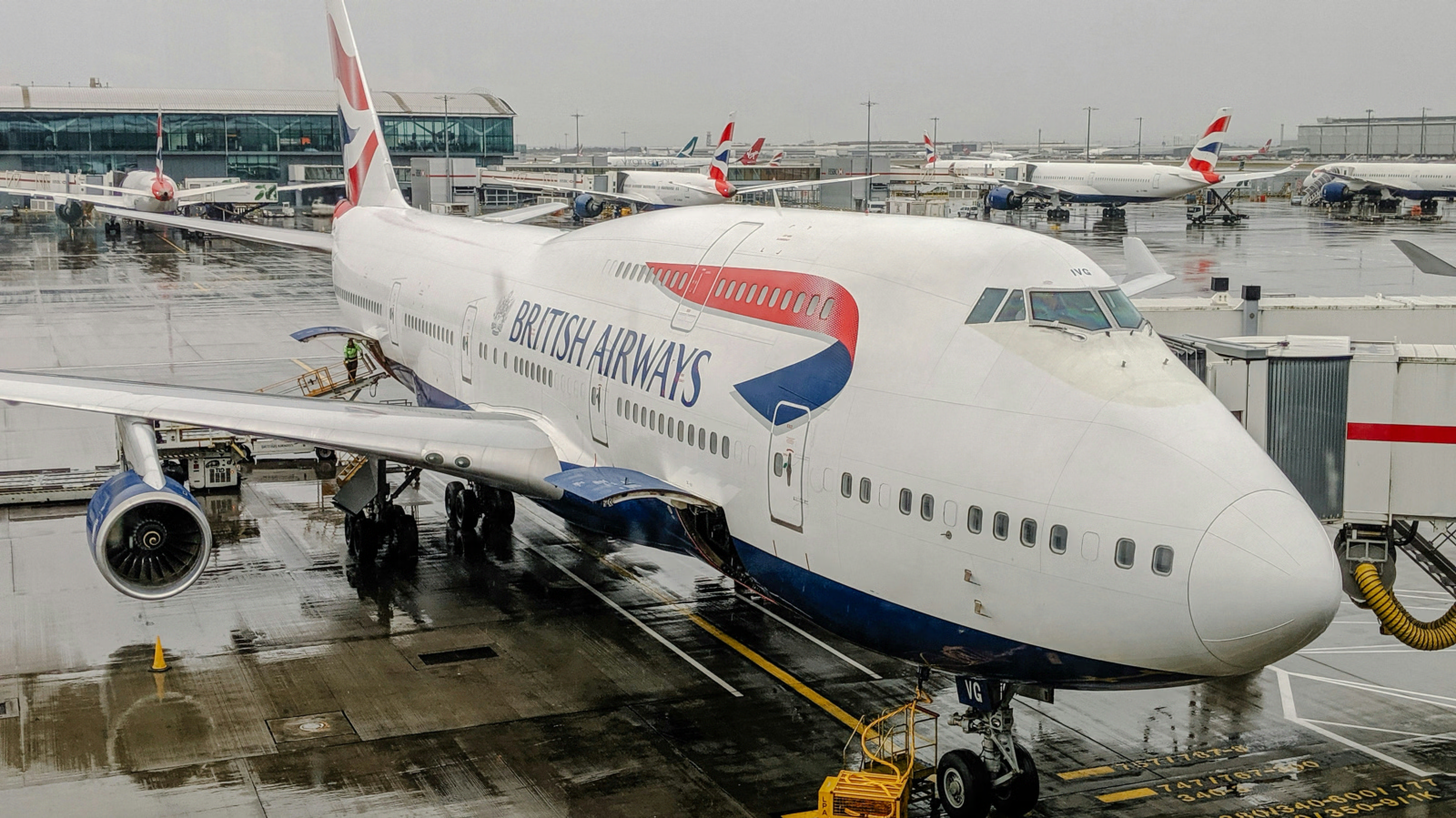
British Airways' first Starlink-equipped aircraft entered commercial service on March 19, 2026, when a Boeing 787-8 registered G-ZBJJ departed Heathrow for Houston, the carrier confirmed in a statement to media. The flight marks the start of a two-year fleetwide rollout that will eventually bring free, no-login Starlink Wi-Fi to all 261 aircraft across BA's Heathrow and Gatwick operations.
The Starlink deal was first announced in November 2025 as part of BA's £7 billion transformation plan, parent company IAG said at the time. The 787-8 fleet is going first because those aircraft have never had Wi-Fi at all, a long-standing gap that put BA behind most of its European and North American peers on transatlantic routes.
What BA Has Confirmed
The airline has been explicit on three points, per its press materials and onboard signage shared by passengers on the first revenue flights.
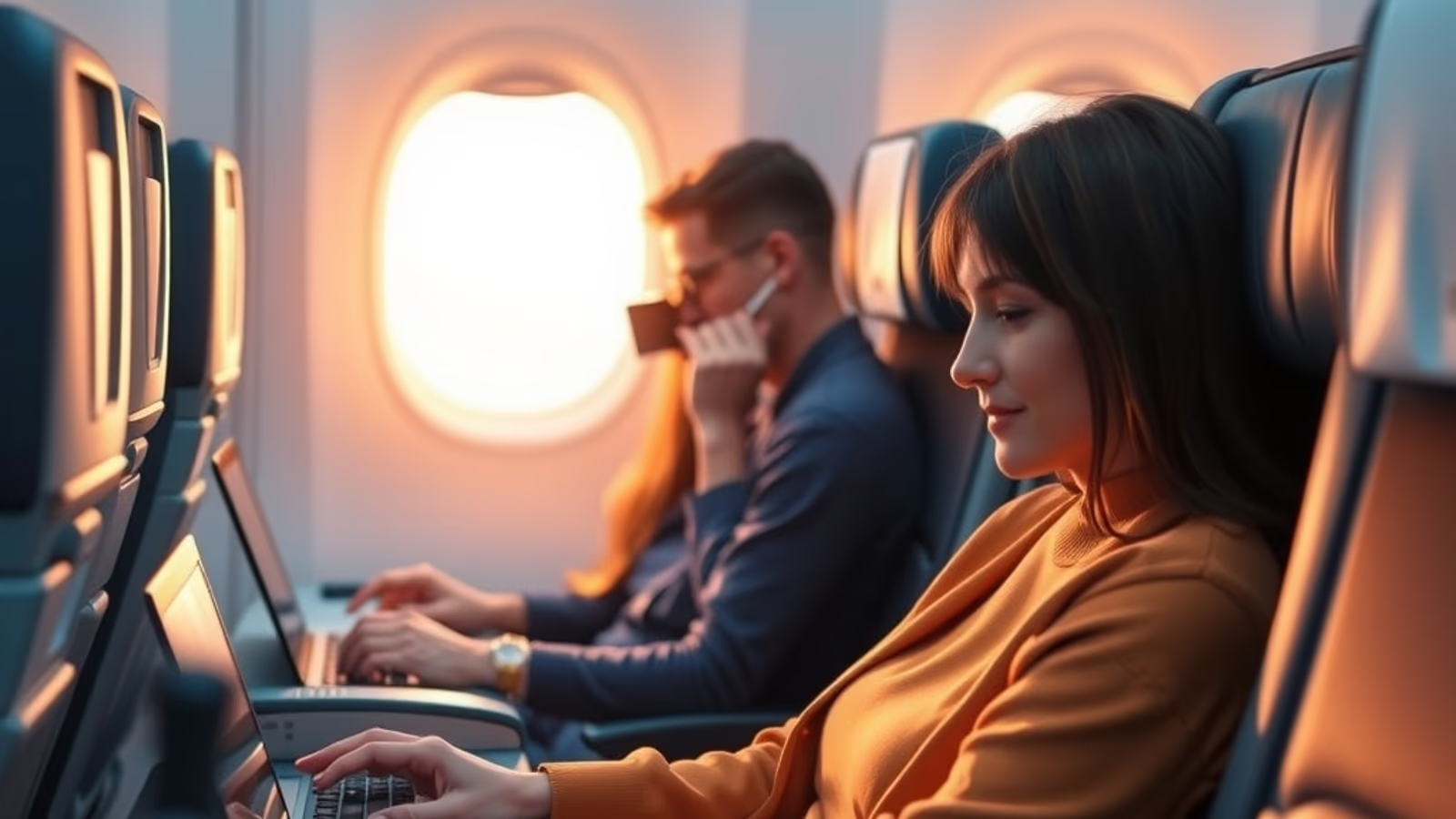
Access is free, in every cabin, with no login required. There is no Executive Club membership gate, no fare-class restriction, and no per-device fee. Connect and go.
Coverage is gate-to-gate. Starlink's low-Earth-orbit constellation means service holds over oceans and polar routes, where the geostationary Ka-band systems used by most legacy fleets degrade. The system supports multiple devices per passenger.
The rollout target is "the next two years" for all 261 aircraft, per BA's own statement to media in March. That timeline is ambitious — most carriers retrofit at a pace of two to three airframes per week once certification is settled, and BA has the engineering base at Heathrow to do the work in-house.
The 787-8 Goes First, Then The Rest
A second 787-8 entered the retrofit shop at Heathrow in late March, according to images shared on FlyerTalk and corroborated by Runway Girl Network. BA has not published a sequencing order beyond the 787-8 cohort, but the logical next group is the 787-9 sub-fleet that also lacks Wi-Fi, followed by the A350 and 777 wide-bodies that have legacy systems due for replacement.
Short-haul A320-family aircraft will come later in the program. BA said in its November announcement that both long-haul and short-haul fleets will receive the upgrade, but did not commit to specific year-one targets for the short-haul rollout.
Routes likely to see Starlink first, based on 787-8 utilization: London Heathrow to Houston, Austin, Calgary, Phoenix, Riyadh, and several seasonal leisure routes. These are the airframes BA is touching first, so these are the routes that benefit first.
Why The No-Login Policy Matters
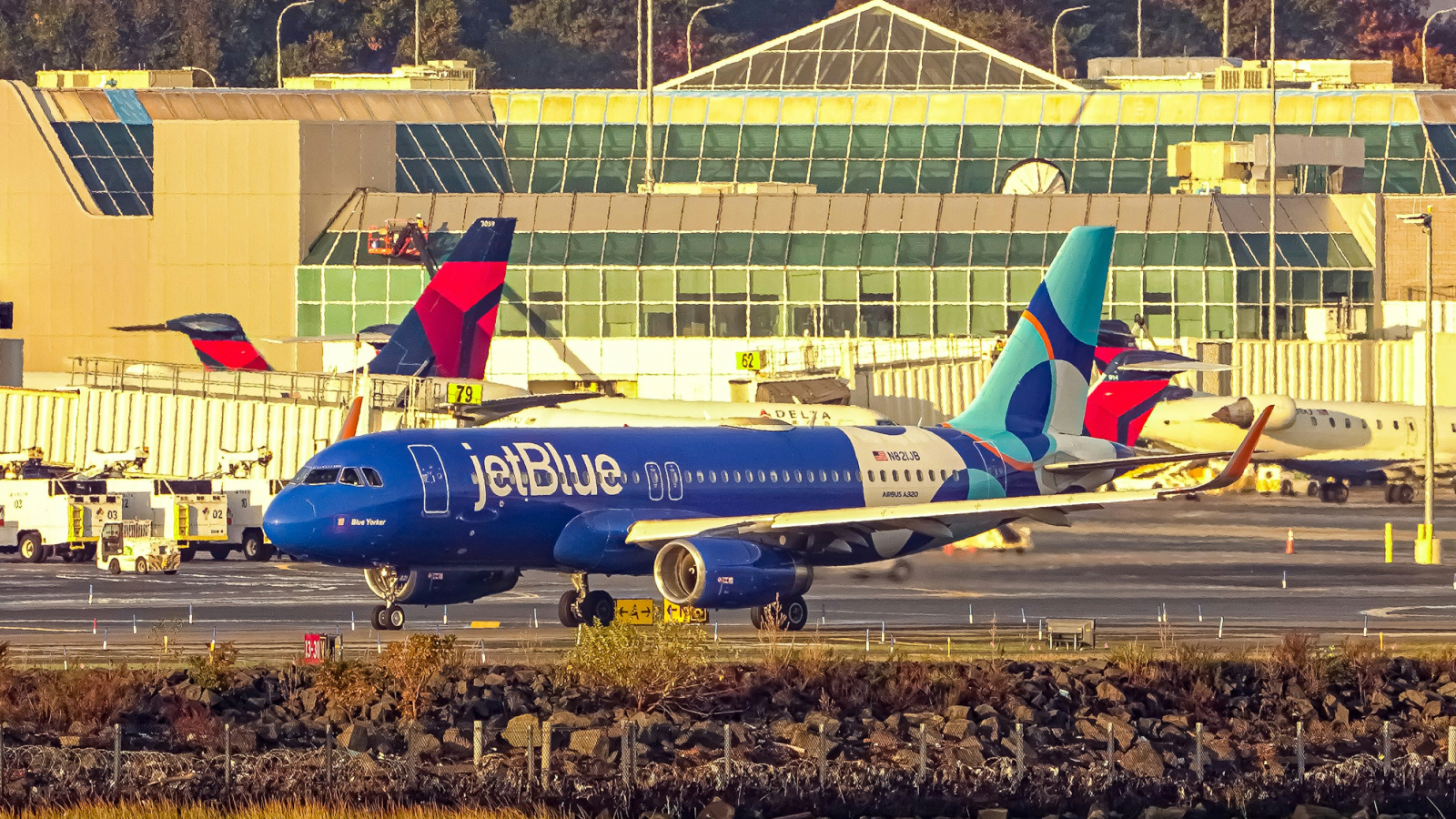
Most carriers offering "free" Wi-Fi gate it behind a loyalty program login. Delta requires SkyMiles. United requires MileagePlus. JetBlue's Fly-Fi is the rare exception in the U.S., and Hawaiian's Starlink rollout is similarly open. BA's no-login approach puts it in that smaller open-access group.
The practical effect: a passenger flying BA on a one-off paid ticket, or on an Avios redemption with a non-elite account, gets the same connectivity as an Executive Club Gold. That's a real differentiator on transatlantic routes where Virgin Atlantic, American, and United all use the Wi-Fi experience as a loyalty hook.
For award travelers, this changes the math on premium-cabin redemptions. A 50,000-Avios off-peak business class one-way from the U.S. East Coast to London now includes ground-quality Wi-Fi, which materially improves the value of the redemption versus a competing American Airlines AAdvantage flight where Wi-Fi is still a paid add-on in most cabins.
The Competitive Picture
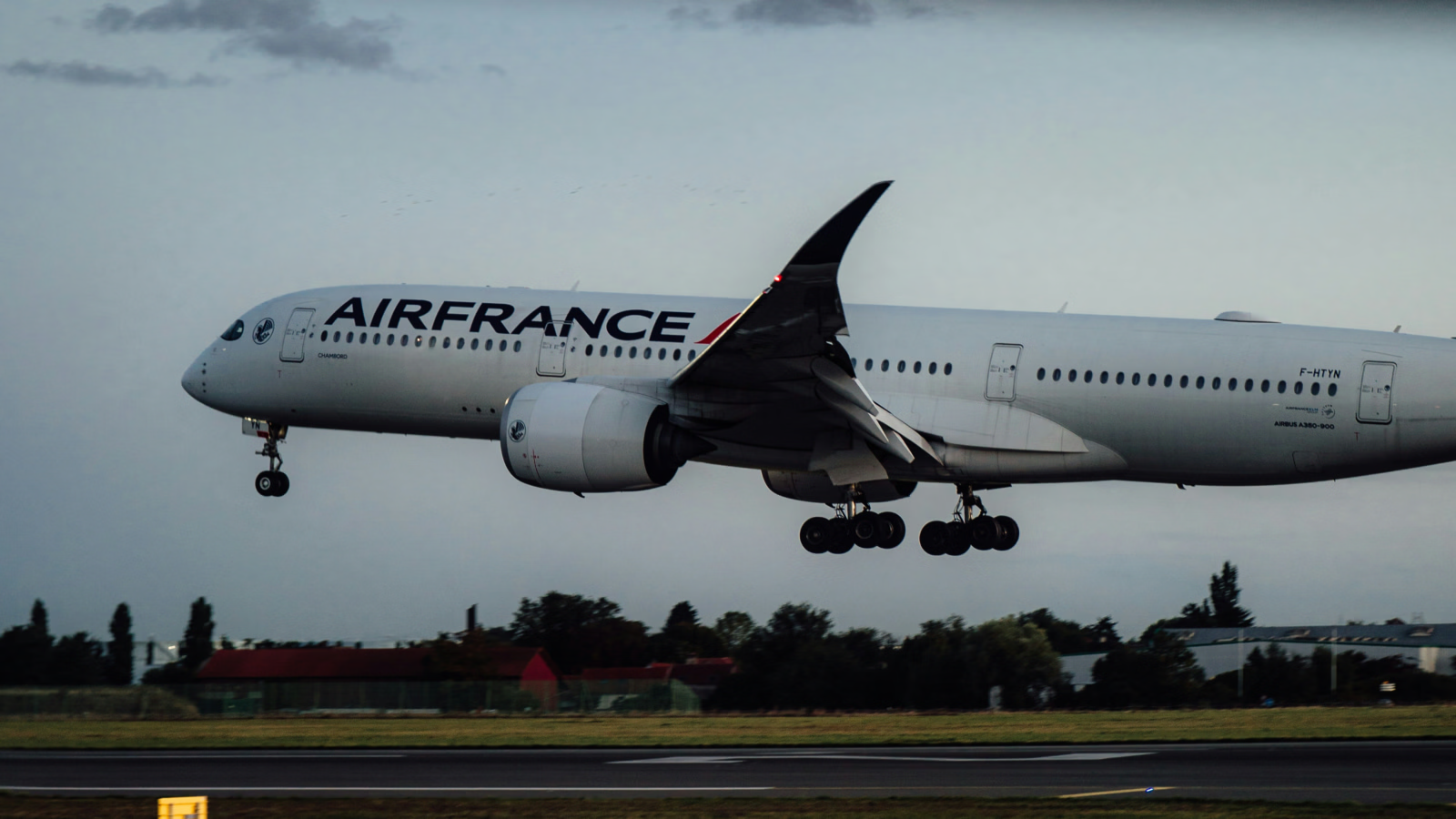
BA is not first to Starlink. Hawaiian Airlines, Qatar Airways, and JSX have completed or are well into their rollouts. United and Air France-KLM are mid-installation. What's notable about BA is the combination of fleet size, hub position at Heathrow, and the no-login policy.
Within the IAG group, Iberia and LEVEL are also part of the Starlink deal announced in November 2025, with Aer Lingus expected to follow on a separate IAG timeline. That means Avios redemptions across the group will increasingly carry the same Wi-Fi benefit, which strengthens the case for parking transferable points in BA Executive Club rather than spreading them across multiple programs.
How To Know If Your Aircraft Has It
BA has not yet added a Starlink indicator to its booking flow or manage-my-booking pages. For now, the cleanest way to check is the aircraft registration: G-ZBJJ is confirmed, and additional 787-8 registrations will be reported on FlyerTalk and Head for Points as they enter service. Watch those forums in the coming weeks.
Once BA adds an amenity flag, which most carriers do within a few months of a major Wi-Fi rollout, it will likely appear alongside the seat-map and meal-service icons on the flight-details page in the BA app.
What To Watch Next
Three things to track over the next six months. First, the pace: BA's two-year target requires roughly two airframes per week, sustained. If the first quarter delivers fewer than 20 retrofitted aircraft, the timeline slips. Second, the policy: airlines occasionally tighten free-Wi-Fi terms after launch, and a loyalty-login requirement could appear if BA's data team pushes for it. Third, the short-haul sequencing: A320-family rollout will dictate whether the European intra-EU network gets Starlink before 2027 or after.
For now, the headline is clean. BA has gone from one of the worst Wi-Fi experiences in the IAG group to one of the most open in the industry, and the rollout has started for real.
This article contains affiliate links. If you apply through our links, we may earn a commission at no cost to you, which helps us continue sharing points and miles strategies with the community.
Some of the links in this article are affiliate links. We may receive a small commission at no extra cost to you if you apply through these links. This helps us keep the site running and continue creating free content.