Breeze Airways' $49 March 2026 Flash Sale: What It Tells Us About the Carrier's Pricing Playbook
Key Points
- Breeze Airways ran a network-wide flash sale in late February 2026 with one-way fares from $49, ending February 28 for travel through March 11.
- The sale targeted Breeze's signature point-to-point routes between underserved Northeast and Southeast cities, where the carrier faces little direct competition.
- Breeze typically runs similar sales two to four times per year; the next round is most likely tied to shoulder-season demand in late spring or early fall.
TL;DR
Breeze Airways' February 2026 flash sale priced one-ways from $49 across its point-to-point network. The sale is over, but the pricing pattern points to how Breeze competes with Spirit and Frontier on routes the legacy carriers ignore.
Introduction
Breeze Airways closed out a network-wide flash sale on February 28, 2026, with one-way fares starting at $49 for travel through March 11. By the deadline, the cheapest seats on the most popular Northeast-to-Southeast pairings had cleared, and Breeze's published fares had returned to their usual $89 to $149 range.
The sale itself is now in the rearview, but the pricing pattern is worth a look. Breeze runs these promotions on a fairly predictable cadence, and the routes it discounts most aggressively reveal how the carrier competes against Spirit, Frontier, and the legacy airlines on point-to-point flying.
What the Sale Covered
The February 2026 promotion applied to Breeze's "Nice" and "Nicer" fare classes on travel between the booking window and March 11. Blackout dates ran March 6 through 9 to avoid the spring break surge.
Pricing varied by stage length. The headline $49 fares appeared on short-haul Northeast-to-Southeast pairings such as Hartford to Charleston, Providence to Jacksonville, Norfolk to Tampa, and Akron-Canton to Myrtle Beach. Medium-haul flights from the Midwest to the West Coast (Columbus to Las Vegas, Pittsburgh to Los Angeles, Louisville to San Francisco) sat in the $79 to $99 band. Transcontinental flights from Northeast cities to the West Coast topped the sale at $109 to $129.
The discount worked out to roughly 40 to 60 percent off Breeze's normal published fares on the most popular routes. The Hartford-to-Charleston pairing, which usually runs $99 to $129 one-way, dropped to $49.
How the Route Map Tells the Story
Breeze's route network is the key to understanding the sale. The carrier, founded by JetBlue and Azul founder David Neeleman and launched commercially in May 2021, was built around point-to-point flying between secondary cities that the legacy network carriers either skip entirely or serve only via a connection.
A traveler from Hartford to Charleston who books on a legacy carrier is almost always routed through Charlotte, Atlanta, or Philadelphia. Breeze's pitch is a nonstop on a route the majors won't fly direct. Breeze isn't underpricing American on a hub-to-hub route; it's pricing low on routes where the alternative is a connection or a longer drive to a major airport.
How Breeze Stacks Up Against Spirit and Frontier
Spirit and Frontier are the obvious comparison. All three are ultra-low-cost carriers with bare-bones base fares and unbundled fees. The difference is the route map and the aircraft.
Spirit and Frontier concentrate on leisure markets served from major airports such as Las Vegas, Orlando, and Cancun. They overlap heavily with the legacy carriers and price aggressively to fill seats on routes the majors also serve. Breeze flies the underserved secondary-city pairings that don't appear on Spirit or Frontier's network maps at all.
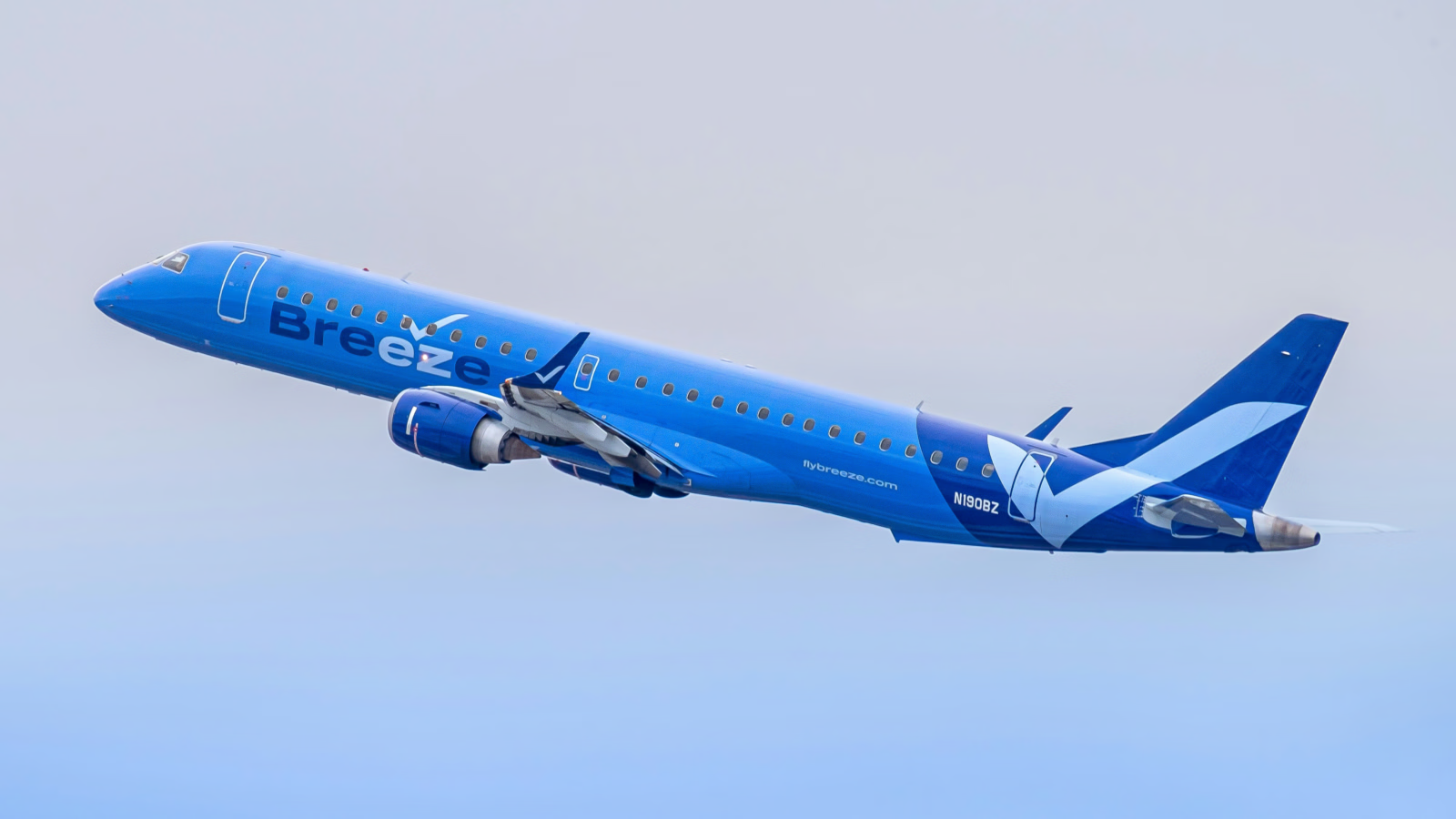
Breeze operates Airbus A220-300s and Embraer E-Jets, both newer single-aisle types with quieter cabins and more generous seat pitch than the A320 and A321ceo workhorses that make up most of Spirit's and Frontier's fleets. On head-to-head pricing where routes do overlap (Pittsburgh to Las Vegas, for instance), Breeze's sale fares ran $20 to $40 below Spirit's and Frontier's typical promotional pricing, and Breeze includes a personal item without an upcharge. Spirit and Frontier "Bare Fare" surcharges can add $30 to $50 each way once seats and bags are factored in.
When Breeze Typically Runs These Sales
Breeze has settled into a rough cadence of two to four network-wide sales per year, usually clustered around shoulder-season demand or new-route launches. Past sales have hit in late January, late February, late August, and the first week of November. The carrier also runs targeted route-specific promotions when it adds a new city or restores a seasonal route.
The February 2026 timing fit the pattern. Late February is a soft demand window for leisure travel, past Presidents' Day and ahead of spring break, and discounting fills seats during a stretch the carrier would otherwise fly half-empty. Industry coverage from The Points Guy and View From The Wing has noted that Breeze's promotional pricing surfaces in carrier emails and the Breeze app first, and on aggregator sites only after the cheapest inventory is mostly gone.
What to Expect for the Next Round
The most likely window for Breeze's next flash sale is late April through mid-May, covering the soft demand pocket between spring break and Memorial Day. A second window typically opens in late August into early September, after summer peaks and before Thanksgiving bookings ramp up.
What to watch for: similar $49 to $79 starting fares on the Northeast-to-Southeast routes, $79 to $99 on Midwest-to-West-Coast pairings, and a booking window of seven to ten days for travel within the next four to six weeks. Blackout dates around peak holidays are standard.
For travelers who live near a Breeze city and use these sales for weekend or short-haul leisure, the playbook is straightforward: keep the carrier's email alerts on, book early in the sale window before the cheapest inventory clears, and factor the $35 to $65 carry-on fee into the comparison against Spirit, Frontier, or the legacy carriers. On the routes where Breeze actually flies, the carrier's sale fares are usually the lowest published price in the market.
This article contains affiliate links. If you apply through our links, we may earn a commission at no cost to you, which helps us continue sharing points and miles strategies with the community.
Some of the links in this article are affiliate links. We may receive a small commission at no extra cost to you if you apply through these links. This helps us keep the site running and continue creating free content.