Airline loyalty programs are not interchangeable. The same number of miles in two different programs can be worth wildly different things, and the gap is wider than most readers think when they start. A 70,000-mile redemption that buys a one-way business class seat to Asia in one program might buy a coach seat with $400 in fuel surcharges in another. The programs are not equally good. They are not even close.
This guide ranks the airline programs that matter for U.S.-based readers in 2026, splits them into tiers based on how their points actually convert into trips, and tells you which credit cards and transfer partners feed each one. The goal is to help you decide which one or two programs deserve your earning effort, not pretend every program is equally useful. Some are excellent. Some are convenient but mediocre on value.
How to Read an Airline Program
Five things determine whether an airline program is worth concentrating points in. Get these right and the rankings stop feeling arbitrary.
Earning rate from credit card spending. For most U.S. readers, more miles come from credit card spending than from flying. The question is not what the airline pays per dollar flown but what credit cards earn this currency and at what multipliers.
Sweet-spot redemptions. The published award price for the routes you actually want to fly. Programs that publish award charts are easier to plan around than programs that price awards dynamically. A few programs still have award charts. Most don't.
Transfer-partner status. Whether Chase, Amex, Citi, or Capital One transfers points into the program. This is the single biggest multiplier, because it lets you earn miles in the program without ever flying it. A program with no transferable-points partner is functionally invisible to most readers.
Elite tier mechanics. What it takes to hit status, what status gets you, and whether the program rewards revenue or distance. Most U.S. programs have shifted to revenue-based qualification.
Fuel surcharges and award fees. Some programs add hundreds of dollars in cash surcharges to "free" award tickets. The headline mile cost is misleading if the cash co-pay is $800.
Tier 1: The Programs Worth Concentrating Points In
These two are the highest-value airline programs accessible from U.S. credit card spending. If you only build one or two airline balances, build these.
Alaska Mileage Plan
Alaska is the value champion of U.S. airline programs and has been for a decade. The reason is the partner award chart: Alaska charges some of the lowest published rates in the world for premium cabin redemptions on partner airlines, and the partners include American, Cathay Pacific, Japan Airlines, Qatar, Finnair, British Airways, and a long tail of smaller carriers.
The headline sweet spots:
- 70,000 miles for one-way business class to Asia on Japan Airlines or Cathay Pacific
- 85,000 miles for Qatar Qsuite (consistently rated the world's best business class) one-way to the Middle East or Asia
- 40,000 miles for one-way coach to Europe, with no fuel surcharges on the right partners
- 5,000-12,500 miles for short-haul West Coast flights on Alaska itself
Alaska also still allows stopovers on one-way award tickets, which is functionally extinct elsewhere and lets you build a multi-city trip for the price of a single redemption. Joining Oneworld expanded the partner list without breaking the program's value.
The catch: Alaska is a transfer partner of Bilt and (slowly, inconsistently) Marriott, but it is not a transfer partner of Chase, Amex, Citi, or Capital One. Earning Alaska miles primarily means flying Alaska or holding the Alaska Airlines Visa Signature card. That is the program's only real weakness, and it's meaningful. If you don't live near a Bilt-eligible apartment or fly Alaska routes, the earning ceiling is real.
United MileagePlus
United is the workhorse program for Chase Ultimate Rewards holders. Chase transfers to United at 1:1 instantly, which means any reader building a Chase balance has a strong United position by default. United runs dynamic award pricing now, but the partner award rates on Star Alliance carriers (Lufthansa, Swiss, ANA, Singapore, Turkish, Air Canada) are still reasonable, and United charges zero fuel surcharges on any partner award.
The headline sweet spots:
- 60,000-80,000 miles for one-way business class to Europe on partner airlines
- 88,000 miles for one-way business class to Asia on ANA or Singapore
- 5,000-12,500 miles for short-haul domestic awards
- Excellent saver-level award availability across the Star Alliance network
United's real edge is operational. The award search on united.com shows Star Alliance partner space cleanly, the customer service line can ticket complex partner itineraries without drama, and the lack of fuel surcharges means the cash co-pay on a long-haul award is usually under $100. That reliability is undervalued in this hobby. Programs that charge less but require six phone calls to book are not actually cheaper.
The earning side is strong: Chase Sapphire Preferred, Sapphire Reserve, and Ink cards all transfer to United, the United co-branded cards (Explorer, Quest, Club) have solid welcome bonuses, and Chase runs occasional transfer bonuses to United.
Tier 2: Strong Programs With a Specific Use Case
These programs are excellent for specific situations and weaker for general-purpose redemptions. Worth building a balance in if your travel patterns match.
American AAdvantage
American has the best premium-cabin award redemption in commercial aviation: 70,000-80,000 miles for one-way Qatar Qsuite to the Middle East. That single redemption is the reason to build an AAdvantage balance. American is also the only major U.S. program with no fuel surcharges on any partner award.
The catch: American's transferable-points position is weak. Bilt transfers to AAdvantage 1:1, and Marriott transfers at 3:1 with a 5,000-mile bonus per 60,000 transferred. Chase, Amex, Citi, and Capital One do not transfer to AAdvantage directly. Without a Bilt rent payment or heavy Marriott balance, earning AAdvantage miles means flying American or holding a Citi or Barclays AAdvantage co-branded card. Those cards are decent but not the strongest welcome bonus options on the market. The earning friction is why AAdvantage sits in tier 2 and not tier 1.
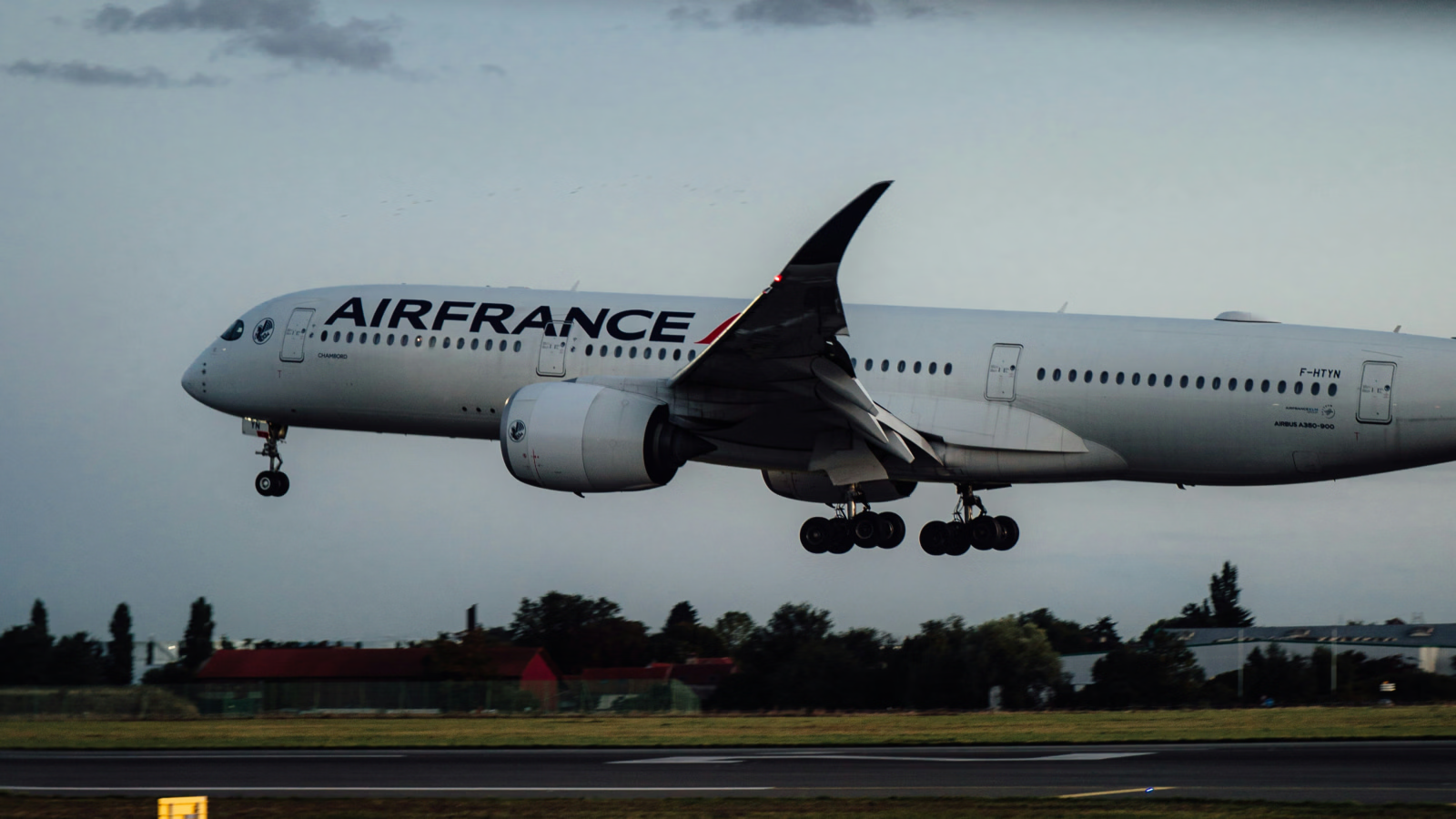
Air France-KLM Flying Blue
Flying Blue is the best program for one specific thing: monthly Promo Rewards that knock 25-50% off published award rates on rotating routes. The Promo Awards page refreshes the first business day of each month with discounted redemptions to and from Europe, and the discounts are substantial enough that they're often the cheapest way to get to Europe in business class for the month.
Flying Blue transfers from all four major credit card currencies (Chase, Amex, Citi, Capital One) at 1:1, which means any reader can build a Flying Blue balance from any base. The catch is dynamic pricing on non-promo redemptions, which can make off-cycle bookings expensive. Flying Blue is best as an opportunistic balance: keep a small starting position, watch the monthly promos, transfer in only when the promo lines up with a trip you want to take.
Virgin Atlantic Flying Club
Virgin Atlantic's own flights are not the point. The point is one partner redemption: 90,000-95,000 round-trip points for ANA business class between the U.S. and Tokyo. This is the redemption that converts skeptics into believers, because the cash equivalent runs $6,000-9,000 and the seat is the actual ANA "throne" suite, not a second-tier partner cabin. Virgin Atlantic is a transfer partner of all four major credit card currencies, so accessibility is excellent.
Other redemptions worth knowing: Delta One business class to Europe at lower rates than Delta charges, and Air France business class for 50,000 round-trip points during occasional sales. Beyond those, the program is a single-purpose tool. Build the balance for the ANA redemption; everything else is bonus.
Tier 3: Convenient But Low Value
These are the programs most U.S. travelers default to because the airlines are big and familiar. They're fine. They are not where smart points readers concentrate effort.
Delta SkyMiles
Delta's program is the textbook example of revenue-based dynamic pricing taken to its conclusion. Award prices fluctuate constantly with demand, the program publishes no award chart, and redemption rates skew low (typically around 1.0-1.4 cents per point), which is below the floor for most premium-cabin redemptions in the better programs. The convenience is real: Delta runs the most reliable U.S. domestic operation, blackout dates are functionally non-existent, and the SkyMiles app is good. The redemption value is consistently mediocre.
Delta is an Amex transfer partner, but transferring Amex points to Delta at 1:1 is almost always a value loss compared to transferring those same Amex points to Air Canada Aeroplan or Virgin Atlantic and booking the same Delta-operated flight through a partner program. The partner programs charge fewer miles for the same seat. Even when you want to fly Delta, the points math usually favors a different program's miles.
If you fly Delta primarily, Delta status has real day-of-travel benefits and the co-branded Amex Delta cards are useful for that reason. But concentrating transferable points into SkyMiles is rarely the right call.
Southwest Rapid Rewards
Southwest is the inverse of Delta in one important way. The redemption rates are mediocre (Southwest prices awards as a fixed cents-per-point ratio against the cash fare, which means you're just getting a discount on the published price, not a sweet spot), but the convenience is excellent. Free checked bags on every fare, no change fees, no blackout dates, no fuel surcharges, and the Companion Pass lets one designated companion fly with you for the cost of taxes only on every Southwest flight for up to two calendar years.
The Companion Pass is the reason to engage with Rapid Rewards. Earning it requires 135,000 qualifying points or 100 qualifying flights in a calendar year, and the welcome bonuses on Chase Southwest cards can get you most of the way there. For a couple or family that flies Southwest routes regularly, the Companion Pass is one of the highest-value benefits in the points world. For everyone else, Rapid Rewards is a convenience program. Earn what you fly, redeem opportunistically, don't transfer flexible currency in.
JetBlue TrueBlue
TrueBlue follows the same fixed cents-per-point model as Southwest. Redemption rates are roughly 1.3 cents per point, blackout dates are minimal, and the Mosaic status tier rewards consistent JetBlue flyers with same-day changes and free first-bag check. TrueBlue is an Amex and Chase transfer partner, but the 1:0.8 transfer ratios make the math poor. Fly JetBlue, earn TrueBlue, redeem when convenient. Don't build a balance from outside.
Hawaiian HawaiianMiles
Hawaiian is in the process of merging with Alaska, and the medium-term direction of HawaiianMiles is unclear. As of early 2026 the program is still independent, the transfer partners (Amex, Bilt) still work, and standalone redemption rates are reasonable for Hawaii-bound travel from the West Coast. The reason to engage right now is the merger: existing Hawaiian elite status is being matched into Alaska's Mileage Plan, which is an opportunity for Hawaii-frequent travelers to claim Alaska status without earning it the hard way.
The International Programs Worth Knowing
These are not U.S.-based, but transferable credit card points reach them and the redemption value can be exceptional.
ANA Mileage Club
ANA's own program prices a round-trip business class ticket between the U.S. and Tokyo at 75,000-90,000 miles, roughly half what most other programs charge for the same seat. ANA also publishes a round-the-world business class chart at 125,000-145,000 miles, well below Star Alliance equivalents. The catch: ANA only transfers from American Express Membership Rewards, booking is by phone, and award tickets must be round-trip. Worth the friction for the right trip.
Air Canada Aeroplan
Aeroplan is the underrated workhorse of the Star Alliance world. The award chart is published, partner award rates are competitive, and the stopover policy lets you add a stopover of more than 24 hours for a flat $100 USD. That single feature turns a one-way trip into a two-destination trip for trivial extra cost. Aeroplan is a Chase, Amex, and Capital One transfer partner. Use Aeroplan for Star Alliance flights when United's mile cost is higher than Aeroplan's, which happens often.
Singapore KrisFlyer
KrisFlyer is the program for Singapore Airlines' premium products. Singapore Suites, the carrier's first-class cabin, is bookable only with KrisFlyer miles or Singapore Airlines partner miles, with published rates starting around 110,000 miles for U.S. to Asia. The program transfers from Chase, Amex, Citi, and Capital One. Narrow use case but specific: book Singapore's premium cabins from your transferable balance.
Elite Tier Mechanics: What Actually Matters
Status programs have shifted heavily to revenue-based qualification. The old "fly enough miles, get status" model is mostly gone at U.S. carriers. United, American, and Delta now require dollars spent on the airline (or, via co-branded credit card spending, on the card) to qualify for top tiers. For most readers, status comes from spending, not flying.
The day-of-travel benefits that matter at any meaningful status tier are the same across programs: free first checked bag, priority boarding, complimentary upgrades on domestic flights when available, and access to economy plus or premium economy seating. Lounge access usually requires top-tier status or a co-branded credit card. The lounge benefit on the United Club Infinite Card or the Citi AAdvantage Executive Card is often easier to acquire than the equivalent status tier.
The exception to the revenue-based shift is Alaska Mileage Plan, which still rewards distance flown. For readers who fly long-haul on Alaska or its partners, Alaska status remains achievable through actual flying in a way that United Premier or Delta Medallion no longer is.
What I'd Actually Do
If you're building a points strategy from scratch and want airline coverage without overcomplicating things, the framework is straightforward.
Concentrate your transferable points in Chase Ultimate Rewards first. The Hyatt partnership is the single best hotel transfer partner in the world, and the United partnership is the best general-purpose airline position from a flexible currency. A Chase Sapphire Preferred or Capital One Venture X covers most of what you need on the airline side.
Add American Express Membership Rewards as the second base for the broader airline list (ANA, Singapore, Aeroplan from a different angle, Virgin Atlantic for the ANA business class redemption). The two-currency setup covers roughly 90% of the high-value airline redemptions available to U.S. readers.
If you fly Alaska routes regularly or live near a Bilt-eligible apartment, add an Alaska balance through the co-branded card or Bilt rent payments. The partner award chart is worth the effort. If your travel includes Southwest routes for two or more people, work toward the Companion Pass: it's the highest-leverage status benefit in the U.S. domestic market. Everything else (Delta, JetBlue, Hawaiian, the international programs beyond Aeroplan) is opportunistic.
The pattern that breaks readers is trying to maintain balances in seven different programs because the airline industry has seven big airlines. You don't need that. You need balances in the two flexible currencies that reach the highest-value partners, plus a co-branded card or two for the airlines you fly enough to justify it. The rest is noise.
This article contains affiliate links. If you apply through our links, we may earn a commission at no cost to you, which helps us continue sharing points and miles strategies with the community.
Some of the links in this article are affiliate links. We may receive a small commission at no extra cost to you if you apply through these links. This helps us keep the site running and continue creating free content.