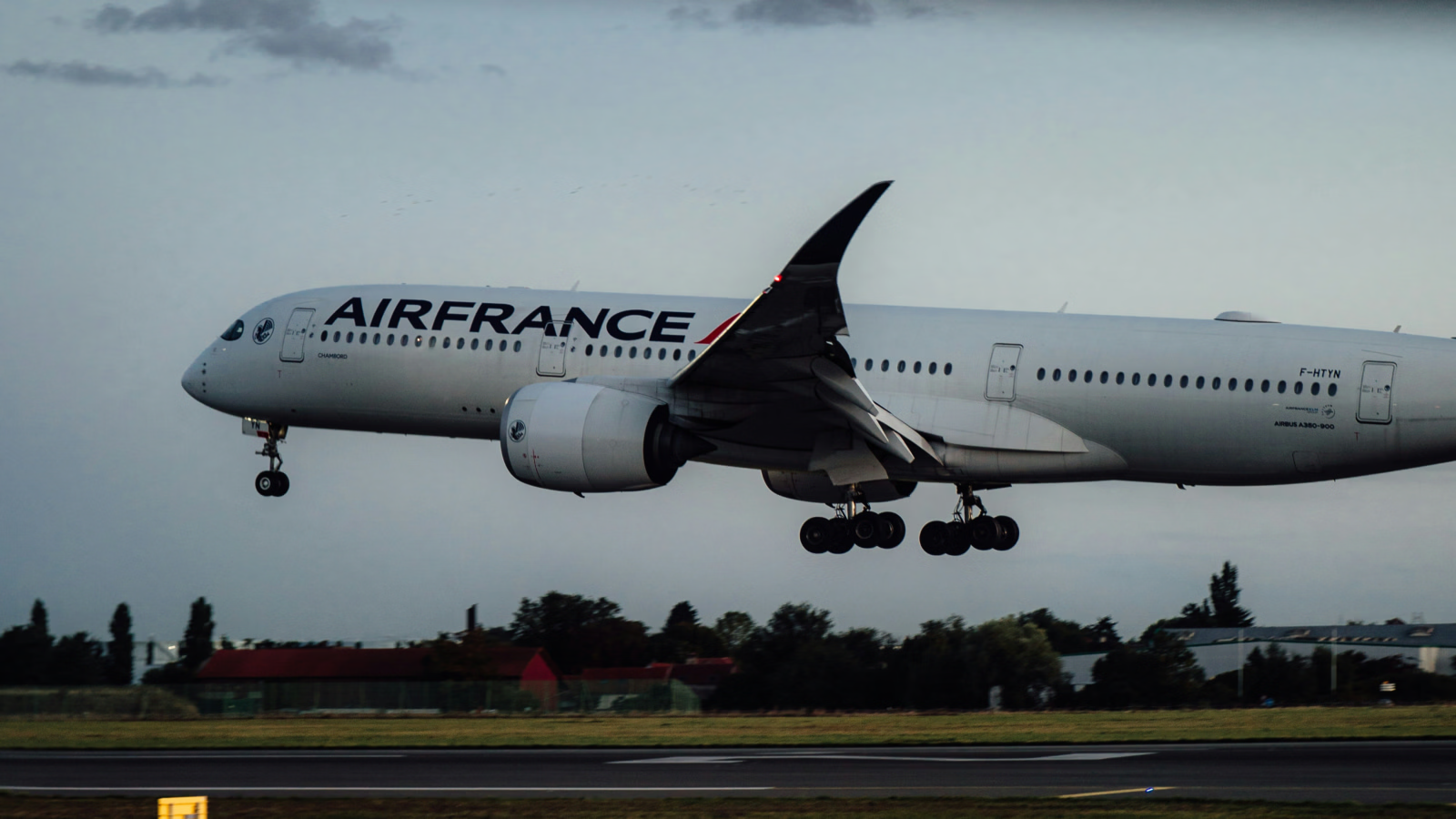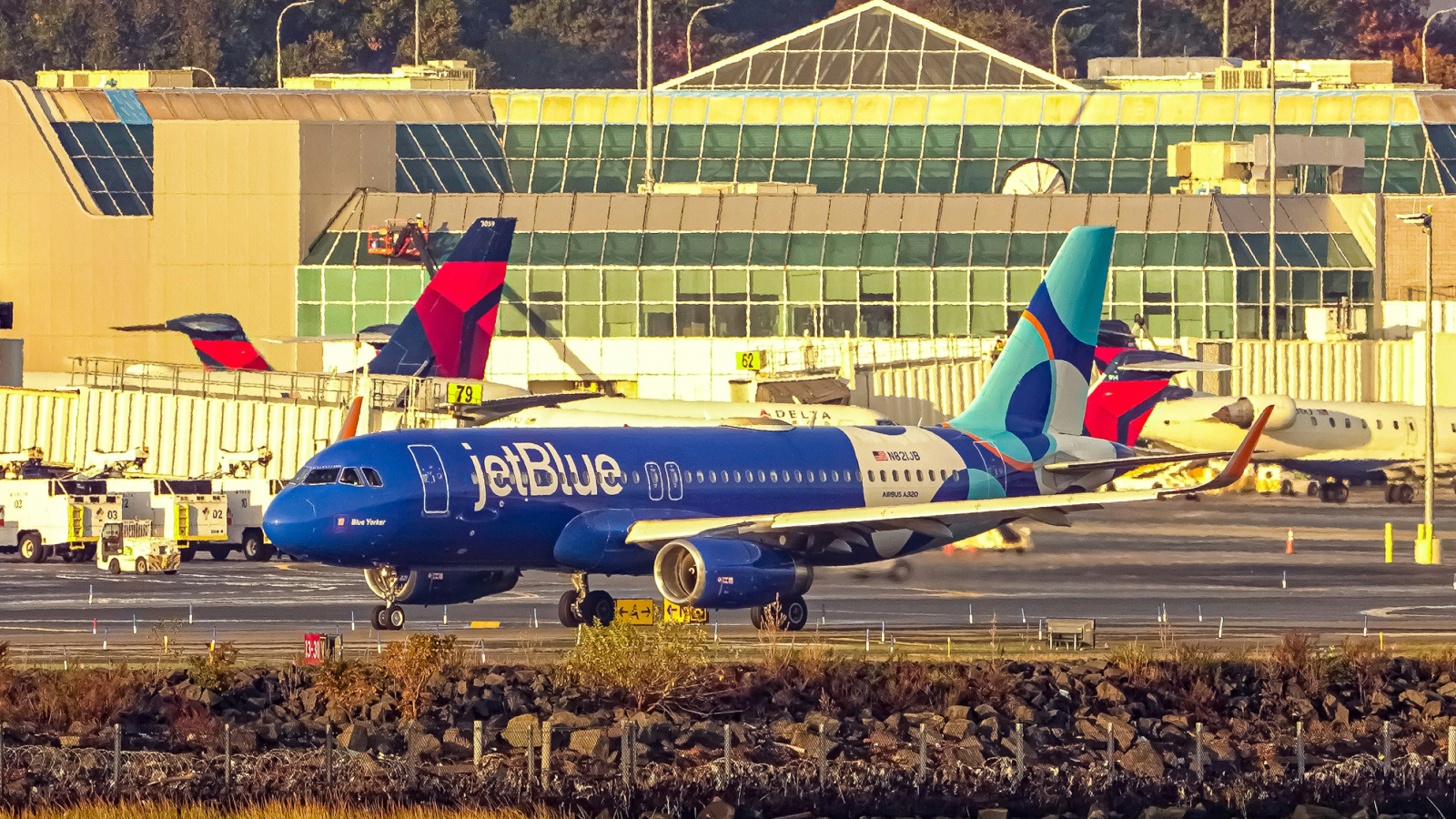
Ten months after Alaska Airlines announced a seven-route West Coast buildout, every flight on the list is in the air. The first three launched October 26, 2025 from Hollywood Burbank, the San Diego ski route followed December 18, and the final two California connections came online January 7, 2026. With a full winter season now in the books, here is how the new map has actually performed for Mileage Plan members, and where the redemption math still works.
The Seven Routes, at a Glance
All seven are Horizon Air operations on the Embraer 175, a 76-seat regional jet configured with no middle seats. Cabin layout: 12 First, 16 Premium Class, 48 Main. Frequency and seasonality matter more than the launch dates now that all routes are flying.
Launched October 26, 2025
- Burbank (BUR) to Eugene, OR (EUG): daily, year-round
- Burbank (BUR) to Tri-Cities, WA (PSC): daily, year-round
- Burbank (BUR) to Redmond, OR (RDM): daily, year-round
- Palm Springs (PSP) to Santa Rosa, CA (STS): 5x weekly, winter seasonal
Launched December 18, 2025
- San Diego (SAN) to Sun Valley, ID (SUN): 3x weekly, winter seasonal
Launched January 7, 2026
- Boise (BOI) to Ontario, CA (ONT): daily, year-round
- Spokane (GEG) to Orange County, CA (SNA): daily, year-round
The Mile-Cost Math
Alaska's domestic award chart has not been blown up; standard saver economy on these routes opens at 7,500 Mileage Plan miles one-way plus minimal taxes, and that price has been visible on most Burbank departures sampled at 2 to 6 weeks out. First class saver typically opens at 15,000 miles when it appears, though it appears less often than economy.
Two caveats are worth pricing in. First, Alaska is on a dynamic award system, so peak-date pricing on the seasonal routes (Palm Springs to Santa Rosa, San Diego to Sun Valley) has run 12,500 to 20,000 miles one-way through ski weekends and holiday windows. Second, Premium Class upgrades for cash are pricing at $29 to $79 each way on these short hops, which is often a better use of cash than miles if a saver upgrade window does not appear.
Compared with the cash floor, the redemption value is reasonable rather than spectacular. Burbank to Eugene and Burbank to Redmond have settled into a $79 to $149 one-way cash band on advance-purchase fares, putting the 7,500-mile economy redemption at roughly 1.0 to 2.0 cents per mile. That is in line with Alaska's normal domestic value range, which is the point: Mileage Plan members got seven more places to spend miles at the program's usual cents-per-mile floor, not a sweet spot.
Where the Routes Have Worked Best
Burbank (BUR) trio. The three year-round Burbank routes have been the clearest win. Burbank is faster to clear than LAX, the BUR to EUG and BUR to RDM flights have shown solid saver inventory inside 30 days, and traffic from Avelo's pre-2025 Burbank exit has had nowhere else to go. If you live in the LA basin and need Pacific Northwest secondary cities, this is the network change that matters most.
Sun Valley (SUN) ski runs. San Diego to Sun Valley, three flights a week through winter, did exactly what Alaska's earlier Vail strategy did: gave a Southern California ski crowd a one-stop-free way to Idaho. Saver economy appeared most weekends, though Friday evening and Sunday afternoon return slots booked up faster than other days and ran at the higher dynamic price.
Wine country (PSP to STS). Five flights a week between Palm Springs and Santa Rosa is the thinnest schedule on the list, and it shows in award availability. Saver seats have been scarce on Friday and Sunday departures, but midweek redemptions opened reliably. Alaska's Wine Flies Free program (one case of wine checked free on Alaska metal) is the structural reason this route exists, and it still applies on the new flights.
Boise to Ontario, Spokane to Orange County. The two January additions are quieter performers. They fill point-to-point gaps that previously routed through Seattle, and saver inventory has been broadly available because the markets are not yet busy.
Where the Routes Are Under Pressure
Breeze on Burbank. Breeze Airways added competing service on overlapping Burbank routes, and Alaska has held capacity rather than expanding it. That means saver economy is fine, but do not expect frequency upgrades soon.
Seasonal frequency. Three-weekly and five-weekly schedules give one or two realistic outbound and return options on any given weekend. For Sun Valley and Santa Rosa specifically, book early or accept midweek dates.
Limited partner award visibility. These regional Horizon routes do not always release to partner programs (American AAdvantage, British Airways, Qantas) on the same schedule as Alaska's mainline flights. If you are holding partner miles instead of Mileage Plan, check availability directly on the partner site rather than assuming a sweet-spot exists.
How to Book Now
Use the Alaska companion fare if you have it. The companion fare from the Alaska Airlines Visa Signature Credit Card works on all seven of these routes. On a paid Burbank to Eugene round-trip in the $200 cash band, the companion certificate pays for itself before the second flight.
Book seasonal routes first, year-round routes later. Saver award space on Palm Springs to Santa Rosa and San Diego to Sun Valley clears fastest in the 60 to 90 day window before the date. The four daily year-round routes are far more forgiving.
Stack with elite benefits. All seven flights are Alaska-marketed and Alaska-operated, so Mileage Plan elite upgrades, full earning on paid fares, and elite qualifying miles all apply normally. Background on the upgrade hierarchy and earning rates is in our Alaska Airlines deep dive, and the cabin classes guide covers what to expect on the E175 specifically.
Watch the Hawaiian integration. The combined Mileage Plan and HawaiianMiles program has been live since late 2025, which means HawaiianMiles balances now redeem on these Alaska routes at the same domestic award chart. If you transferred miles in during the merger window covered in our Alaska and Hawaiian merger explainer, this is one of the cleaner places to spend them. The Hawaiian Airlines companion fare continues to work only on Hawaiian-marketed flights, not on Horizon-operated routes.
What The Points Guy Got Right and Wrong
At launch, the conventional read was that these routes were Alaska's leisure-network bet against United and American on West Coast point-to-point flying. Ten months later, the bet has paid off on the Burbank routes and on Sun Valley, and is still maturing on the wine country and Inland Empire pairings. The thesis was correct; the timeline for the seasonal routes to fill in is just slower than the daily ones.
Bottom Line
Seven new routes, all flying, all priced at Alaska's standard 7,500-mile economy saver when inventory opens, with dynamic pricing on peak dates. Burbank's three year-round routes and the San Diego to Sun Valley ski run are the clearest wins; Palm Springs to Santa Rosa rewards midweek flexibility; Boise to Ontario and Spokane to Orange County are quiet but useful. None are sweet spots, but all extend the map at the Mileage Plan price floor, which for a domestic short-haul network is the most a single buildout can reasonably deliver.
The Points Party may earn a commission from affiliate links in this article. This does not affect our editorial recommendations.
Some of the links in this article are affiliate links. We may receive a small commission at no extra cost to you if you apply through these links. This helps us keep the site running and continue creating free content.