
When the REAL ID enforcement deadline passed on May 7, 2025, after 20 years of delays, the practical reality was less dramatic than industry observers had predicted. TSA continued admitting travelers without REAL ID-compliant identification through an alternate verification process, but at the cost of significant added screening time. A year on, the rule is essentially settled: most travelers have compliant ID, and those who don't have a clear (if slower) path through security.
What changed at TSA checkpoints
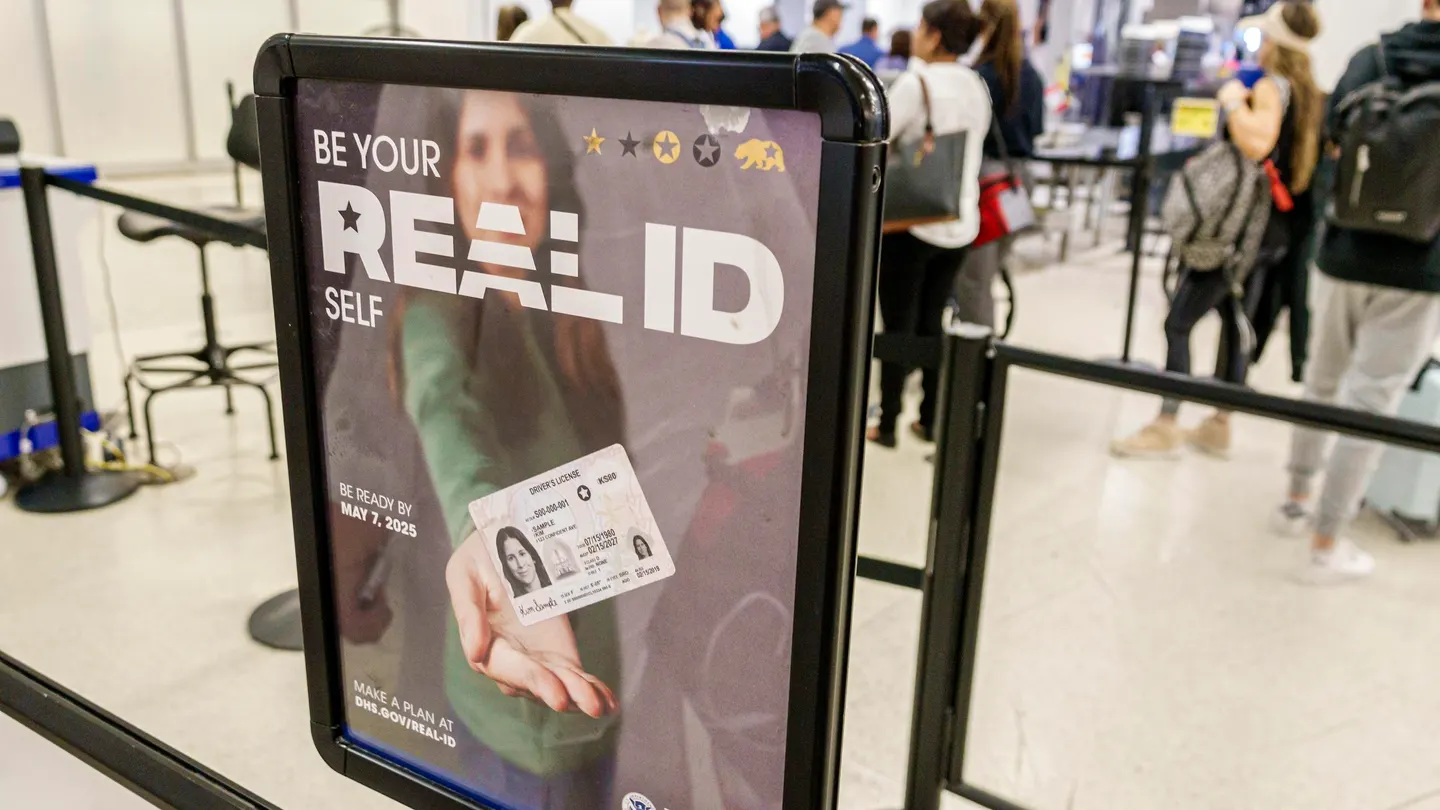
REAL ID-compliant identification is now required at TSA checkpoints for all U.S. domestic travel. Compliant IDs carry a star (or, in California, a star within the state's golden bear symbol) in the upper right corner. State-issued licenses without the star are not accepted as the sole identification, but travelers carrying them are not turned away at the checkpoint. They're routed to alternate verification, which involves:
- Providing name and address to a TSA officer.
- Answering identity-verification questions drawn from public records.
- Submitting to additional physical screening.
The process adds substantial time. TSA's standing guidance for non-compliant ID holders has been to arrive three hours before domestic departures, a recommendation TSA representatives have continued to publish through 2026.
Acceptable alternatives to a REAL ID
Travelers who haven't upgraded a state license can still fly using any of the following federally accepted IDs:
- U.S. passport or passport card.
- DHS Trusted Traveler Program cards: Global Entry, NEXUS, SENTRI, FAST.
- U.S. Department of Defense ID.
- Permanent resident card.
- Federally recognized Tribal photo ID.
- HSPD-12 PIV card.
- USCIS Employment Authorization Card (I-766).
- U.S. Merchant Mariner Credential.
Of these, the Trusted Traveler Program cards have the secondary benefit of granting expedited security access. Global Entry includes TSA PreCheck, which avoids the long standard lanes that hit hardest during staffing crunches like the February to March 2026 shutdown.
The Global Entry workaround for non-REAL ID holders
For travelers who haven't upgraded their state license and don't already hold a passport, Global Entry remains the most efficient single application: $120 for five years, includes TSA PreCheck, serves as accepted ID at TSA checkpoints, and adds expedited customs returns from international travel.
Several travel credit cards reimburse the $120 application fee:
- Chase Sapphire Reserve: up to $120 every four years for Global Entry, NEXUS, or TSA PreCheck.
- American Express Platinum: same Global Entry credit, every four years, extending to authorized users.
- Capital One Venture X: up to $120 every four years.
Mid-tier cards including the Capital One Venture, IHG One Rewards Premier, and United Explorer offer the same reimbursement at a lower annual fee. For travelers in the Chase 5/24 window or with an open Amex MR ecosystem, the credit closes the application-fee gap entirely.
Why TSA hasn't tightened past alternate verification
The federal compromise on REAL ID, accept compliant ID but don't refuse the non-compliant, reflects two realities. First, state DMV processing capacity for license upgrades has been consistently strained, and a hard refusal would have stranded a meaningful share of the traveling public. Second, the alternate-verification process gives TSA an enforcement lever (delay) without the airline-disruption risk of refusing boarding.
That balance has held through the first year of enforcement and there's no public indication the policy is shifting. State DMVs continue to issue REAL ID-compliant licenses and identification cards; non-compliant licenses are still being issued in limited circumstances and remain valid for non-federal purposes (driving, alcohol purchase, age verification).
What travelers should do now
For anyone who hasn't yet upgraded a state license:
- Check whether a passport or Global Entry already covers you. Either is sufficient for federal ID purposes at TSA.
- If neither, request a REAL ID-compliant license at your next DMV appointment. Documentation typically requires a Social Security card, proof of address (two utility bills or equivalent), and either a birth certificate or current passport.
- If you fly internationally even occasionally, Global Entry is the higher-utility purchase. REAL ID compliance is a side benefit; the primary value is the expedited customs return at JFK, LAX, and other major international gateways.
The policy isn't going away, and the workarounds are well-defined. The most expensive thing a non-REAL-ID traveler can do at this point is keep arriving without compliant ID and burning three hours of pre-flight buffer at every domestic departure. The Global Entry application closes that gap permanently.
This article contains affiliate links. If you apply through our links, we may earn a commission at no cost to you, which helps us continue sharing points and miles strategies with the community.
Some of the links in this article are affiliate links. We may receive a small commission at no extra cost to you if you apply through these links. This helps us keep the site running and continue creating free content.