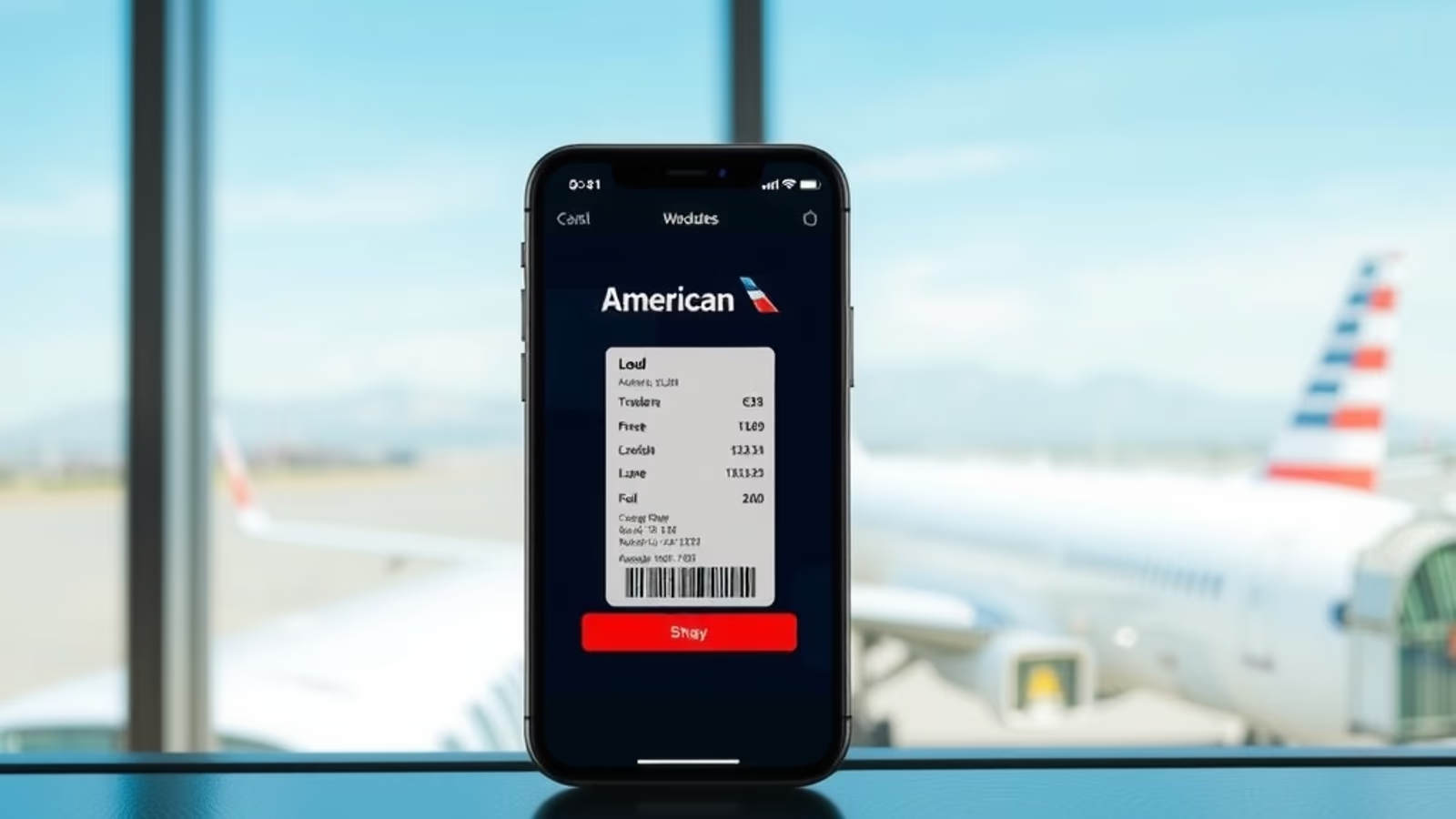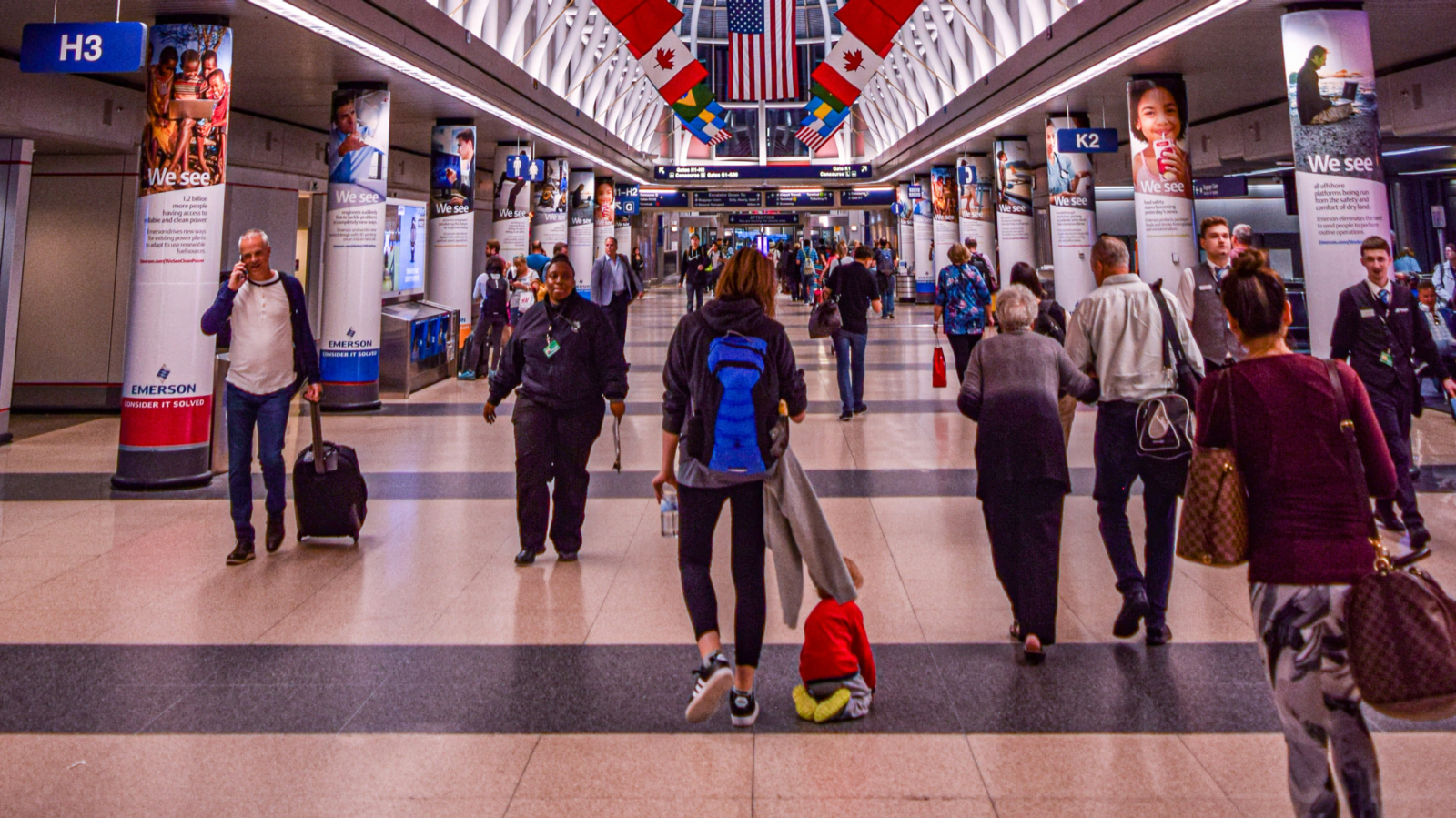
Standard-lane TSA wait times at Hartsfield-Jackson Atlanta International reached 153 minutes on March 22, 2026, the worst single-day figure published by the airport's checkpoint tracker. Houston George Bush hit 120 minutes the same day; Baltimore-Washington and JFK both crossed 75 minutes. The proximate cause was the federal government shutdown that began February 14, 2026, which left TSA officers, classified as essential, working without pay.
What happened
TSA officers continued to report to checkpoints after the February 14 shutdown began, but with no paychecks arriving, call-out rates climbed steadily through the first half of March. Hartsfield-Jackson Atlanta International reported 42 percent of officers absent on March 22; Houston Bush reported 39 percent; Baltimore-Washington and JFK reported 38 percent and 35 percent respectively. More than 400 TSA officers had quit since the shutdown began, according to TSA representatives quoted in March 22 reporting.
Atlanta's checkpoint wait-time tracking system, which is designed to measure the distance from the head of the line to the checkpoint, stopped publishing reliable numbers because the line itself extended past the tracking sensors. The airport advised passengers in late March to arrive four hours before domestic departures.
San Francisco International and Kansas City International, the two major U.S. airports operating under the Screening Partnership Program with private contractors instead of federal TSA officers, kept normal wait times. Both airports' contractors continued to be paid through the shutdown, and call-out rates stayed at baseline. Travelers with routing flexibility used SFO and MCI as connection points specifically to avoid TSA-staffed hubs.
What it meant for travelers
PreCheck and CLEAR effectively segmented the airport population into two tiers during the worst of the crisis. TSA-published data showed PreCheck members at 99 percent under-10-minute waits even at airports with two-hour standard lanes. CLEAR-plus-PreCheck combinations cleared security in roughly five minutes at most major hubs.
Standard-lane passengers without either program faced wait times that turned even three-hour buffers into close calls. American Airlines and Delta both temporarily relaxed same-day standby fees at affected airports; both airlines confirmed the policy in agent memos but did not formally announce it to the public.
The cost of a missed flight (same-day rebooking running $200 to $500 domestically, more for international) created a near-immediate uptick in PreCheck enrollment. The Trusted Traveler Programs portal reported elevated application volume in early March, though official figures haven't been published.
Where the programs stand in April 2026
TSA PreCheck. $78 for five years. Reimbursed in full by the Chase Sapphire Reserve, Capital One Venture X, Amex Platinum, and several mid-tier travel cards every four to five years. Roughly 200 U.S. airport coverage. PreCheck remains the highest-leverage purchase a domestic flyer can make.
CLEAR Plus. $189 per year. Skips the ID-check line via biometric verification. Reimbursed by the Amex Platinum (up to $189), some United and Delta co-branded cards. Roughly 60 U.S. airport coverage. Most useful in combination with PreCheck.
Global Entry. $120 for five years, includes PreCheck. Reimbursed by Chase Sapphire Reserve, Capital One Venture X, Amex Platinum, and others. The right pick for any traveler who flies internationally even occasionally: same PreCheck benefit at home, plus expedited customs returns.
What travelers should do now
For passengers traveling in the coming weeks while staffing is still recovering:
- Check the MyTSA app or your departure airport's checkpoint tracker before leaving for the airport, then again on arrival. Wait times shifted by 30+ minutes between morning and afternoon at Atlanta during the worst of March.
- If you have flexibility, route through SFO or MCI for any U.S. connection. Both airports kept normal staffing throughout.
- Mid-morning departures (10 a.m. to 12 p.m.) consistently moved faster than 5 to 8 a.m. peaks, even at affected airports.
- If you're flying without PreCheck and have any departure within the next 30 days, enrolling now is a coin-flip whether your interview slot returns approval before you fly. CLEAR Plus is faster to activate (same-day at most enrollment locations) and serves as an interim mitigation.
What comes next
Resolution of the shutdown will return TSA staffing to baseline within several weeks of paychecks restarting. Past shutdowns have followed roughly that timeline. What this episode reveals, beyond the immediate disruption: the U.S. air travel system runs without slack at peak capacity, and the federal-employee staffing model is brittle to funding interruptions. Airports operating under the Screening Partnership Program (SFO, MCI, and roughly 18 smaller airports) proved out an alternative that the major hubs may revisit.
PreCheck and CLEAR were already worth their cost during normal operations. The March 2026 episode raised the floor: travelers who enrolled mid-crisis are positioned for whatever the next staffing disruption looks like.
This article contains affiliate links. If you apply through our links, we may earn a commission at no cost to you, which helps us continue sharing points and miles strategies with the community.
Some of the links in this article are affiliate links. We may receive a small commission at no extra cost to you if you apply through these links. This helps us keep the site running and continue creating free content.