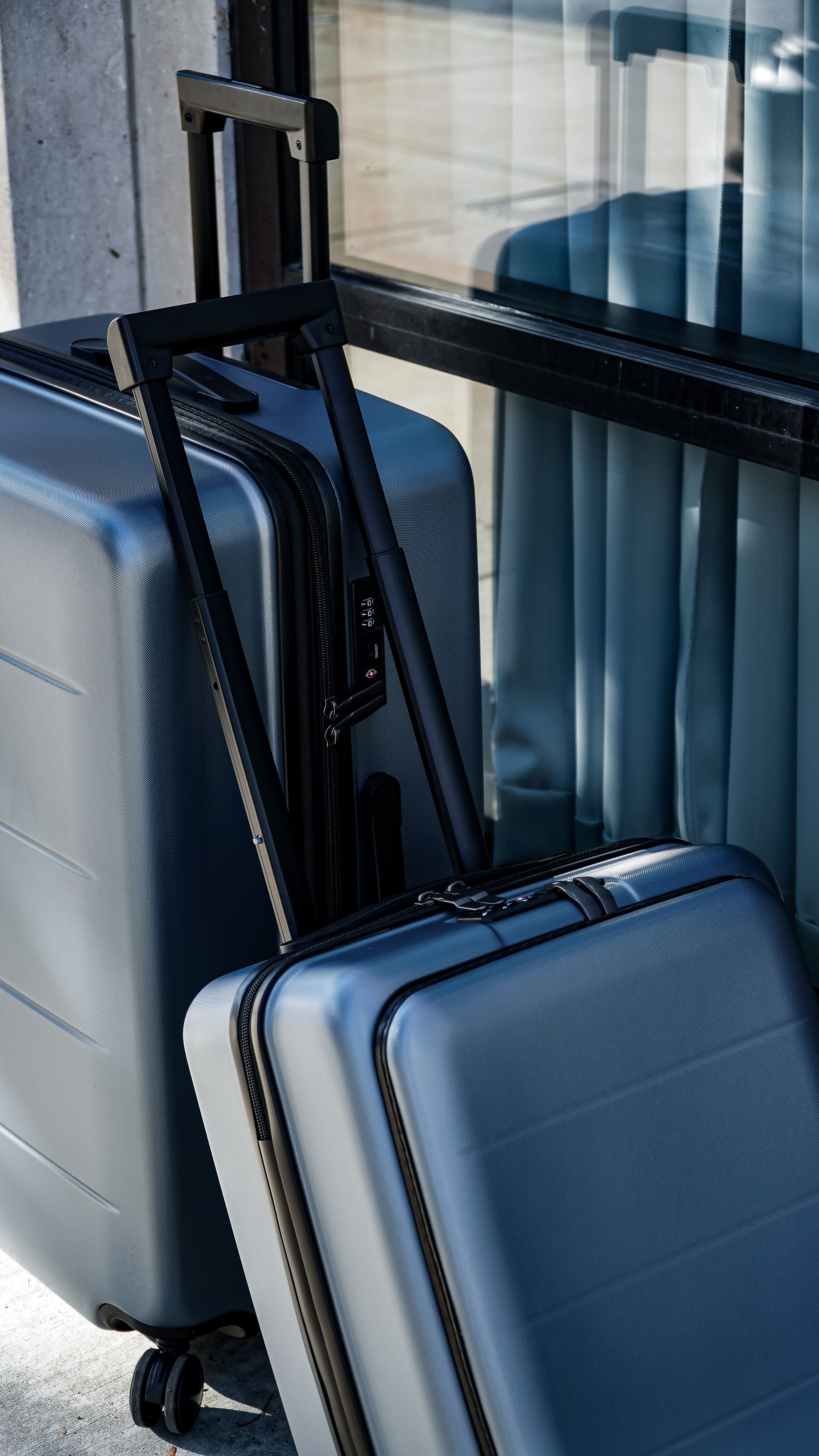
The single most important update for travelers in the last decade arrived in April 2024, when the US Department of Transportation finalized a rule requiring airlines to issue automatic cash refunds for delayed luggage. Under the rule, fully in effect since Q1 2025, your checked-bag fee comes back to you if a domestic bag is delayed more than 12 hours, an international short-haul bag more than 15 hours, or an international long-haul bag more than 30 hours. The refund must be cash by default, not a voucher, unless you explicitly agree otherwise. Most travelers still don't know this rule exists, and most airline agents won't volunteer it.
This is the playbook I run when a bag doesn't make the belt.
Quick Answer
File a Property Irregularity Report (PIR) at the airport baggage office before you leave the terminal. Photograph your claim tag, your boarding pass, and the PIR. Open your AirTag location data if you placed one in the bag. Then file two parallel claims: one with the airline for fee refund and reimbursement of essentials, and one with your credit card's baggage delay benefit. For most domestic delays over 12 hours, you are owed an automatic refund of your checked-bag fee under the 2024 DOT rule.
The First 30 Minutes
Don't leave the airport without a PIR in hand. The Property Irregularity Report is the document every downstream claim hangs on. It establishes the time the airline learned the bag was missing, which starts the clock on the DOT refund rule, the 21-day "lost" threshold under domestic rules, and the 21-day international delay window under the Montreal Convention.
Go to the baggage service office in the arrivals hall, not the check-in desk. Bring your bag tag stub, your boarding pass, and a photo of the bag if you have one. The agent will enter a description into WorldTracer, which is what most major airlines use to surface bags across the network.
Before you walk away, do four things. Confirm the file reference number is printed on your copy. Confirm the airline has your phone number, hotel address, and email. Ask for a written copy of the airline's interim expense policy, including any per-day cap and what receipts they require. And ask, explicitly, whether the bag has been scanned at the origin airport and whether the airline can see its current location. If you have an AirTag in the bag, show the agent the location on your phone. Airlines started accepting AirTag location data as evidence under Montreal Convention claims in 2024.
The DOT 2024 Auto-Refund Rule
This is the rule most travelers miss. The DOT's April 2024 final rule on automatic refunds requires US airlines to refund your checked-bag fee whenever a bag is materially delayed. The thresholds:
- Domestic flights: bag delayed more than 12 hours after arrival.
- International short-haul: bag delayed more than 15 hours.
- International long-haul: bag delayed more than 30 hours.
Three things matter. First, the refund is automatic. The airline must issue it once the threshold is crossed. Second, the refund must be cash, returned to your original form of payment, unless you affirmatively agree to a voucher. Third, this is separate from reimbursement for interim essentials or any damages claim. The fee refund is a baseline.
In practice, "automatic" still means watching your account. If you don't see it within seven business days of the bag's eventual delivery, file a complaint with the airline in writing and reference the DOT rule by name. If the airline still doesn't comply, file at transportation.gov. The rule covers checked bags only. If a basic-economy ticket forced you to gate-check at the gate, that bag is treated as a checked bag for refund purposes.
Liability Limits
The legal ceiling on what an airline owes you depends on whether the flight was domestic or international.
Domestic US flights are governed by DOT rule, capped at $4,700 per passenger in maximum liability. That covers a delayed bag's eventual loss, damage during transit, and reasonable interim expenses. It is a ceiling, not a default. You document the value of what was inside with receipts, photos, and serial numbers where applicable.
International flights are governed by the Montreal Convention, which caps liability at roughly $1,800 USD equivalent per passenger (1,288 SDR). Coverage begins when the airline accepts the bag at check-in and ends when you receive it back. This is why you photograph the bag, the contents, and the claim tag at check-in for any international flight where the contents matter.
If your contents exceed these limits, airlines sell "excess valuation" coverage at check-in. Almost nobody buys it. The better approach is to ensure your credit card and travel insurance cover the gap.
Your Credit Card's Baggage Delay Coverage
The card you used to pay for the flight is the single best line of defense after the airline itself. The major travel cards all carry some version of baggage delay coverage, and the limits vary widely.
- Chase Sapphire Reserve: Up to $100 per day for five days of baggage delay (combined trip-delay coverage of up to $3,000 per traveler for delays over six hours).
- Chase Sapphire Preferred: Up to $100 per day for five days, with a $500 per-claim baggage delay benefit.
- American Express Platinum: Up to $500 baggage delay coverage, primary in most cases, meaning you don't have to claim with the airline first.
- Capital One Venture X: Up to $500 baggage delay, secondary to the airline's coverage.
- Citi Strata Premier: Up to $500 baggage delay, with the carrier's responsibility primary.
"Primary" versus "secondary" matters more than the headline number. A primary benefit pays out first, on the card's own terms. A secondary benefit pays only after the airline has either paid or declined. Amex Platinum's primary baggage delay is the easiest claim to file because you skip the airline's process entirely on essentials.
To trigger the benefit, you generally need:
- Proof you paid for the flight on the card (the card statement).
- A copy of the PIR.
- Receipts for the essential items you bought during the delay.
- Confirmation of when the bag was delivered or declared lost.
Card benefit administrators are strict on receipts and lenient on what counts as "essential." Clothing, toiletries, phone chargers, and basic medications all qualify on every major card. Designer items and electronics typically don't.
For a comparison of which Chase travel card carries which protections, our Chase Sapphire Reserve review walks through the 2026 benefits package, and our Sapphire Preferred review covers the same ground at the mid-tier. The Amex Platinum review covers its primary protections in detail. If you're choosing a first travel card, our mid-tier premium travel cards guide is the starting point.
Filing the Right Claims, in the Right Order
Sequence matters. Getting it right means you collect from every source you're owed without filing redundant or conflicting claims.
Step one: The airline. File the PIR at the airport. Ask for the interim expense policy in writing. Save every receipt. When the bag is returned, file the DOT auto-refund request if it hasn't posted automatically. If the bag is declared lost after 21 days, file the full liability claim with an itemized list and documentation.
Step two: The credit card. Once you have the PIR and any receipts, file the baggage delay claim with your card's benefits administrator. Cards generally require this within 60 to 100 days of the delay, but file early. Most cards cover the gap up to their limit after the airline has paid.
Step three: Travel insurance, if you have it. A standalone policy is the third layer, not the first. Most policies coordinate with credit card benefits, paying only what the card doesn't. File this last with the documentation from the first two claims attached.
The mistake to avoid: double-dipping. You cannot collect for the same item from multiple sources. You can stack the DOT fee refund, the airline's expense reimbursement, and your credit card's baggage delay benefit, because they cover different things.
The AirTag Workflow
An Apple AirTag in your checked bag is now default travel infrastructure. Roughly $25 per bag, a year of battery.
Place the AirTag inside the bag, deep enough that a casual sort doesn't dislodge it. A small interior zip pocket works well. Activate it before the trip and confirm it pairs to your iPhone in the Find My app.
When the bag doesn't arrive, open Find My before you reach the baggage office. The location tells you whether the bag is at the origin airport, at the destination airport on a different belt, or stuck at a connecting hub. Show the agent the location on your phone. Since 2024, every major US airline has accepted AirTag location data as evidence in Montreal Convention claims and as a routing aid for WorldTracer. Delta updated its policy in late 2024 to allow station agents to request the AirTag location proactively.
Our deep look at AirTags as a travel tool covers placement and battery management. We also track the lowest current price on a four-pack in our running AirTag deal post.
Carrier-Specific Reimbursement Rules
US airlines have published policies on interim expense reimbursement, and they vary in generosity and clarity.
- Delta: $50 per day, up to five days, with receipts required.
- United: Reimbursement for essential items upon submission of receipts, no published per-day cap. Pays out within 30 days of the bag's return.
- American: Reimbursement for necessary items with receipts. Expect pushback on items over $100 per receipt.
- Southwest: Reimbursement for reasonable expenses, with faster turnaround than the legacies.
- Alaska: Reimbursement for necessary items, with amenity kits often available at the baggage office on arrival.
- JetBlue: Reimbursement with documentation, no per-day cap published.
- Frontier and Spirit: Coverage is limited and varies by fare class. Basic fares often exclude expense reimbursement, though the DOT auto-refund rule still applies to bag fees.
International carriers fall under the Montreal Convention. Avianca and Etihad both publish interim expense policies that generally exceed the US legacies on long-haul delays. Always ask for the reimbursement policy in writing at the baggage office. A printed policy is the only one you can hold the airline to later.
What to Buy in the Interim
Buy what you actually need. Save every receipt. Keep them in a single folder on your phone so the eventual claim is fast.
Essentials that reimburse cleanly on every card and most airlines:
- One to two days of clothing (shirt, underwear, basics).
- Toiletries (toothbrush, toothpaste, deodorant, basic skincare).
- Phone charger and adapter if applicable.
- Any prescription medication you can refill locally.
Receipts that reimburse poorly: anything from a luxury brand, anything over $200 per item without strong justification, anything that isn't time-sensitive. A new suitcase is not an "essential" in most reimbursement frameworks. A business suit you need for a meeting tomorrow is essential; the airline and your card both pay out on that with documentation of the meeting. Document the reason on the claim notes. "Replacement for delayed checked bag containing business attire required for client meeting on [date]" is the difference between approval and denial.
When to Escalate to a DOT Complaint
The DOT consumer complaint form at transportation.gov is the lever you pull when the airline isn't complying with the 2024 refund rule, isn't acknowledging a Montreal Convention claim, or is sitting on a reasonable expense reimbursement past 60 days.
Use it when:
- The airline refused to issue the automatic checked-bag fee refund after the relevant threshold passed.
- The airline tried to issue a voucher instead of a cash refund without your consent.
- The airline is denying reimbursement for essentials despite documented receipts and a confirmed PIR.
- The bag has been declared lost past 21 days and the airline hasn't engaged with the full liability claim.
DOT publishes airline-by-airline complaint data and uses the volume of complaints in regulatory action. A single complaint won't typically resolve your case on its own, but it does move it into the carrier's regulatory compliance queue. Most airlines escalate a DOT-routed complaint to a dedicated team within five business days.
Common Mistakes
A few patterns I see repeatedly:
- Leaving the airport without a PIR. Without it, you don't have a documented start time for any claim. Some airlines will let you file later by phone; many won't honor a non-airport PIR for full reimbursement.
- Vague item descriptions. "A black suitcase" is not a description. "A Samsonite Winfield 3 in dark teal, 28-inch, with a red ribbon on the handle and an AirTag inside" is. Specificity speeds up WorldTracer matches.
- Missing the AirTag step. If you have the data, share it. If you don't have an AirTag, install one before your next trip.
- Waiting to file the credit card claim. Cards have hard deadlines (60 to 100 days). File the day after the bag is returned, while the receipts are organized.
- Accepting a voucher instead of cash. Under the 2024 DOT rule, a voucher requires your affirmative consent. The default is cash. Say so explicitly.
- Underestimating the value of contents. If your bag is declared lost, the claim ceiling is real money. Itemize at replacement cost, not depreciated value, where the airline's policy permits it. Most do.
What I'd Actually Do
If my bag doesn't come down the belt, here's the sequence I run. I check Find My for the AirTag. I walk to the baggage service office with my bag tag stub, boarding pass, and a phone screenshot of the AirTag location. I file the PIR. I confirm in writing what the airline's interim expense policy is and where the bag is currently located.
I leave the airport. I buy one set of clothes and basic toiletries. I keep every receipt. The next morning, I check whether the DOT auto-refund of my checked-bag fee has posted to my card. If the bag hasn't arrived within 24 hours, I file the credit card baggage delay claim with the PIR and receipts attached.
If the bag arrives, I file the airline's reimbursement for essentials with documentation. If it doesn't arrive within 21 days, I file the full liability claim itemized at replacement cost, capped at the legal limit (domestic $4,700, international $1,800 USD equivalent). If at any point the airline isn't engaging, I file the DOT complaint at transportation.gov.
The point of the playbook isn't to make money on a lost bag. The point is to know what you're owed before you walk up to the counter, so you collect everything without leaving any of it on the table.
This article contains affiliate links. If you apply through our links, we may earn a commission at no cost to you, which helps us continue sharing points and miles strategies with the community.
Some of the links in this article are affiliate links. We may receive a small commission at no extra cost to you if you apply through these links. This helps us keep the site running and continue creating free content.