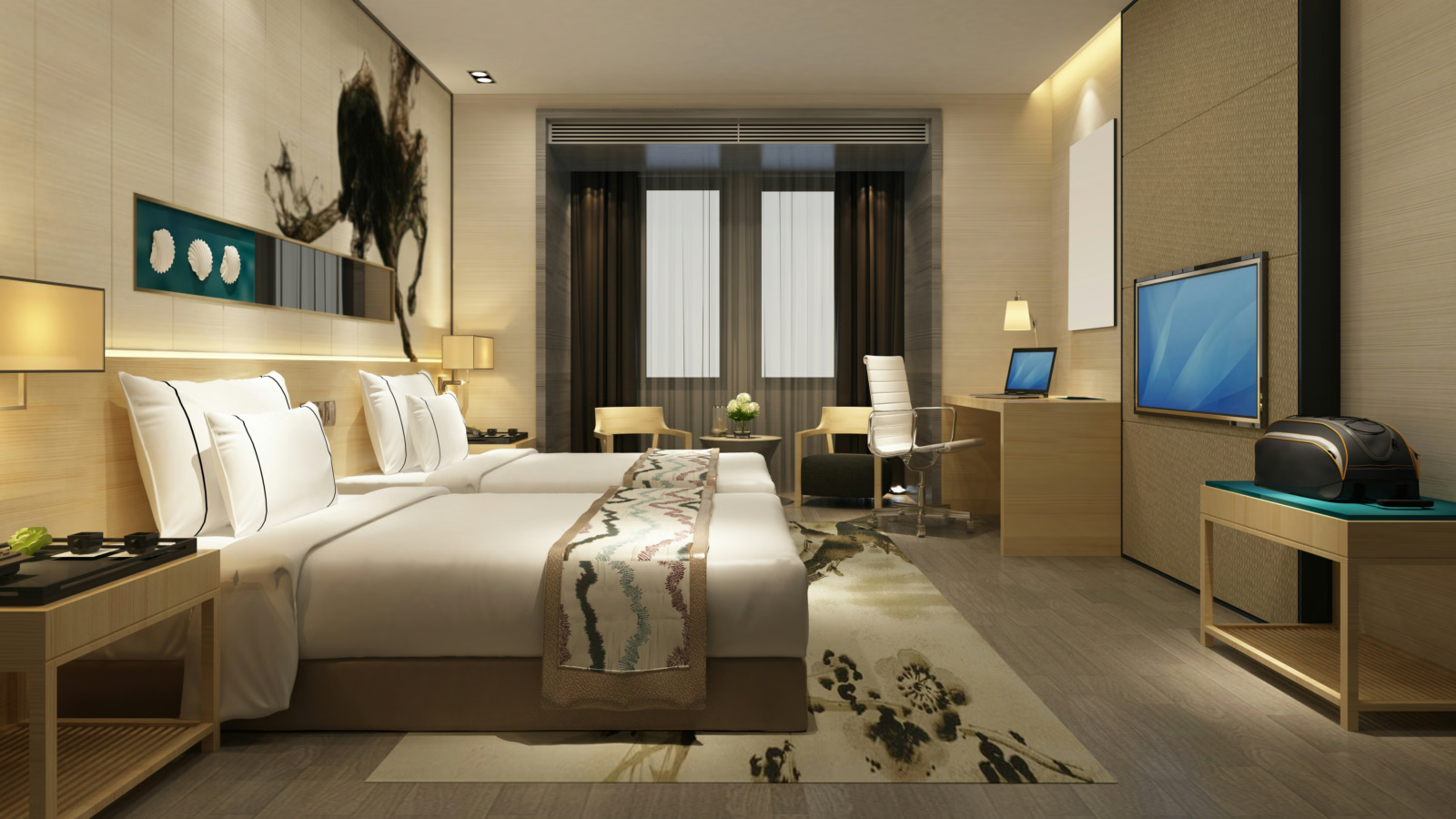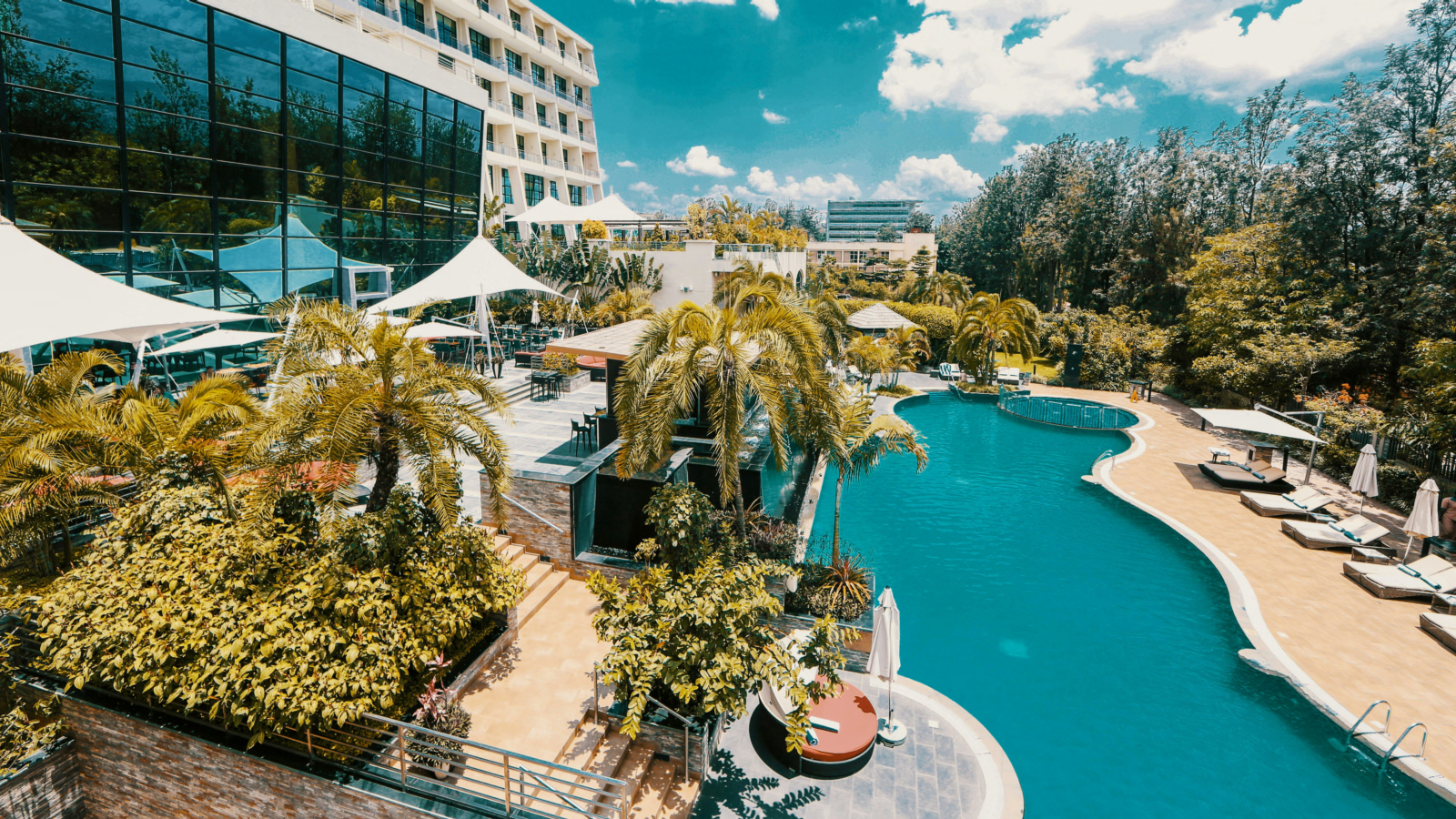
Suite upgrades are where hotel elite status earns its keep. A standard king room runs $300 a night at the property your spouse picked for your anniversary; the one-bedroom suite next door runs $700. Status is the lever that closes that gap, and the program you put your nights into determines how often the lever actually works.
The mechanics break into two buckets. Space-available upgrades happen at check-in, when the front desk has unsold suites and the program rules say you should get one. They're free, they require zero pre-planning, and they vary wildly in reliability. Confirmed suite upgrades let you lock the suite in before arrival, often at booking. They remove the uncertainty but typically cost you an award from a limited annual allotment, or restrict the confirmation window to a few days before check-in.
The four major US programs treat these benefits very differently, and the gap between the best and the weakest is not subtle. Below is the actual program-by-program breakdown, the credit card shortcuts that get you to the relevant status tiers without 60-plus nights of paid stays, and the tactics that move upgrade odds in your favor when status alone isn't enough.
Hyatt Globalist, the gold standard
World of Hyatt Globalist sits at the top, and not by a small margin. The space-available rule says that if a standard suite is available at check-in, the Globalist receives it. The program language is unusually direct about this. No "may receive," no "at the hotel's discretion." Hotels are expected to honor it, and in my experience at Park Hyatt and Andaz properties, they generally do.
The confirmed upgrade benefit is the real differentiator. Globalists who hit 60 qualifying nights earn five confirmed suite upgrade awards. Each one:
- Confirms at the time of booking, not days before arrival.
- Covers up to seven consecutive nights per award.
- Has zero capacity controls. If a standard suite shows availability for sale, you can apply the award to it.
- Works on both cash and points bookings.
Past 60 nights, every additional 10 qualifying nights through 150 unlocks another confirmed upgrade. Hit 150 and you're holding 15 confirmed suite upgrade awards for the year. That is a category of benefit no other major program offers.
The credit card lever is the World of Hyatt Credit Card from Chase. It pays 5 qualifying nights just for opening the account, plus 2 qualifying nights for every $5,000 spent, capped at 4 additional nights per year. It also drops the Globalist threshold by combining card-earned nights with the spend-based path: $15,000 of card spend plus 30 paid nights reaches Globalist instead of 60 paid nights. For someone already doing 25 to 35 hotel nights a year, that's the difference between Globalist being aspirational and Globalist being inevitable.
Marriott Platinum and above
Marriott Bonvoy Platinum Elite (50 nights), Titanium Elite (75 nights), and Ambassador Elite (100 nights plus $23,000 in spend) all carry suite upgrade language. The problem is what that language now says. Several years back the program shifted from "the best available room up to a standard suite" to upgrades that "may" include suites, "high floors, corner rooms, or rooms with views." That linguistic move handed hotels permission to call a corner king with a city view an upgrade and call it done.
In US hotels at Platinum, expect a better standard room. Actual suites tend to stay on the shelf for paid guests or members spending nightly upgrade awards. The picture changes meaningfully overseas. St. Regis, Ritz-Carlton, and JW Marriott properties in Asia and the Middle East upgrade reliably to suites for Titanium and Ambassador members, and the gap between US and international generosity is the single largest variable in Marriott upgrade outcomes.
The confirmed path is Marriott's nightly upgrade awards. Platinum and above receive 5 awards at 50 nights and another 5 at 75 nights, for 10 annually if you hit Titanium. Each award:
- Confirms a suite upgrade for one night, applied 3 to 5 days before arrival depending on brand.
- Works on standard award bookings, which is a real advantage over Hyatt's confirmed awards on cash-and-points mechanics.
- Is subject to capacity controls. Hotels can block inventory from upgrade awards, and on peak dates they often do.
The 3-to-5-day confirmation window is the binding constraint. You can't lock a suite in six months out for an anniversary trip; you're waiting on availability inside the final week.
The card lever is the Marriott Bonvoy Brilliant American Express, which posts 25 elite night credits annually. Combined with stays, hitting 50 nights for the first 5 upgrade awards takes 25 paid nights instead of 50; hitting 75 for the second batch takes 50 paid nights instead of 75. The Marriott Bonvoy Boundless from Chase posts 15 elite night credits and runs at a lower annual fee, which is the right pick for travelers who'd rather earn most of the way to status through stays. The Brilliant carries the larger fee but offsets it with a $300 dining credit, a $25 monthly Marriott credit, an annual free night certificate up to 85,000 points, and Platinum status. Platinum on its own from a card is the relevant detail if you don't intend to chase Titanium.
IHG Diamond Elite
IHG One Rewards Diamond Elite earns space-available upgrades "subject to availability," which in practice means about what Hilton's same language means: inconsistent, and weaker than Hyatt or Marriott internationally. The confirmed upgrade awards through Milestone Rewards are the reason to chase Diamond:
- First confirmed suite upgrade at 40 elite nights.
- Second at 60 nights.
- Third at 70 nights.
- Each award confirms 1 to 14 days before arrival, valid for up to 5 consecutive nights, works on cash and points bookings, and carries no capacity controls during the confirmation window.
The catch is reaching 70 elite nights at IHG. US travelers don't have access to the international IHG co-brands that post elite night credits at meaningful rates. The IHG One Rewards Premier Card from Chase grants Platinum Elite automatically, not Diamond, so the card shortcut tops out a tier short of the suite upgrade benefits.
The strategic case for IHG: the InterContinental portfolio includes properties in secondary markets like Danang, Hua Hin, Bora Bora, and parts of Eastern Europe, where $250 a night gets you into a hotel that would cost $600-plus under a luxury brand. A confirmed suite upgrade applied at one of those properties delivers outsized real-dollar value relative to the same award at a Manhattan Holiday Inn.
Hilton Diamond, the weakest of the big four
Hilton Honors Diamond Elite is where I have to set expectations. The upgrade language is "subject to availability, at the hotel's discretion." Both clauses matter, and "at the hotel's discretion" is the operative phrase: hotels can keep suites empty rather than upgrade a Diamond member, and they regularly do.
The program excludes upgrades entirely at nine Hilton brands: Embassy Suites, Hampton by Hilton, Hilton Garden Inn, Hilton Grand Vacations, Homewood Suites, Home2 Suites, Motto, Spark, and Tru. That's the majority of Hilton's US footprint, and the brands most travelers actually stay at carry no upgrade benefit at all.
Diamond Reserve, the tier introduced for higher-spending elites (80 nights or 40 stays plus $18,000 in eligible spending), adds a single confirmed suite upgrade award good for up to seven nights. One per year. That is the entirety of Hilton's confirmed upgrade program.
Hilton works overseas, especially Conrad and Waldorf Astoria properties in Asia and the Middle East, where Diamond does get upgraded to suites with reasonable frequency. For US stays at the brands Diamond actually covers, plan to pay for the suite if you want the suite.
The status shortcut is the Hilton Honors American Express Aspire Card, which grants automatic Diamond. It's the only card I know of that hands top-tier hotel status without conditions, and the dollar-for-dollar value of the rest of the Aspire's benefits (the $400 Hilton resort credit, free weekend night, airline credit, lounge access) generally justifies the annual fee independent of whether you ever check into a Hilton-branded suite.
Beyond the big four
Four Seasons Preferred Partner doesn't run a loyalty program in the traditional sense. The benefits flow through accredited travel advisors. Booking a Four Seasons stay through a Preferred Partner agent gets you a room category upgrade when available at check-in, daily breakfast for two, a property credit (usually $100), and complimentary Wi-Fi and welcome amenity. There's no status to earn. The benefits attach to the booking channel.
Aman Guest Recognition publishes minimal public detail. The properties are small enough (often 30 to 50 keys) that repeat guests get tracked individually. Upgrade percentages climb noticeably after the second or third stay at the same resort, and the front office at most Aman properties remembers preferences without prompting.
Rosewood Elite, the program's top tier, includes a confirmed suite upgrade as part of the welcome amenity at the highest level. The tier is earned through paid stays. No status matches, no credit card shortcut, which keeps the benefit aligned with actual revenue. It applies at properties (Hotel de Crillon, Las Ventanas al Paraiso, Carlyle) where the spread between standard room and suite pricing is large enough that the upgrade carries real cash value.
Credit card status shortcuts, ranked
For someone optimizing for suite upgrades specifically:
The World of Hyatt Credit Card is the strongest card-to-suite-upgrade path. The combination of 5 free qualifying nights, up to 4 additional nights from spend, and the reduced Globalist threshold ($15,000 of card spend plus 30 paid nights) compresses the road to the strongest suite upgrade benefit in the industry. Annual fee is $95.
The Marriott Bonvoy Brilliant American Express is the right pick if you want to compress the road to Marriott nightly upgrade awards. The 25 elite night credits annually plus a Platinum-level status floor mean you start each year halfway to the first 5 upgrade awards. Annual fee runs in the high $600s but the offsetting credits and free night certificate typically clear that.
The Hilton Honors American Express Aspire grants instant Diamond, which sounds like the cleanest shortcut and technically is. But as covered above, Hilton's underlying suite upgrade benefit is the weakest of the four. Get the Aspire for the resort credit, free night, and lounge access, not for suite upgrades specifically.
For non-card holders who already carry the Chase Sapphire Reserve, the card's hotel benefits (3x on travel booked direct, primary rental coverage, $300 travel credit) pair well with Hyatt stays since Hyatt transfers 1:1 from Ultimate Rewards. The Sapphire Reserve itself doesn't carry hotel status.
Tactics that move the odds
Status sets your eligibility. These move your actual hit rate inside that eligibility:
Book direct. Third-party bookings (Expedia, Hotels.com, Booking.com) generally don't qualify for elite benefits at all. Always book on the chain's own site or app, even when the OTA price matches.
Be a repeat guest at specific properties. Front desk staff have discretion and they use it for guests they recognize. The third stay at a Park Hyatt property runs noticeably better than the first.
Target weeknights at resort hotels and weekends at business hotels. Suite inventory is a function of who's filling the building. Business hotels empty out Friday through Sunday; resort hotels empty out Monday through Thursday. The same status produces different upgrade outcomes depending on which side of that pattern you're booking.
Check in late. Hotels finalize their actual availability by late afternoon. A 2 p.m. arrival sees them holding back suites for arrivals still expected; a 6 p.m. arrival sees what's actually empty for the night.
Flag special occasions in the reservation notes. Anniversaries, honeymoons, milestone birthdays. Hotels have discretion to lean into these and frequently do.
Status match where it's offered. Marriott and Hilton both run occasional matches and challenges from competing programs. A timed match plus 90 days of focused stays can move a traveler from no status to Platinum or Diamond at the new chain without the standard 50-plus-night ramp.
When the upgrade doesn't happen
Even at Globalist with award nights in hand, some stays produce a standard room. The fallback options:
Ask for the paid upgrade rate at check-in. Front desk staff often have day-of-arrival upgrade pricing that runs $50 to $150 per night, a fraction of the published suite premium. Sometimes they waive the fee entirely on a soft night.
Compare the points cost of booking the suite outright versus burning a confirmed upgrade award. Hyatt prices suites at roughly 2x to 3x the standard room rate in points. On a 3-night stay, the math sometimes favors paying the suite in points and saving the upgrade award for a 7-night trip where the per-night value is higher.
Try again after the initial rush clears. Walk back to the front desk 45 to 60 minutes after check-in. Cancellations and no-shows shake out, and the staff has more flexibility once the lobby thins out.
Split the booking across nights. If you don't get upgraded for night one of a five-night stay, check award availability for nights two through five. Sometimes a suite opens later in the stay. Book it separately on points and request the room move at check-out on night one.
What the upgrade is actually worth
A standard suite at a US Park Hyatt or Andaz typically runs $200 to $500 over the standard room rate per night. International luxury properties run wider, $400 to $1,200 in the gap. A confirmed suite upgrade award covering 5 to 7 nights at a property with a $400 nightly spread is worth $2,000 to $2,800 in real-money pricing. The 5 awards at 60 Hyatt nights are worth $10,000 to $14,000 a year if applied to the right trips; 10 awards from 150 nights run $20,000 to $28,000.
Space-available upgrades resist clean math because you're not choosing when they fire. A reasonable proxy: 25% upgrade rate across 30 annual stays at a $150 nightly suite premium puts roughly $1,125 a year on the board. International stays push the hit rate and the dollar value higher.
The multiplier that matters most for many readers is family travel. A two-bedroom suite separates kids from parents at 8 p.m., which is the difference between a trip that works and one that doesn't. The arithmetic of "one suite versus two standard rooms" closes fast when the second room is a $300 add-on and the suite is the free upgrade.
Program rankings from actual experience
After tracking outcomes across several hundred stays:
Best space-available upgrade rate, US: Hyatt by a wide margin. Andaz and Park Hyatt properties upgrade Globalists to standard suites at roughly 60% to 70% of stays in my data.
Best space-available upgrade rate, international: Marriott luxury brands (St. Regis, Ritz-Carlton) in Asia and the Middle East. The gap between US Marriott and Asia-Pacific Marriott on upgrades is the most dramatic regional split in any of the four programs.
Best confirmed upgrade program: Hyatt, with no close second. Confirm at booking, no capacity controls, 5 to 7 nights per award, 5 awards at the entry tier.
Worst US upgrade outcomes: Hilton, regardless of status. Three actual upgrades to a suite at a US Hilton property across roughly 50 stays as a Diamond member over the past seven years.
Most improved: Marriott's nightly upgrade awards, once you learn to apply them on 4-plus-night stays where the 3-to-5-day confirmation window has time to break in your favor.
If suite upgrades are the reason you're chasing hotel status, optimize for Hyatt Globalist first. The World of Hyatt Credit Card is the lever: 5 free qualifying nights, the $15,000 spend path that drops the Globalist threshold to 30 paid nights, and confirmed suite upgrade awards that confirm at booking with zero capacity controls. Marriott is a credible second program if you're already maxing the Brilliant's 25 elite night credits or traveling internationally where the upgrade percentage climbs. IHG works for travelers specifically targeting InterContinental properties in secondary markets. Hilton's status carries value for resort credits and lounge access through the Aspire, but not for suite upgrades themselves.
The pattern that matters across all four programs: status is the floor, not the ceiling. The travelers who get upgraded most consistently are the ones booking direct, returning to the same properties, flagging the occasion, and checking in late. Status without those habits underperforms; status with those habits compounds.
This article contains affiliate links. If you apply through our links, we may earn a commission at no cost to you, which helps us continue sharing points and miles strategies with the community.
Some of the links in this article are affiliate links. We may receive a small commission at no extra cost to you if you apply through these links. This helps us keep the site running and continue creating free content.