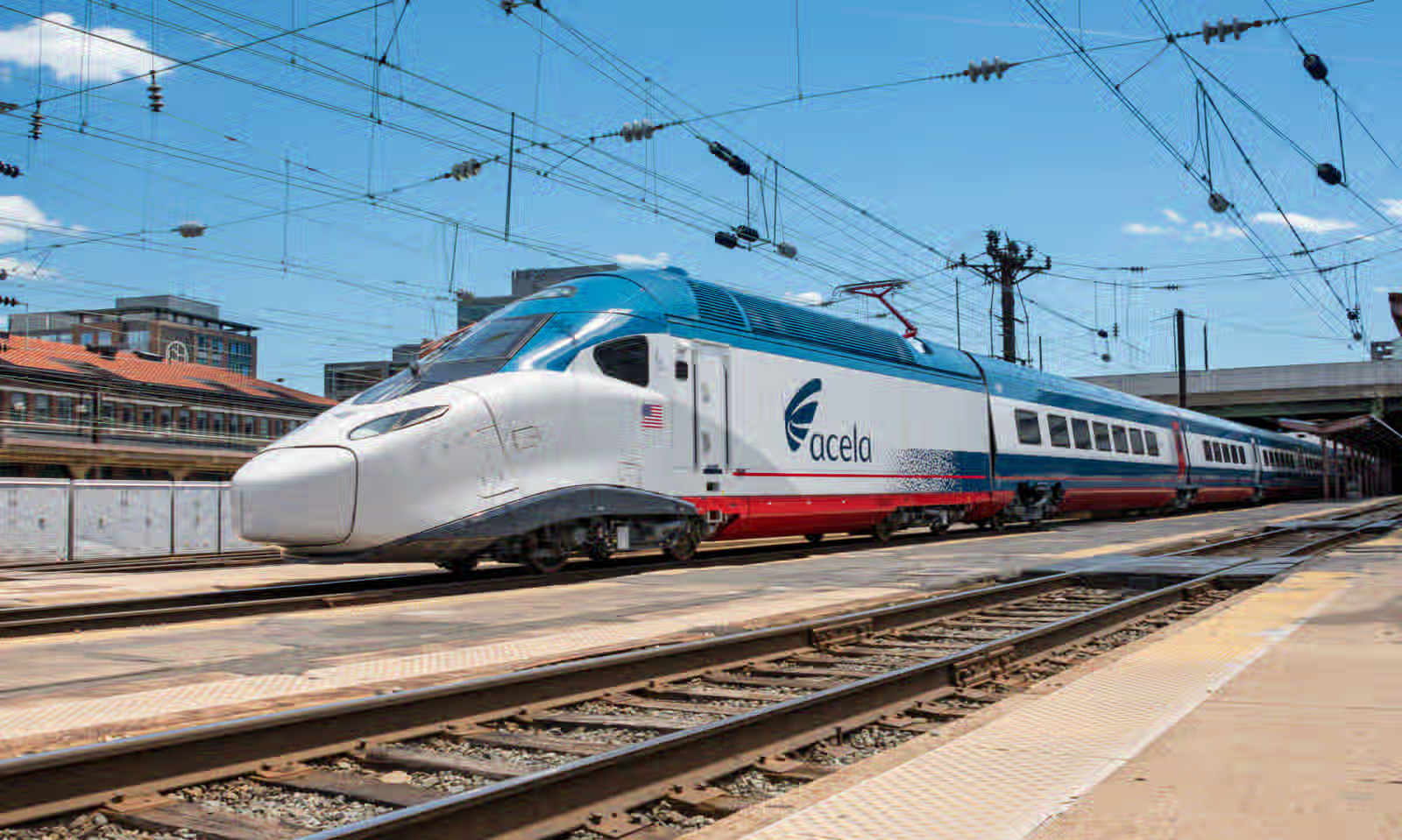
Nine months into service, Amtrak's NextGen Acela has gone from a long-delayed promise to a familiar sight on the Northeast Corridor. The first trainsets entered passenger service on August 28, 2025, and as of May 2026, five sets are running daily between Washington and Boston. The remaining 23 trainsets are scheduled to phase in through 2027, so on any given route you're still getting a mix of old and new fleet.
Here's what the real-world experience looks like now that the honeymoon period is over.
Quick facts at a glance
- In service since: August 28, 2025
- Top operating speed: 160 mph (up from 150 mph on the legacy Acela)
- Trainsets delivered: 5 of 28 (full fleet expected by 2027)
- Capacity: 386 passengers per train, roughly 27% more than the legacy Acela
- Route: Boston to Washington D.C. via NYC and Philadelphia
- WiFi: Free 5G-enabled service throughout
What's actually different on board
The headline number is the 10 mph bump in top speed. In practice, that matters most on the New York to Philadelphia segment, where the track geometry actually supports higher speeds. North of New Haven, you're still stuck with the same century-old infrastructure, so total trip times have only shaved off a few minutes for now.
The bigger day-to-day difference is the active tilt system. The Avelia Liberty platform tilts into curves the way European trainsets have for years, which lets the train hold speed through bends that forced the legacy Acela to slow down. The ride is noticeably smoother, especially on the wiggly stretches through Connecticut.
The other upgrades passengers consistently call out after riding both fleets:
- WiFi that actually works. The free 5G service is a real improvement over the legacy paid WiFi, which routinely dropped near tunnels and rural stretches. It's not perfect, but it's good enough to take a video call from New York to D.C.
- Power at every seat. Individual outlets plus USB-A ports per seat. No more hunting for the shared outlet behind the row.
- Winged headrests. Small change, big quality-of-life win for anyone trying to nap or block out a chatty seatmate.
- Bigger restrooms with touchless doors. Genuinely nicer than what's on the legacy fleet.
- Cafe Acela has more options. Both full-service and grab-and-go now, with Stephen Starr's team consulting on the menu in First Class.
Booking and identifying NextGen trains
Amtrak flags NextGen trains in search results on amtrak.com and in the app, usually with a small badge or callout. If you care which fleet you ride, check before you click "book." With only five trainsets in rotation, the assignment can flip if Amtrak swaps equipment for maintenance, so it's worth confirming again 24 hours before departure.
Pricing matches the legacy Acela. Business Class typically runs $100 to $250 depending on route and how far in advance you book. First Class is usually $200 to $400 plus. There's no NextGen surcharge — same fare buckets, same dynamic pricing, same Amtrak Guest Rewards earning.
If you ride the corridor more than a few times a year, the Amtrak $35 lounge day pass is one of the better quiet-place-to-work deals in major Northeast stations.
First Class vs Business Class
Honestly, Business Class on NextGen is good enough for almost every trip. You get the wide ergonomic seats, the power outlets, the free WiFi, the new ride quality, and access to the Cafe Acela car. For a 90-minute hop from New York to Philadelphia or D.C., there's no real reason to pay more.
First Class is worth it on the longer Boston runs, or if you're trying to work straight through. You get Metropolitan Lounge access at major stations, at-seat meal service, complimentary drinks including alcohol, and a few solo seats in the dedicated front car. Boarding is faster too.
Train vs flying on the corridor
Nine months of ridership data have backed up what corridor regulars already knew: rail wins on the short and mid-length routes once you count door-to-door time.
- New York to D.C.: ~2h 45m by train vs 3h 30m plus by air once you add security, boarding, and airport transfers. Train wins.
- New York to Philadelphia: ~1h 15m by train vs 2h 30m plus flying. Not close.
- New York to Boston: ~3h 30m by train vs 3h 45m plus flying. Train edges it out, and you can actually work the whole way.
- Boston to D.C.: ~6h 15m by train vs 4h plus flying. Flying still wins on pure time, though Acela's productivity advantage closes the gap if you can spread out and work.
The corridor's other rail advantages haven't changed: no security line, 30-minute arrival window, no liquids restrictions, generous luggage allowance, and city-center stations instead of suburban airports.
A few tips for getting the most out of it
- Book early. Acela pricing is dynamic, so the difference between a Tuesday booking three weeks out and a Friday walk-up can be hundreds of dollars.
- Confirm fleet assignment 24 hours before departure. With only five NextGen sets running, swaps happen.
- Bring your own headphones. The trains are quieter than the legacy fleet, but you'll still want noise-cancelling for the Cafe Acela rush.
- Use a card that earns on rail spend. Travel cards that treat Amtrak as travel get you bonus points on tickets. The Capital One Venture X pays 2x on every purchase and the $300 annual travel credit can apply to Amtrak.
- Join Amtrak Guest Rewards if you haven't. It's free and the redemption math on Acela is usually fair.
Sustainability and the manufacturing story
Amtrak says the new trainsets cut energy consumption per seat by about 20% versus the legacy fleet, helped by regenerative braking and the higher passenger capacity. The trainsets are assembled at Alstom's Hornell, NY plant, with roughly 95% of components sourced domestically across more than 180 suppliers in 29 states. That's not why you'd buy a ticket, but it's a meaningful piece of the broader U.S. rail manufacturing picture.
Bottom line
Nine months in, NextGen Acela has delivered most of what it promised: a smoother ride, working WiFi, real power outlets, and a noticeably more comfortable cabin. The 10 mph speed bump matters less than the operational reliability and the improved on-board experience.
The catch is fleet availability. With only five trainsets running today and the full rollout not finishing until 2027, you can't yet count on getting NextGen equipment on a given departure. Check before you book if it matters, and accept that legacy Acela trains will be in the mix for at least another year.
For the Northeast Corridor, this is still the most civilized way to get between any two cities from Boston to Washington. The full Amtrak rollout details and current schedule are at amtrak.com/nextgen-acela.
The Points Party may earn a commission from cards mentioned in this article at no additional cost to you. Our reviews and recommendations are independent and based on our own analysis.
Some of the links in this article are affiliate links. We may receive a small commission at no extra cost to you if you apply through these links. This helps us keep the site running and continue creating free content.