Viking ocean and river cruises run roughly $300 to $700 per person per day, which puts a 15-day Mediterranean sailing somewhere between $9,000 and $20,000 for two passengers. That's the kind of price tag that sends travelers hunting for an awards strategy. Here's the first thing to know, as of May 2026: Viking is not a transfer partner of any major credit card or airline loyalty program. You cannot move Chase Ultimate Rewards, Amex Membership Rewards, Capital One miles, or any airline mileage balance directly to a Viking account, because Viking does not operate one.
That doesn't mean your points are useless against a Viking fare. It means you have to come in sideways. Below are five strategies that actually work in 2026, the math behind a few realistic redemptions, and where the Wave Season promotions and Explorer Society credits stack on top.
Why Viking's inclusions change the points math
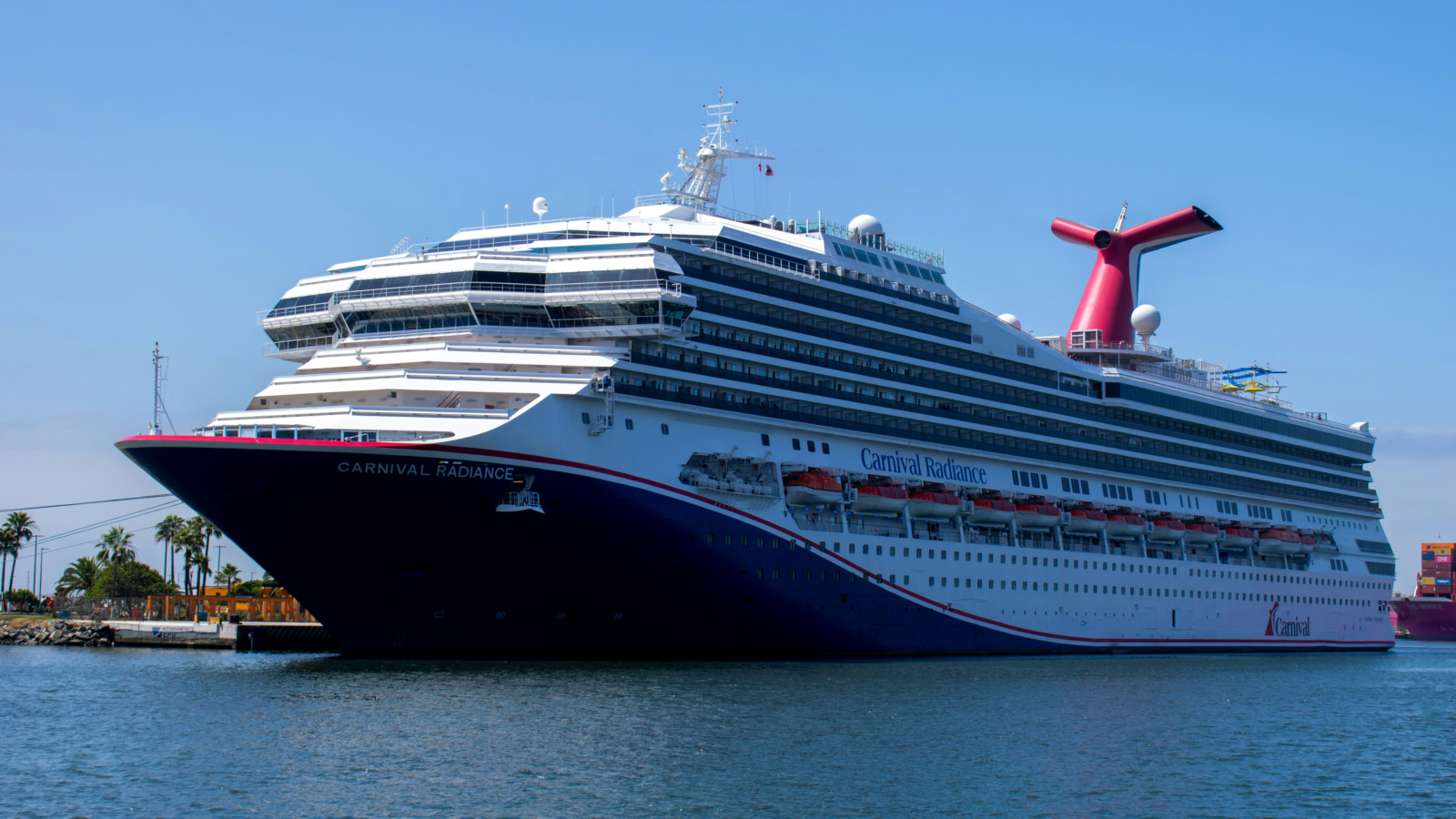
Before evaluating any redemption, look at what Viking's fare already covers. Every ocean stateroom is a balcony. Every booking includes one shore excursion in each port, complimentary Wi-Fi, beer and wine at lunch and dinner, all specialty restaurants, the thermal suite and snow grotto on ocean ships, and gratuities on most fares. Carnival and MSC are different fits for different travelers, and their lower cash fares carry a longer add-on list once you price excursions, drinks, and specialty dining. When you're comparing a $400-per-day Viking rate to a $200-per-day mass-market rate, the apples-to-apples gap is much smaller than the headline. That matters because the cents-per-point math has to account for what your cash dollars would have bought you anyway.
The five strategies
1. Credit card travel portals
The most direct path. Chase Sapphire Reserve cardholders redeem Ultimate Rewards through Chase Travel at 1.5 cents per point on cruise bookings; Sapphire Preferred holders get 1.25 cents. Amex Travel pays 1 cent per Membership Rewards point on cruise reservations, and Capital One Travel pays 1 cent per mile. Viking sailings book through all three portals when inventory and brand availability sync, although availability is uneven and you should call the portal's cruise desk to confirm. Sapphire Reserve at 1.5 cpp turns 200,000 Ultimate Rewards into $3,000 toward a Viking fare, meaningful on a $12,000 cruise and the cleanest redemption mechanic of the five. One caveat: portal-booked Viking sailings sometimes appear with limited cabin categories versus what shows on viking.com, so confirm the Veranda or Penthouse Veranda you want is bookable through the portal before assuming the redemption math holds. Full mechanics on Chase's program are in our Chase Ultimate Rewards guide.
2. Statement credit redemption
When the portal won't book the sailing you want, you book Viking directly and apply points after the fact. Capital One's Purchase Eraser covers travel charges at 1 cent per mile against any cruise line, including Viking. Amex's Pay With Points against a charge works the same way at about 0.6 cents per point against most categories, which is usable but inefficient compared with the portal. Chase Pay Yourself Back on Sapphire Reserve currently doesn't include cruise lines as an eligible category, so confirm the latest list in your card's portal before assuming. Statement credits are the right tool when you've already committed to a specific Viking departure, cabin, and promo and don't want to lose the booking by routing through a third party.
3. Travel program portals
Marriott Bonvoy operates a Cruise with Points portal that books Viking, Royal Caribbean, Princess, Celebrity, and several other lines. Base redemption runs around 0.5 to 1 cent per Bonvoy point, but Marriott periodically offers 25% to 30% bonus credit on cruise redemptions; if you're sitting on a large hotel balance with no clear hotel use, the bonus periods are when this gets interesting. United MileagePlus Cruises also books Viking and pays roughly 1 cent per mile, with the additional perk that you can stack mileage earning on the cruise fare itself. Neither portal beats Sapphire Reserve at 1.5 cpp on raw redemption value, but they liquidate hotel and airline balances that have no better use.
4. Cash and points hybrid
The strategy seasoned Viking bookers actually use. Pay cash for the cruise fare itself, which preserves access to Viking's promotional pricing and Wave Season terms (more below), and apply points to everything around it. That means airfare to the embarkation port, pre- and post-cruise hotel nights, travel insurance, and any second excursion you add. Transferring Ultimate Rewards to United, Air Canada Aeroplan, or Air France-KLM Flying Blue covers a Mediterranean or Northern European positioning flight at 60,000 to 80,000 miles in business class. Hyatt and Marriott points cover the pre-cruise hotel night you'll want before a 7am port arrival. A pay-with-points travel insurance redemption (or a direct purchase of an annual policy like the one we reviewed in our Allianz travel insurance review) closes the gap. The cruise fare stays cash, the cash outlay stays roughly flat, and 300,000-plus points cover the ancillary bill. The advantage over a pure portal redemption is that you keep every Viking promotion the line is running, including the Wave Season free-airfare credit you'd otherwise forfeit by routing through Chase Travel or Amex Travel.
5. Gift card arbitrage through cashback portals
Less elegant, more reliable. Rakuten and similar shopping portals periodically run cashback on cruise line gift cards or on travel agency partners that resell Viking. Stacking 5% to 10% portal cashback with a 2% to 5% credit card category bonus on the same purchase yields an effective 7% to 15% off the cash portion of the fare. The catch is that Viking specifically restricts gift card use on certain fare types and won't apply them to deposits, only to final-payment balances. Run the math on a specific booking before assuming the discount will land. The Rakuten portal carries cruise offers irregularly; sign up well before you book so you're ready when an offer surfaces.
Stacking with Viking promos and Explorer Society
Wave Season runs January through March, and Viking's offers during that window typically include reduced deposits ($25 per person on select sailings versus the usual 25% of fare), complimentary or reduced economy airfare from select North American gateways, free pre-cruise hotel nights, and double Explorer Society credits. Booking during Wave Season while routing the deposit and final payment through a card that earns transferable points effectively double-dips.
Pay attention to the Wave Season air component specifically. The free or reduced airfare clause is fare-restricted and gateway-restricted, but on a sailing where the published cash fare runs $8,000 per person, a $1,500 air credit is meaningful and stacks cleanly on top of any points play you've already constructed.
Explorer Society is Viking's loyalty program, structured around credits rather than tiers. After your first sailing, you receive $200 per passenger to apply to a future booking, valid for 12 months from your last voyage. Refer a new Viking customer and you earn $100; they receive $200 toward their first cruise. These credits stack on Wave Season terms and on travel agent commissions when you book through an agency. The Explorer Society dollars are not large per booking, but on a multi-year cruise rotation they compound; three Viking cruises over six years can pull $1,200 in member credit out of the program if timed correctly.
Three realistic redemption scenarios
Scenario 1: Portal-only, Chase Sapphire Reserve. A 15-day Mediterranean Odyssey for two in a Veranda stateroom prices around $14,400. The traveler redeems 600,000 Chase Ultimate Rewards through Chase Travel at 1.5 cents per point for $9,000 toward the booking, paying $5,400 cash. Effective value: 1.5 cpp, with the booking still earning Explorer Society credit because Chase Travel issues a Viking confirmation number directly. Best for travelers who've earned a large Ultimate Rewards balance through Chase Sapphire Reserve, Ink Business Preferred, and Freedom card combinations.
Scenario 2: Statement credit, Capital One Venture X. An 8-day Rhine river sailing prices around $4,800 per person, $9,600 for two. The traveler books directly with Viking, which preserves Wave Season pricing and a Wave Season free-airfare credit worth roughly $1,200, and applies 480,000 Capital One miles via Purchase Eraser against the $4,800 net cruise charge. Effective value: 1 cpp, lower than Scenario 1, but the cash side stays around $3,600 after the Wave Season air credit, versus $5,400 in Scenario 1. The total trip cost is lower because the Viking promo stacks.
Scenario 3: Amex hybrid for Antarctica. A 13-day Antarctic Explorer voyage in a Nordic Balcony prices around $27,990 for two. The traveler pays cash for the cruise fare to preserve Viking's expedition-program inclusions, then redeems 150,000 Amex Membership Rewards through Amex Travel at 1 cpp for $1,500 toward business-class positioning flights to Ushuaia, and transfers 250,000 Membership Rewards to Aeroplan for a Toronto-Buenos Aires business class pair worth roughly $7,000 cash. Total points deployed: 400,000. Effective value blended across cabin redemption and portal: above 2 cpp on the Aeroplan transfer leg. Best for travelers with stacked Amex Platinum and Gold card earnings.
The Viking voyages worth your best points
Three categories return outsize value when paid partially or fully with points. Antarctica expeditions on Octantis and Polaris start around $13,995 per passenger; the per-day rate is high but the all-included expedition format (zodiacs, kayaks, submarine excursions, special operations boats) means points cover what would otherwise be heavy add-on costs. The Viking World Cruise, currently priced from roughly $85,000 per passenger for the full 138-day itinerary, is the redemption ceiling for travelers with massive Ultimate Rewards balances; even a partial portal redemption of $10,000 against the fare meaningfully changes the cash equation. Peak-season Northern Europe sailings (June and July Norwegian fjords and Iceland departures) see less Wave Season discounting than Mediterranean shoulder dates, which makes points-based redemption the cleanest discount available. Detail on the ocean fleet itself is in our Viking cruise ships guide, and Mediterranean-specific itinerary mechanics are in our Mediterranean cruise booking piece.
Fleet status as of May 2026
Viking operates nine ocean ships at 930 guests each (Star, Sea, Sky, Orion, Jupiter, Venus, Mars, Neptune, Saturn) plus the newer 998-guest class. Vela entered service in December 2024 and Vesta joined in 2025. Mira launches in June 2026, roughly three weeks from now, and is already accepting bookings for fall 2026 sailings. Viking has publicly committed to a 10-ship ocean fleet by 2030. On rivers, the Longships at 190 guests cover the Rhine, Main, and Danube; smaller specialty vessels operate the Douro, Nile, and Mekong. For points planning, the practical implication is that newer ships (Mira, Vesta, Vela) tend to have more cabin inventory and price slightly more aggressively in their first 12 months, which is useful when sizing a portal redemption against an actual stateroom.
Common mistakes
Three keep recurring. Booking less than 90 days out forfeits both Wave Season terms and almost all promotional airfare credits, and Viking inventory on popular Mediterranean and Northern European departures genuinely sells out 9 to 12 months ahead. Comparing Viking's cash fare to a Carnival or MSC headline rate without adding excursions, drinks, and gratuities back into the lower-priced line distorts the cents-per-point math. And waiting to redeem Ultimate Rewards directly into a Viking account, which does not exist as a redemption channel, instead of routing through Chase Travel.
Bottom line
Viking won't transfer points in, but the booking can still absorb 200,000 to 600,000 points without much effort if you stack the right card portal with the right Wave Season promo. Sapphire Reserve at 1.5 cpp through Chase Travel is the cleanest play; cash-and-points hybrids with paid cruise fare and points-funded airfare are the strongest total-cost play; statement credits cover the rest. Pick the strategy that matches the sailing you actually want, book during Wave Season if the calendar allows, and let Explorer Society credits compound across your next two voyages.
This article contains affiliate links. If you apply through our links, we may earn a commission at no cost to you, which helps us continue sharing points and miles strategies with the community.
Some of the links in this article are affiliate links. We may receive a small commission at no extra cost to you if you apply through these links. This helps us keep the site running and continue creating free content.