Credit Cards Explained: A Complete 2026 Guide for Beginners
Key Points
- A credit card is a revolving line of credit. Pay the statement balance in full by the due date and you owe zero interest, no matter the APR.
- Networks (Visa, Mastercard, Amex, Discover) handle the rails. Issuers (Chase, Citi, Capital One, your bank or credit union) decide your limit, rewards, and fees.
- Two numbers move your credit score the most: utilization (keep it under 10% if you can) and on-time payment history.
TL;DR
Credit cards lend money interest-free for 21 to 25 days if you pay the statement balance. Start with one no-fee card and autopay the full balance.
If you've never had a credit card, the whole thing can feel like a maze of acronyms. APR, FICO, utilization, grace period, statement closing date, and that's before anyone mentions points or miles. The mechanics are simpler than the marketing makes them sound. Once you understand the billing cycle and which numbers actually move your credit score, the rest comes down to picking a card that matches your spending. This guide covers how credit cards work in 2026, what the fees and rates mean, the beginner-friendly card categories, and how to pick a first card.
How a Credit Card Actually Works
A credit card is a revolving line of credit. The issuer (Chase, Capital One, Citi, your local credit union) lends you up to a set limit. Every time you swipe or tap, they pay the merchant on your behalf and add the charge to your balance.
The rhythm of that loan is the billing cycle, typically 28 to 31 days. At the end of the cycle, the issuer closes your statement, totals everything you charged, and sends a bill. From the closing date, you have a grace period of 21 to 25 days before interest kicks in. That gap is the most valuable feature of the product, and people who use cards well are essentially borrowing money for free during it.
Three numbers on every statement matter.
Statement balance. What you actually charged during the cycle. Pay this in full by the due date and you owe nothing in interest. Zero. The APR is irrelevant when you carry no balance.
Minimum payment. The smallest amount that keeps the account current, usually 1% to 3% of the balance plus interest and any fees. Paying only the minimum is how a $1,500 statement balance turns into a $3,000 balance over a few years. The minimum protects your credit score, not your wallet.
Due date. Miss it by 30 days and the issuer can report a late payment to the credit bureaus. That single mark stays on your report for seven years and can drop a thin credit file by 50 to 100 points.
Pay the statement balance every month and you keep the rewards, build payment history, and never see an interest charge. Let any portion roll and the grace period disappears on new purchases too, meaning interest starts accruing the moment you swipe.
Networks vs. Issuers: Who Does What
Every card has two logos that matter. The network is the rails: Visa, Mastercard, American Express, or Discover. The issuer is the bank that lent you the money and decides your limit, rewards, and fees.
Visa and Mastercard are pure networks; they don't issue cards directly. Chase, Citi, Capital One, Bank of America, Wells Fargo, and credit unions all put Visa or Mastercard logos on their products. American Express and Discover run their own networks and also issue most cards on them.
The practical takeaway is acceptance. Visa and Mastercard are accepted at over 99% of U.S. merchants. American Express acceptance has improved, and most national chains take it, but small independent restaurants and many merchants abroad still don't. Discover acceptance in the U.S. is around 99% but drops sharply outside North America.
If you only carry one card, Visa or Mastercard is the safest. If you carry two, pair an Amex or Discover for the rewards and lean on the Visa or Mastercard when acceptance is uncertain.
The Major Card Types
Beginner-friendly cards fall into a few clean buckets.
Cash back cards. The simplest rewards structure. You earn a flat percentage (typically 1.5% or 2%) or higher rates in specific categories. The Discover it Cash Back pays 5% on quarterly rotating categories up to $1,500 in spend (activate each quarter), 1% otherwise, and Discover matches your first-year cash back. The Capital One Quicksilver pays a flat 1.5% with no annual fee and no foreign transaction fees. The Chase Freedom Unlimited pays 1.5% baseline plus bonus rates on dining, drugstores, and travel booked through Chase. The Citi Double Cash earns 1% when you buy and 1% when you pay, for an effective 2%.
Travel rewards cards. Earn points or miles instead of cash. Points transferred to airline or hotel partners can be worth more than their cash value. Better for cardholders with established credit and a clear plan to travel. Most beginners don't need one on day one.
Store cards. Issued by retailers (Target, Macy's, Amazon Store Card). Typically have very high APRs (often 28% or higher), low credit limits, and rewards that only work at that store. Useful for building credit, but rarely worth keeping once you qualify for a general-purpose card.
Secured cards. For people with no credit history or damaged credit. You put down a refundable deposit (often $200 to $500) that becomes your credit limit. Otherwise the card behaves like any unsecured card: it reports to all three bureaus, has a billing cycle, and charges interest on revolving balances. After six to twelve months of on-time payments, most issuers graduate you to unsecured and refund the deposit. Discover it Secured and Capital One Platinum Secured are both no-annual-fee options.
Business cards. For sole proprietors, freelancers, and registered businesses. They report to commercial bureaus rather than personal ones, so they don't build personal credit history. Skip these until you have an actual business reason.
The Fee Landscape
Read the disclosure schedule before you apply. Most beginner mistakes happen because someone didn't realize a fee existed.
Annual fee. A flat charge for having the card. Beginner cards almost always have $0. Mid-tier rewards cards run $95. Premium cards run $395 to $695. The rewards each year need to exceed the fee. For a first card, stick with no annual fee.
Foreign transaction fee. Charged on any purchase processed outside the U.S. or in a foreign currency, typically 2.5% to 3%. If you travel internationally at all, pick a card with no foreign transaction fee. Capital One charges none on any of its cards. Discover and Chase Sapphire products also waive the fee. Most basic Bank of America and Citi cards still charge it.
Late fee. Triggered when you miss the due date. The CFPB capped late fees at $8 for most issuers as of 2024, though the rule has been challenged in court, and some issuers may still charge up to around $40 for repeat offenses. Set up autopay for at least the minimum.
Balance transfer fee. A one-time charge (usually 3% to 5%) when you move debt from one card to another, often paired with a 0% intro APR offer. Useful if you're paying down existing card debt, irrelevant otherwise.
Cash advance fee. Charged when you use the card to withdraw cash at an ATM. Usually 5% of the advance or $10, whichever is higher, plus a higher APR with no grace period. Never use unless it's a true emergency.
APR and How Interest Compounds
APR (annual percentage rate) is the interest you pay on any balance you carry past the due date. In April 2026, average credit card APRs sit between 20% and 25%, with subprime and store cards often running 28% to 32%.
The APR isn't applied annually in one chunk. Issuers calculate a daily periodic rate (APR divided by 365) and apply it to your average daily balance, which compounds. If you only pay the minimum, the interest charged becomes part of next month's balance, and you pay interest on the interest.
An example. Charge $2,000 on a 24% APR card and pay only the minimum ($40 a month). You'll pay roughly $1,400 in interest before the balance hits zero, and it'll take more than seven years to clear. Pay the same $2,000 in full at the next due date and you pay $0.
Pay the statement balance in full each month and the APR is a number you can ignore. The moment you carry a balance, the APR becomes the most important number on the card.
Rewards, Decoded
Beyond cash back, you'll see three main currencies.
Points. Issued by banks (Chase Ultimate Rewards, Amex Membership Rewards, Capital One Miles, Citi ThankYou Points). Roughly 1 cent each as statement credit, more through the issuer's travel portal, and potentially more again when transferred to airline or hotel partners. Beginners can ignore the transfer game on day one.
Miles. Issued by airlines (Delta SkyMiles, United MileagePlus, American AAdvantage) on co-branded cards. Worth roughly 1 to 1.5 cents per mile. Useful if you're loyal to one airline, less flexible than transferable bank points.
Hotel points. Issued by hotel programs (Marriott Bonvoy, Hilton Honors, World of Hyatt) on co-branded cards. Best when redeemed for free nights where the cash rate is high. Hyatt points are the most valuable per point. Hilton points are the least, but Hilton gives you a lot more of them.
For a first card, cash back wins on simplicity. You earn a percentage, you redeem it as a statement credit or deposit. No award charts, no transfer ratios, no blackout dates.
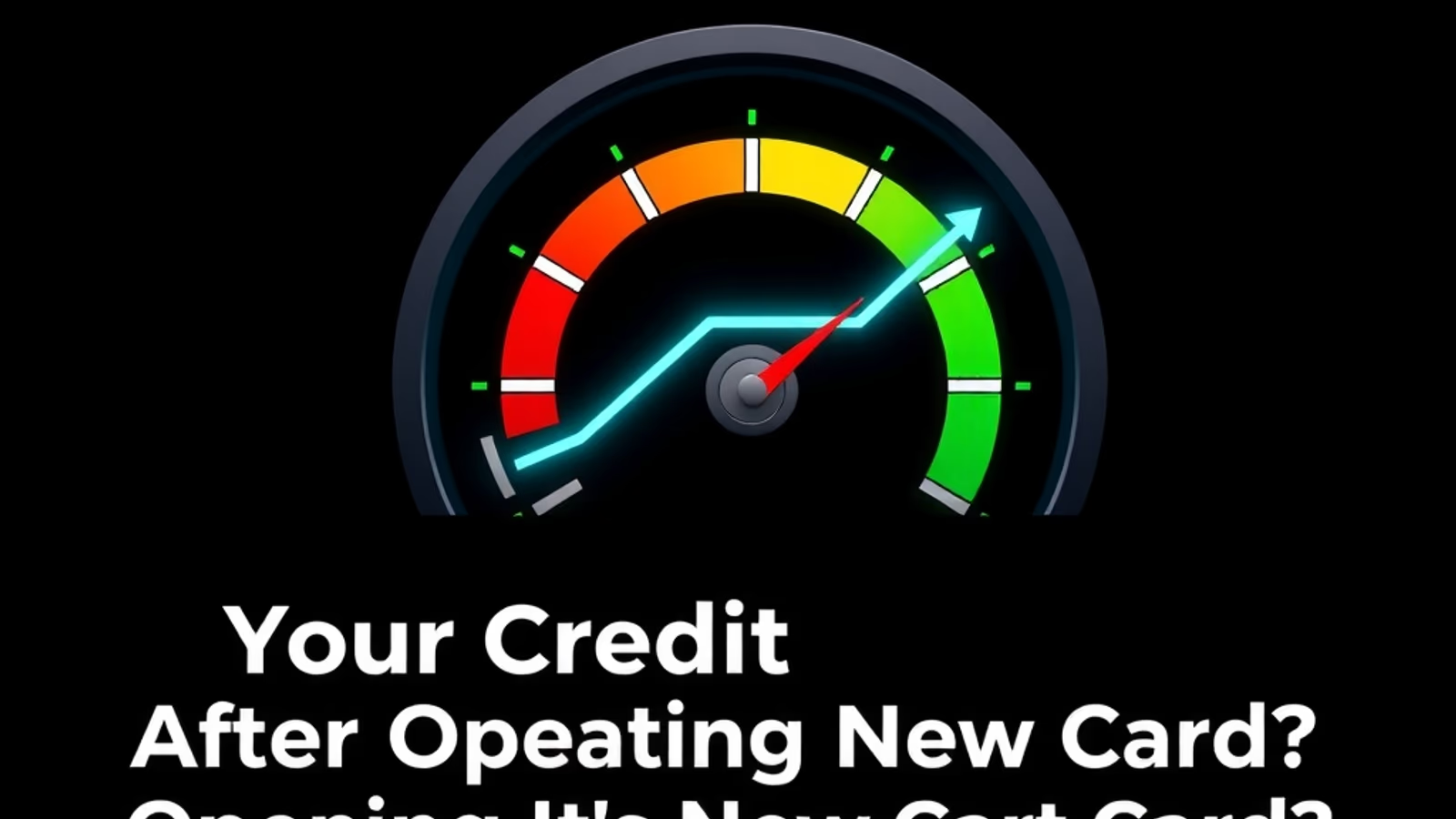
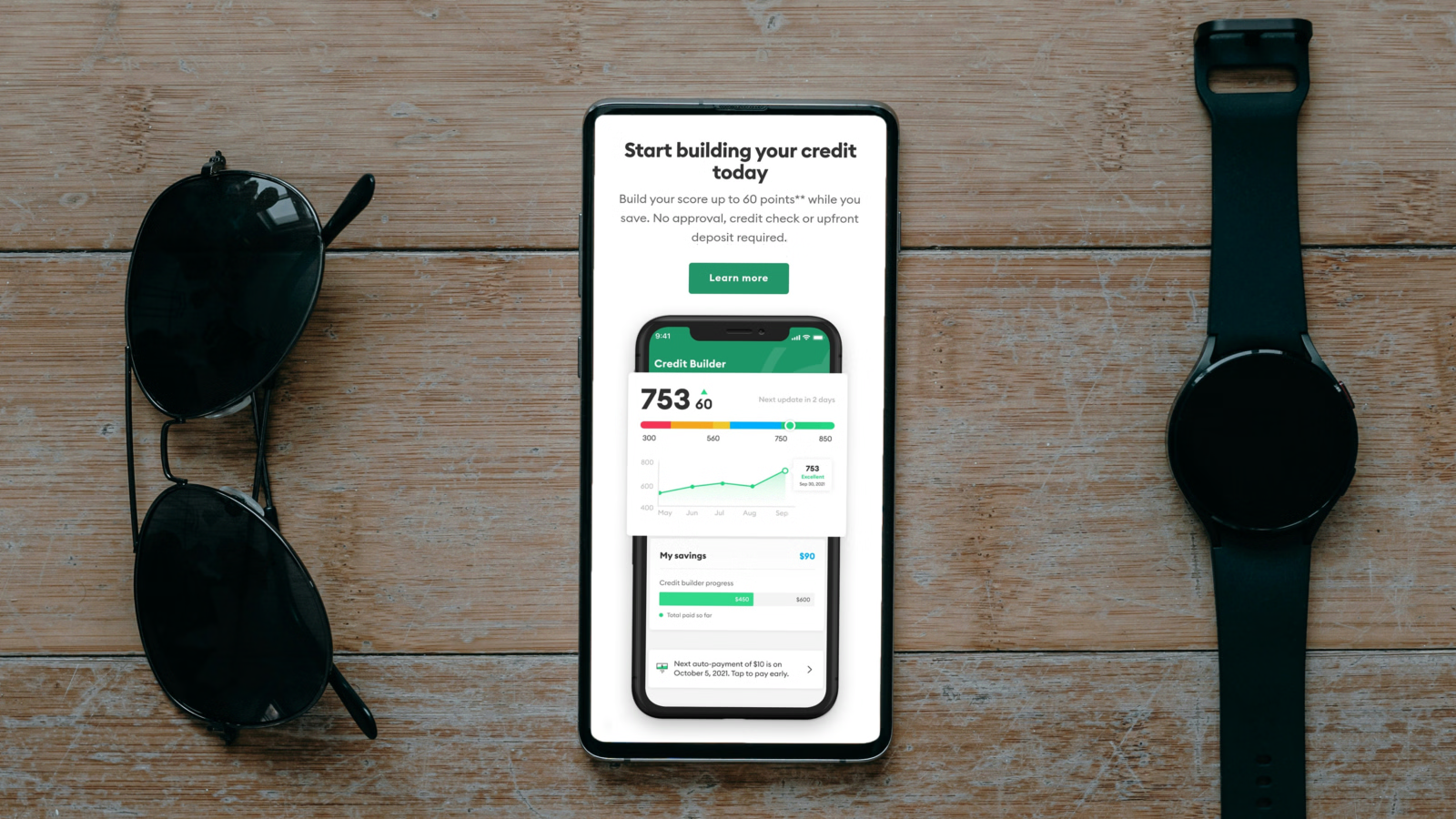
How Credit Cards Move Your Credit Score
Your FICO credit score breaks down roughly like this: payment history 35%, credit utilization 30%, length of credit history 15%, credit mix 10%, and new credit/inquiries 10%. The first two are within your direct control and make up nearly two-thirds of the score.
Payment history is binary. Pay on time, get credit. Pay late by 30 days or more, take the hit. Late payments stay on your credit report for seven years, though their impact fades. The single most useful thing you can do with a first card is set up autopay for at least the minimum. That alone protects the biggest slice of your score.
Utilization is the percentage of your credit limit you're using, reported per card and across all cards. A $1,000 limit with a $300 balance shows 30% utilization. Below 10% is the sweet spot. Utilization is reported on the statement closing date, not the due date. Even if you pay in full every month, the balance on your closing date is what gets reported. If you want to keep utilization low for score reasons (applying for a mortgage soon, for example), pay the card down before the statement closes.
Length of credit history is why you don't close your first card after upgrading. Closing a card you've had for five years can lower your average account age and total available credit, raising utilization.
Hard pulls. Each application triggers a hard inquiry. One typically costs 5 to 10 points temporarily and falls off after two years. Several in a short window has a real cumulative impact. Spacing applications at least 90 days apart is the safer rhythm.
Choosing Your First Card: A Framework
Step one: figure out what you qualify for. Most major issuers offer pre-qualification tools that run a soft pull (no score impact) and tell you which cards you're likely to be approved for. Capital One, Discover, and American Express all have one. Use them before any actual application.
Step two: match the card to your credit profile.
- No credit history and not a student: secured card. Discover it Secured is a strong default.
- Student with thin or no credit: student cards from Discover, Capital One, or Bank of America. Lower approval bar, basic rewards, no annual fee.
- Some credit history, fair score (640 to 700): unsecured starter cards like the Capital One Quicksilver, Discover it Cash Back, or basic Citi or Chase products you pre-qualify for.
- Good to excellent score (700+): the full beginner cash-back lineup is open. Chase Freedom Unlimited, Citi Double Cash, Discover it Cash Back, Capital One Quicksilver. Pick on rewards structure and which categories match your spending.
Step three: check three things on the disclosure. Annual fee should be $0. Foreign transaction fee should be 0% if you travel internationally at all. Rewards categories should match where you actually spend.
Step four: apply for one card. Use it for one recurring expense (gas, a streaming subscription, your phone bill). Set up autopay for the full statement balance. Wait six months. Watch your score climb.
That's the formula. Pick a card you qualify for, use it for an expense you already have, pay the statement in full, repeat. Most beginners who follow this for a year end up with a score in the 720s to 740s and access to almost any card on the market.
The Mistakes That Cost the Most
A few traps catch nearly every first-time cardholder.
Carrying a balance to "build credit" is a myth. Paying in full every month builds credit just as well, better actually, because utilization stays low. Carrying a balance just costs you interest.
Closing your first card after getting a better one shortens your credit history and reduces your total credit limit. Keep the no-fee card open and use it once a quarter to keep the account active.
Maxing out the limit, even briefly, hurts your score. A balance over 30% gets reported on the statement closing date even if you pay it off the next day. Pay it down before the statement closes.
Applying for a stack of cards in one sitting compounds the hard-pull penalty. Issuers also use velocity rules (Chase's 5/24, for example) that automatically deny applicants who've opened too many accounts recently.
Credit cards reward people who learn how to use them. Pick a no-fee card that matches your spending, pay in full, watch the score build, then expand from there.
This article contains affiliate links. If you apply through our links, we may earn a commission at no cost to you, which helps us continue sharing points and miles strategies with the community.
Some of the links in this article are affiliate links. We may receive a small commission at no extra cost to you if you apply through these links. This helps us keep the site running and continue creating free content.