Key Points
- TSA's Touchless ID program is now live in dedicated PreCheck lanes at major hubs operated by Delta, American, and United, with a passport-photo facial match replacing the physical ID handoff.
- Enrollment is free for active PreCheck members, opt-in only, and routed through each airline's loyalty profile rather than the TSA itself, so coverage depends on the carrier you book.
- The system is voluntary at every checkpoint, you must still carry a physical ID, and an opt-out at the lane sends you through standard PreCheck verification with no penalty.
TL;DR
TSA's Touchless ID is now live in PreCheck lanes for Delta, American, and United at major hubs. It is free, voluntary, and opt-in through your airline loyalty profile.
Introduction
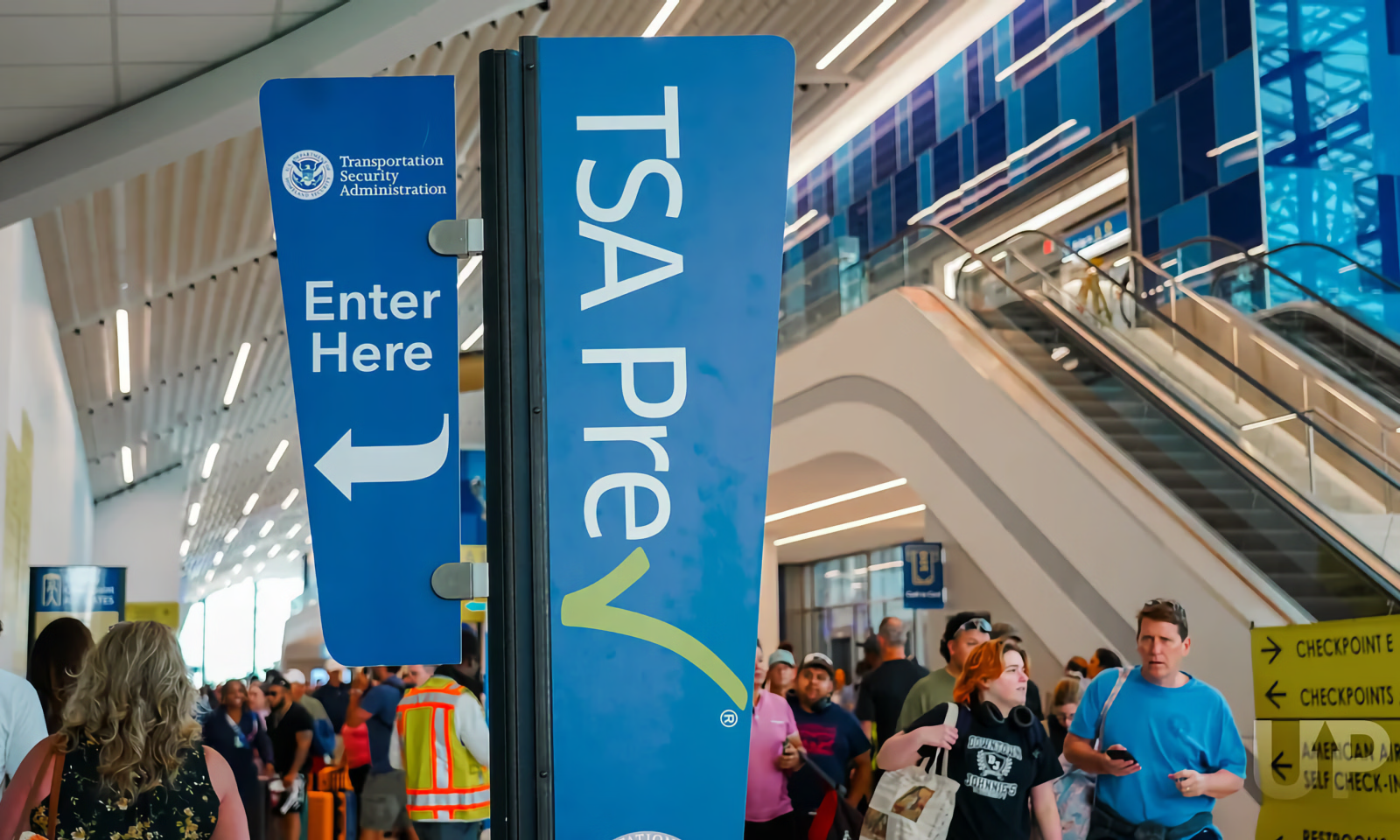
TSA's PreCheck Touchless Identity Solution is now operating in dedicated PreCheck lanes across most major U.S. hubs, with Delta, American, and United enrolled as the active carrier partners as of April 2026. The system uses a live camera capture at the lane and matches it against the passport or visa photo already on file with the U.S. government, removing the physical ID handoff at the document-check podium. The TSA confirmed the rollout in agency communications throughout 2025 and 2026, framing Touchless ID as the operational extension of the agency's Credential Authentication Technology program rather than a new screening rule.
What TSA Announced
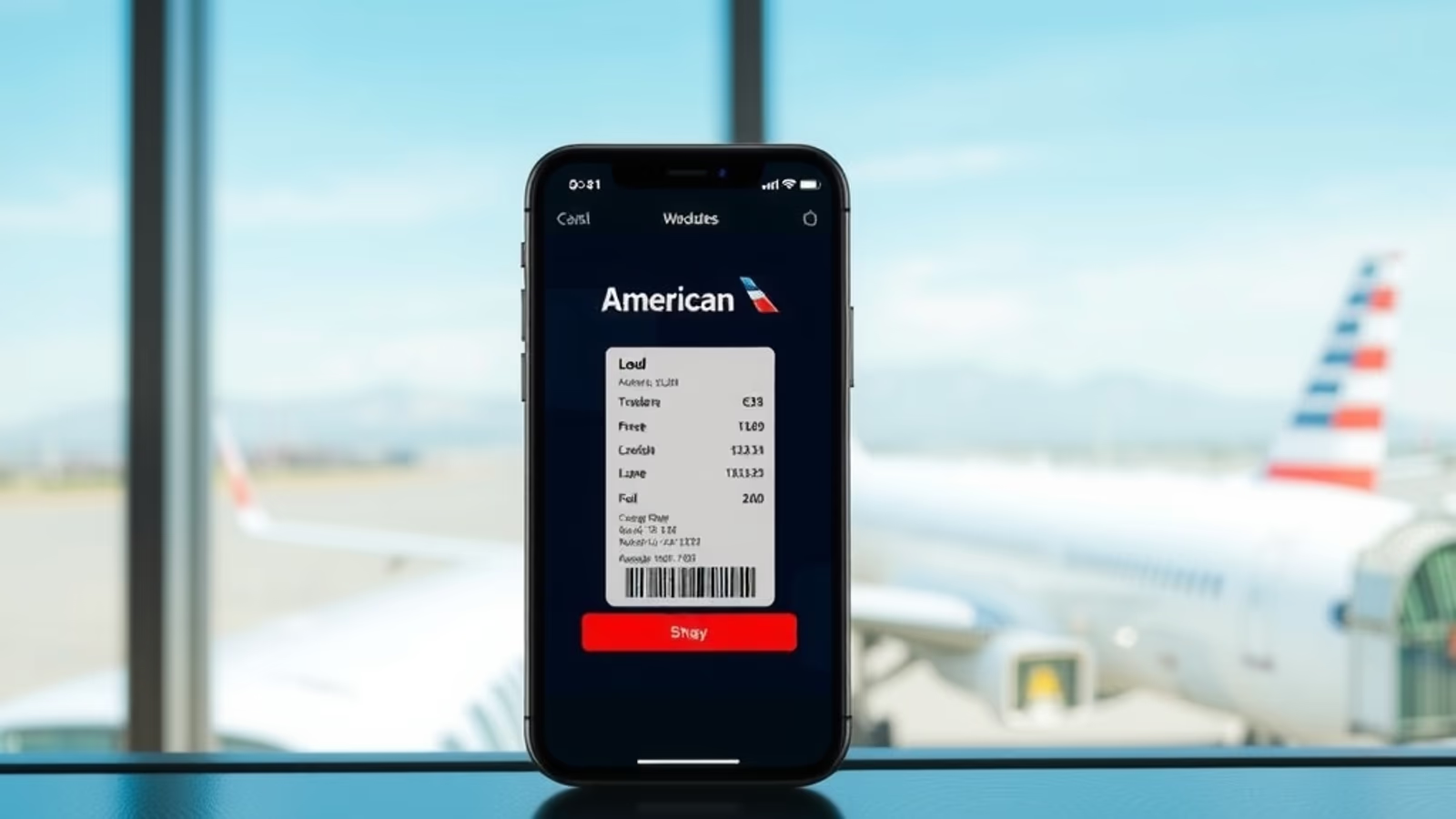
The Touchless Identity Solution sits inside TSA PreCheck and is available only to PreCheck members on flights operated by participating carriers. Travelers opt in once through their airline loyalty profile, store a passport number alongside their Known Traveler Number, and then encounter a Touchless ID indicator on a mobile boarding pass when they are eligible for the dedicated lane. At the lane, a camera captures a live image, the system runs a one-to-one match against the stored passport photo, and the traveler proceeds without surrendering an ID card. The TSA reports the verification step itself completes in under eight seconds in operational testing.
The participating airline list as of April 2026 is Delta Air Lines, American Airlines, and United Airlines, with Alaska Airlines listed in the program at limited stations. The active airport list runs through the major hubs operated by those carriers: Atlanta, Detroit, Los Angeles, New York LaGuardia, New York JFK, Salt Lake City, and Washington Reagan for Delta; Reagan, LaGuardia, Atlanta, and Salt Lake City for American; Chicago O'Hare and Los Angeles for United. The TSA has stated publicly that the program is on track to expand to additional airports through 2026, and the agency's broader CAT-2 facial-matching deployment now covers more than 250 federalized checkpoints, which is a separate, lane-agnostic program. Touchless ID is the PreCheck-only flavor of that capability.
Privacy and Opt-Out Mechanics
Touchless ID is voluntary at the lane. A traveler who has opted in through their airline profile can still decline the camera at the checkpoint by telling the officer; the alternate path is a standard PreCheck document inspection with no secondary screening triggered. The TSA's published policy retains Touchless ID-specific data for 24 hours after the scheduled departure, longer than the normal CAT-2 lane retention which deletes the live image immediately after the match. Both retention windows are shorter than the typical commercial-airline biometric programs that have drawn ACLU and Senate scrutiny since 2023, though the agency continues to face pressure for an opt-out that is more visible at the lane than the current signage practice.
Two practical limits worth flagging. The first is that Touchless ID currently requires a U.S. passport on file, not a state driver's license, because the matching template is the passport photo. The second is that the program is limited to solo travelers in most carriers' implementations; families and groups still route through standard PreCheck.
How It Compares to CLEAR Plus
CLEAR Plus is a different mechanism with a different account holder. CLEAR is a private vendor that runs its own enrollment, captures iris and facial biometrics at sign-up, and operates a separate identity-verification lane that runs parallel to TSA's standard document check. CLEAR membership runs $209 a year for individuals as of 2026 pricing and does not include the physical screening that comes after identity verification. Travelers who hold CLEAR Plus alone still need to pass through a TSA lane after the CLEAR podium.
Touchless ID does not replace CLEAR and CLEAR does not replace Touchless ID. CLEAR's value proposition is shorter document-check queues at high-traffic airports where the standard TSA line is the bottleneck. Touchless ID's value proposition is dropping the physical ID handoff inside an existing PreCheck reservation. Travelers carrying both can use them in sequence at participating airports, and the TSA has confirmed there is no exclusivity rule preventing it. The free comparison favors Touchless ID for any PreCheck member whose home airport is on the rollout list and whose airline is a partner.
What Changes for the Reader
For PreCheck members flying Delta, American, or United through a participating hub, the practical change is small but real: no fumbling for an ID card or boarding pass at the document podium. The shoes-on, laptops-in PreCheck rules are unchanged, and physical ID is still required as a backup if the match fails or the camera is offline. Enrollment is the only friction. Each carrier handles opt-in inside its own loyalty profile, and at least one airline requires an annual renewal, so a traveler who flies all three needs to enroll three times and refresh as required.
For travelers booking on non-participating carriers or through smaller airports, nothing changes in 2026. The standard PreCheck process remains in place at every checkpoint nationwide, and there is no penalty for declining Touchless ID where it is offered. For travelers planning international trips, the program does not extend to Customs and Border Protection's Global Entry kiosks, which run a separate facial-matching system that has been live since 2018 and is not affected by the PreCheck rollout.
The forward-looking note: the TSA's stated goal is broad expansion of facial-matching across PreCheck and standard lanes through 2027, and Congressional oversight on biometric retention rules is the variable most likely to change the operational picture. For now, the program is a free, voluntary upgrade for the right combination of PreCheck membership, participating airline, and rollout airport.
This article contains affiliate links. If you apply through our links, we may earn a commission at no cost to you, which helps us continue sharing points and miles strategies with the community.
Some of the links in this article are affiliate links. We may receive a small commission at no extra cost to you if you apply through these links. This helps us keep the site running and continue creating free content.