President Trump signed legislation on April 30, 2026, ending the 75-day Department of Homeland Security shutdown, the longest single-agency funding lapse in U.S. history, and reopening TSA, the Secret Service, FEMA, and the Coast Guard through September 30. The headline news is good. The travel news underneath it is not.
According to DHS, more than 1,110 TSA officers resigned between February 14 and the end of the shutdown, walking away from a workforce of roughly 50,000 screeners after missing two full paychecks. Backfilling those positions takes four to six months of training before a new hire can run a checkpoint solo, per TSA's own onboarding standards. That math doesn't resolve before summer travel.
For travelers booking points-and-miles trips through August, this is the operational reality you're planning around, even though the lines are no longer in the news cycle.
What actually happened, and what changed last week
The shutdown began February 14, 2026, when a short-term continuing resolution for DHS expired without a successor. Unlike the 43-day full-government shutdown in October-November 2025, the February-April 2026 lapse was DHS-only, the FAA was funded under a separate full-year appropriation passed February 3, so air traffic control operated normally throughout. The pain was confined to TSA checkpoints and CBP arrivals.
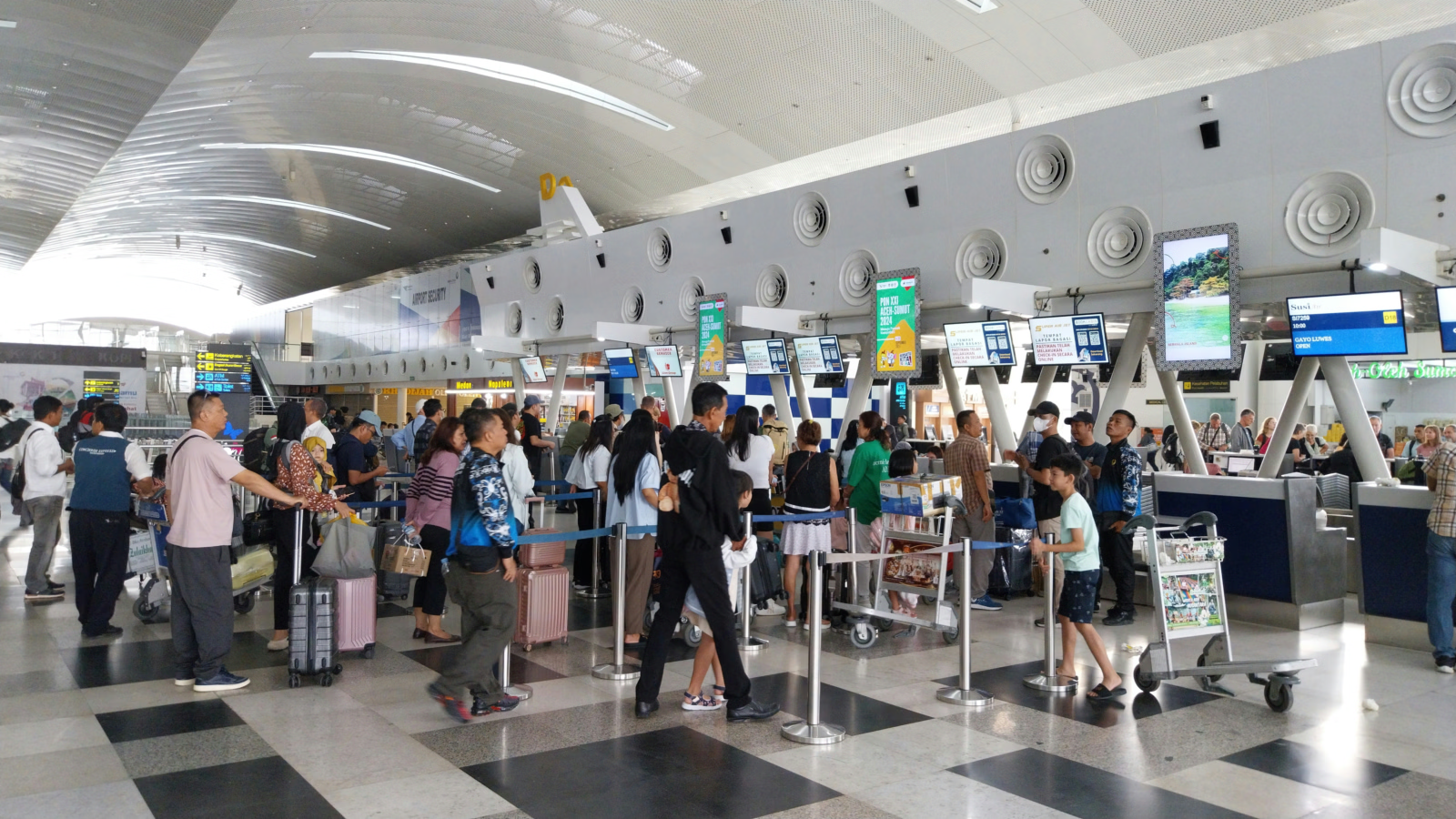
It got bad. CNN reported hours-long lines at Houston Hobby, Atlanta Hartsfield-Jackson, New Orleans Louis Armstrong, and Charlotte Douglas during the first weekend without full pay in mid-March. By late March, NPR was reporting checkpoint waits exceeding two hours at multiple Category X airports during morning peaks. Global Entry kiosks were dark for nearly the full duration. Mobile Passport Control absorbed the overflow at international gateways.
The bill Trump signed last week, passed by the House on voice vote and through the Senate the day before, funds DHS minus a portion of ICE enforcement appropriations. TSA, the Coast Guard, FEMA, and the Secret Service are funded through September 30, 2026. Officers received back pay and a return to schedule. Per a memo from Secretary Markwayne Mullin posted May 1, agency operations are "returning to normal staffing posture in phases."
The staffing hangover
Phases is the relevant word. A pre-shutdown TSA workforce of approximately 50,000 lost 1,110-plus resignations, and that number is the floor, DHS has not yet published a final post-shutdown attrition report, and industry analysts expect callout-rate normalization to lag by weeks.
Time's May 1 reporting cited TSA sources warning that the affected airports, Houston, Atlanta, New Orleans, Charlotte, Newark, and several others in the worst-hit cohort, will likely see elevated wait times through the early summer travel period. The agency is running expedited hiring, but new-hire training is the binding constraint, not application volume.
What this means in practice: a Tuesday morning at a major hub in May or June 2026 will probably look closer to a busy holiday weekend than a normal weekday. PreCheck lanes, which remained open throughout the shutdown, should be the default, not the upgrade.
Practical implications for points-and-miles travelers
A few things to factor in if you've booked award travel through summer:
Arrival buffer. Add 45 to 60 minutes to your normal airport timing at the airports most affected during the shutdown, particularly on weekend mornings. The standard "two hours domestic, three hours international" formula is realistic again at most airports but conservative at Houston Hobby, Atlanta, Newark, and Charlotte through at least June.
Trip-delay coverage matters more this summer. Cards with built-in trip-delay reimbursement protect the financial downside of a missed connection caused by a checkpoint backup. The Capital One Venture X triggers coverage after a three-hour delay, the shortest threshold among major premium cards. The Chase Sapphire Reserve and American Express Platinum both trigger at six hours. None of these will rebook your flight, they reimburse meals and lodging if you get stuck. Document the delay with timestamped photos of the wait board and keep receipts.
Award rebooking flexibility is uneven. Southwest still redeposits Rapid Rewards points instantly with no fee. United and Delta charge nothing for cancellation but reprice if you change. American charges $150 on most awards outside the 24-hour window. If you're booking summer award travel right now, the program flexibility is part of the value calculation.
Global Entry kiosks are open again as of May 1, per CBP. Active memberships were not invalidated during the shutdown, the kiosks simply weren't staffed. If you applied between February and April and your interview was deferred, CBP is working through the backlog and contacting applicants directly to reschedule.
CLEAR remained operational throughout and continues to do so. It is a private service, not a federal program, and was unaffected by appropriations. The Amex Platinum covers up to $209 in CLEAR Plus credits annually as of the 2025 refresh, which more than offsets the membership cost for cardholders.
The longer-term question
The structural lesson the industry is processing is that TSA's funding model, annual DHS appropriations subject to lapse, creates a single point of failure for U.S. aviation that the FAA model does not. Industry groups including Airlines for America have called for multi-year TSA appropriations or a fee-based funding mechanism similar to the Aviation Trust Fund. Those proposals existed before February 2026. They have not moved through committee.
The DHS funding extension expires September 30, 2026. Whether Congress arrives at a longer-term solution before then will shape what fall travel looks like.
For now, the shutdown is over, the lines are easing, and the points are still worth booking. Just give yourself the buffer.
This article contains affiliate links. If you apply through our links, we may earn a commission at no cost to you, which helps us continue sharing points and miles strategies with the community.
Some of the links in this article are affiliate links. We may receive a small commission at no extra cost to you if you apply through these links. This helps us keep the site running and continue creating free content.