
Key Points
- TSA's REAL ID enforcement is now in effect, and a $45 alternative-ID fee for non-compliant travelers is reportedly scheduled for February 1, 2026.
- American Airlines began rolling out free in-flight Wi-Fi for AAdvantage members in January 2026, joining Delta, United, and Southwest.
- Southwest Airlines is ending open seating in early 2026, switching to assigned seats with three categories.
TLDR
As of April 2026, the biggest U.S. air-travel changes are tighter TSA ID rules, free Wi-Fi spreading across major loyalty programs, and the end of Southwest's open seating. Most of it favors travelers who plan ahead.
Introduction
The U.S. air travel experience is changing more this year than it has since the post-9/11 security overhaul. REAL ID is finally being enforced at TSA checkpoints. Free in-flight Wi-Fi is becoming a baseline benefit instead of a premium upsell. Southwest Airlines is retiring the open-seating policy that has defined the airline since 1971. And carry-on enforcement at the gate is getting noticeably stricter.
Here's what is actually happening in 2026, what travelers can expect at the airport, and how to prepare.
REAL ID enforcement and the $45 fallback
REAL ID enforcement at TSA checkpoints took effect May 7, 2025, after roughly two decades of delays. Domestic travelers now need a REAL ID-compliant driver's license (look for the star in the upper corner), a U.S. passport or passport card, a military ID, an Enhanced Driver's License from a participating state, or a Trusted Traveler card such as Global Entry or NEXUS.
According to TSA, more than 94% of passengers were already showing acceptable ID at the start of 2026. The remainder is the policy question.
Multiple travel-industry outlets have reported that beginning February 1, 2026, travelers who arrive without compliant ID will be directed into a paid identity-verification process called TSA ConfirmID, with a fee in the range of $45 valid for a 10-day window. The exact rollout, fee structure, and final TSA documentation should be confirmed before publication. What is not in dispute: the alternate-ID process is slower than standard screening and includes additional questioning.
Practical takeaway: if you don't have a REAL ID and don't routinely fly with a passport, get a REAL ID at your state DMV now. Most states charge $10-$30, and processing typically takes one to four weeks.
Biometric screening expands; opt-out remains
TSA's CAT-2 units, which scan an ID document and compare it to a live photo of the traveler at the podium, have been rolling out across major U.S. airports through 2025 and into 2026. The agency confirms passengers can opt out of the facial-comparison step and request a manual ID check. Wait time is typically the same. Expect biometric podiums to be the default at the largest hubs by mid-2026.
One related rule that did go away: on July 8, 2025, the Department of Homeland Security ended the routine shoe-removal requirement at standard TSA lanes, citing improvements in scanner technology. Keep your shoes on unless an officer asks otherwise.
Free Wi-Fi becomes table stakes
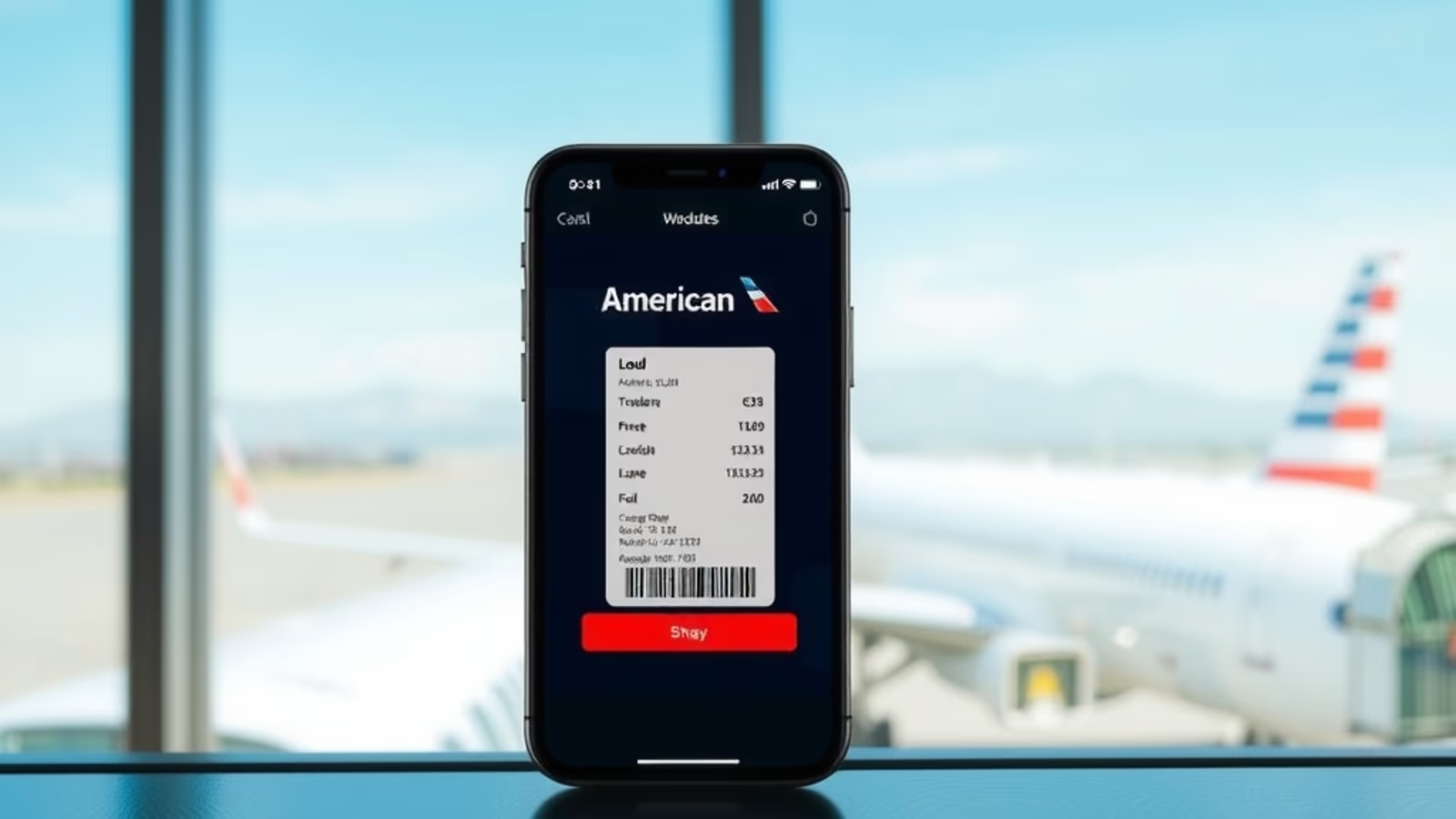
American Airlines began rolling out complimentary in-flight Wi-Fi for AAdvantage members in January 2026, in partnership with AT&T. American has said the benefit will eventually cover roughly 90% of its mainline fleet, on aircraft equipped with Viasat or Intelsat connectivity. Aircraft on Panasonic systems, including some 777-200ERs, 777-300ERs, and 787s, are not included in the initial rollout.
American is the latest, not the first. Delta launched free Wi-Fi for SkyMiles members in 2023. United and Southwest extended free Wi-Fi to loyalty members during 2024. Alaska Airlines has said its Starlink-equipped fleet will offer free Wi-Fi as the retrofit progresses through 2026.
The pattern is clear: free in-flight Wi-Fi is becoming a loyalty-program benefit rather than a paid add-on. The price of admission is signing up for the program, which costs nothing.
Southwest ends open seating
Southwest Airlines confirmed last year that it will end open seating and move to assigned seats in 2026. Reservations for travel on or after the cutover date already display assigned seats, and Southwest is selling the new product in three tiers: Standard (back of cabin), Preferred (front of cabin, standard pitch), and Extra Legroom (near exit rows, with three to five additional inches of pitch).
The fare structure is being relabeled: Basic, Choice, Choice Preferred, and Choice Extra. Southwest has also revised its longstanding Customer of Size policy to require an extra seat be purchased in advance, with conditional refunds available after travel.
The exact in-service date for assigned seating has been reported as January 27, 2026, but travelers should confirm the cutover for their specific itinerary in their reservation.
Stricter carry-on enforcement
Carry-on dimensions for most U.S. airlines remain 22 by 14 by 9 inches; Southwest's allowance is slightly larger. What is changing is enforcement. Gate agents are increasingly using sizers at the boarding door and charging gate-check fees on bags that don't fit, often $50-$100 versus $30-$35 at the ticket counter. Some international carriers also enforce 15-20 pound carry-on weight limits, and U.S. carriers may follow.
If you haven't measured your carry-on lately, do it before your next flight.
What travelers should do before the next trip
- Confirm your ID. If your driver's license doesn't have a star, schedule a DMV appointment or fly with a passport.
- Join the loyalty program of any airline you fly more than once a year. Free Wi-Fi is now the most consistent free benefit of membership.
- Check your Southwest reservations for travel after late January 2026 to confirm seat assignments.
- Measure and weigh your carry-on. If it's borderline, replace it before the gate agent does it for you.
- Build buffer time into the first few months of 2026. Security lines will be longer while travelers adjust.
For frequent flyers, premium travel cards continue to soften the rough edges. The Amex Platinum and Chase Sapphire Reserve both reimburse Global Entry or TSA PreCheck application fees and include Priority Pass lounge access, which matters when security takes longer than expected. Airline co-branded cards remain the cleanest way to dodge bag fees if carry-on enforcement turns into a checked-bag situation.
Bottom line
The 2026 changes are real, dated, and mostly favor prepared travelers. REAL ID is enforced. Free Wi-Fi is spreading. Southwest's cabin is getting numbered. None of it is catastrophic, and several pieces, especially Wi-Fi and the end of shoe removal, are genuine improvements. The travelers who breeze through the rest of 2026 are the ones who handle the DMV, the loyalty signup, and the carry-on measurement before they get to the airport.
This article contains affiliate links. If you apply through our links, we may earn a commission at no cost to you, which helps us continue sharing points and miles strategies with the community.
Some of the links in this article are affiliate links. We may receive a small commission at no extra cost to you if you apply through these links. This helps us keep the site running and continue creating free content.