Repositioning cruises are the cruise industry's shoulder-season clearance rack. When ships move between seasonal markets (Caribbean to Mediterranean in spring, Mediterranean back to Caribbean in fall, Alaska to Australia in autumn), cruise lines fill those one-way crossings at steep discounts. You get the same ship, the same crew, the same balcony, often for 40 to 60 percent less per night than peak-season pricing on the same vessel.
This guide covers the eight repositioning patterns worth booking for the 2026 fall and 2027 seasons. Rather than chase specific sailing dates (cruise calendars shift every cycle), we focus on the recurring routes each major line runs, what to expect on board, and how to time your booking. For a points-and-miles primer, see our guide to understanding miles and points. New to cruising? Our overview of Carnival's ships and onboard experience walks through what life at sea looks like.
Why Repositioning Cruises Offer Outsized Value
Cruise lines do not want empty cabins. When a ship has to move between hemispheres for the season, every unsold balcony is a loss. The math forces aggressive discounting: 14-night transatlantic crossings sometimes price below what a 7-night Caribbean loop costs on the same ship the week before.
The savings show up everywhere. Per-night fares routinely run 40 to 60 percent below peak pricing. Balcony cabins on these sailings often cost less than interior cabins on round-trip itineraries. Onboard credit, free gratuities, and drink packages get bundled in to sweeten the deal. And because most repositioning cruises are 10 to 18 nights long, the daily cost of premium amenities (specialty dining, spa, Wi-Fi) drops too.
The trade-off is real but manageable: more sea days, fewer ports, and a one-way arrangement that requires a flight home from a different city than you departed. For travelers who actually want to use the ship, this trade is the entire appeal.
The 8 Repositioning Patterns Worth Booking for 2026-2027
1. Transatlantic Westbound (Europe to Caribbean, October-November)
Every fall, the Mediterranean cruise season winds down and dozens of ships sail west for their winter Caribbean schedules. This is the single largest annual repositioning event in cruising and produces some of the deepest discounts on the calendar. Royal Caribbean, Norwegian, MSC, Celebrity, and Princess all run multiple westbound crossings between mid-October and late November.
Expect 12 to 15 nights at sea with stops in the Azores, Madeira, and a Caribbean port or two before disembarkation in Florida or San Juan. Pricing on Royal Caribbean's Oasis-class and Norwegian's Breakaway-class ships has historically landed at $700 to $1,200 per person for interior cabins, with balconies often available under $1,500. Booking 8 to 10 months out is the sweet spot for cabin selection.
2. Transatlantic Eastbound (Caribbean to Europe, April-May)
The spring mirror of the fall westbound migration. Ships that wintered in the Caribbean head back to the Mediterranean for the European summer. Itineraries usually depart from Florida, Bayonne, or San Juan and arrive in Barcelona, Rome (Civitavecchia), Southampton, or Lisbon.
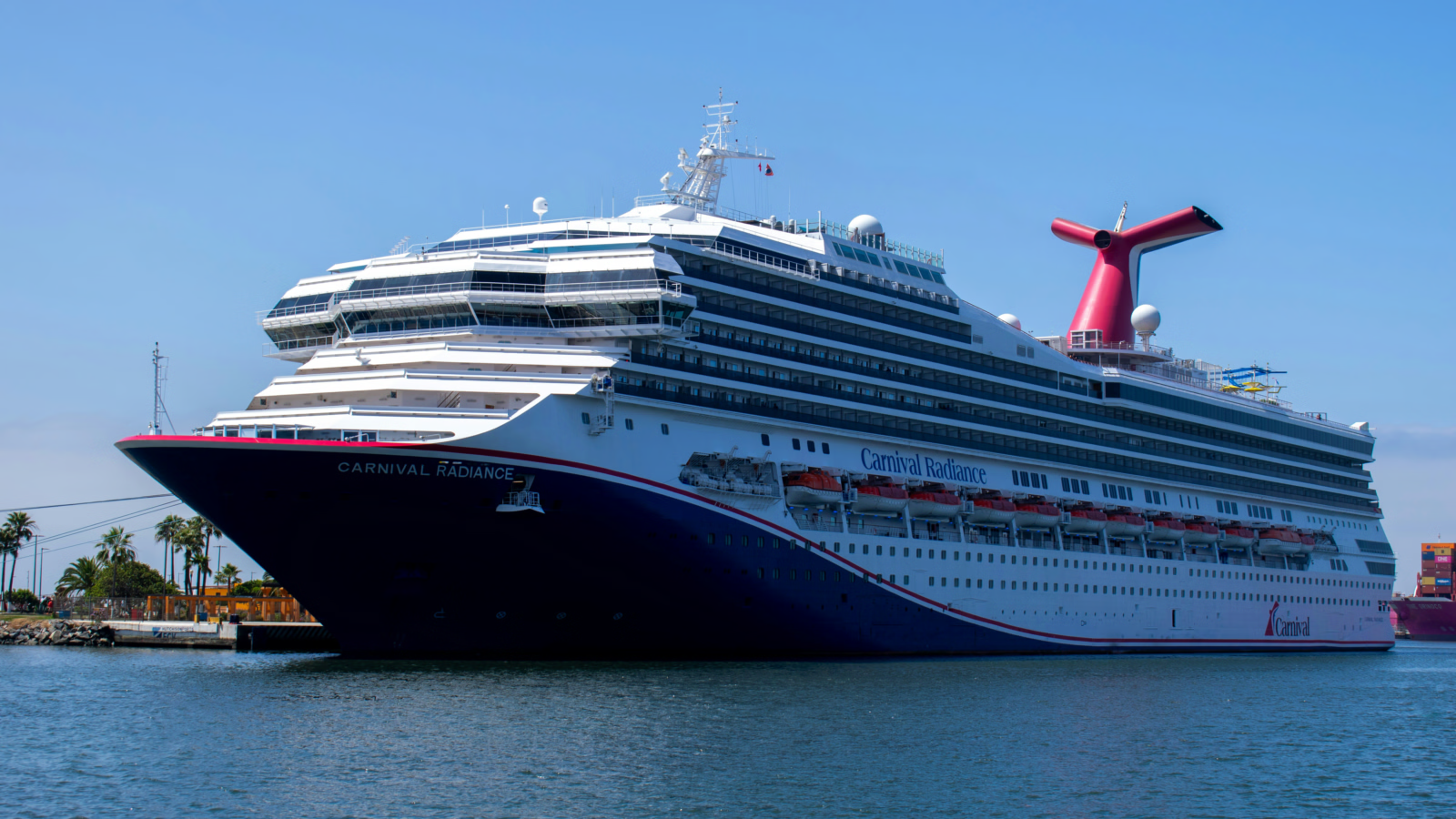
Carnival typically repositions Carnival Glory and similar mid-size ships each spring from Florida to Barcelona, with port stops in Bermuda, the Azores, and Spain. Celebrity, Holland America, and Princess run similar patterns. April and early-May sailings often include three or four port stops, while late-May crossings tend to be more sea-day heavy. If you've never crossed an ocean by ship, this is the version to book first: warm weather, smooth Atlantic conditions, and a built-in European jumping-off point for further travel. Pair the back end with platforms like Expedia for one-way flights home.
3. Panama Canal Transits (Spring and Fall)
Princess Cruises has run Panama Canal transits as a signature repositioning route for decades. The pattern is reliable: spring sailings from Fort Lauderdale to Los Angeles, fall sailings the other direction. Holland America, Norwegian, and Celebrity run similar itineraries. These are 14 to 17 night sailings, mostly because crossing the canal itself takes a full day, with stops in Cartagena, the Pacific coast of Costa Rica or Mexico, and either an Aruba or Curacao call.
The canal transit is the attraction. Watching a 100,000-ton ship rise and fall through the Miraflores and Gatun locks is one of the most engineering-impressive experiences in modern travel. Pricing typically runs $1,400 to $2,800 per person for balcony cabins, substantial in absolute dollars but cheap per-night given the length. Princess's Coral Princess and Island Princess were purpose-built narrower to fit the original locks and remain the most atmospheric ships for this route.
4. Hawaii to Sydney (October-November)
When ships finish their summer Alaska seasons, several reposition south through Hawaii to Sydney or Auckland for the Southern Hemisphere summer. Celebrity, Royal Caribbean, and Princess have all run versions of this 17 to 21 night sailing. The route is sea-day heavy, with stops in Maui, Kona, and the Big Island, then a long Pacific stretch before island calls in Fiji, Samoa, or New Caledonia.
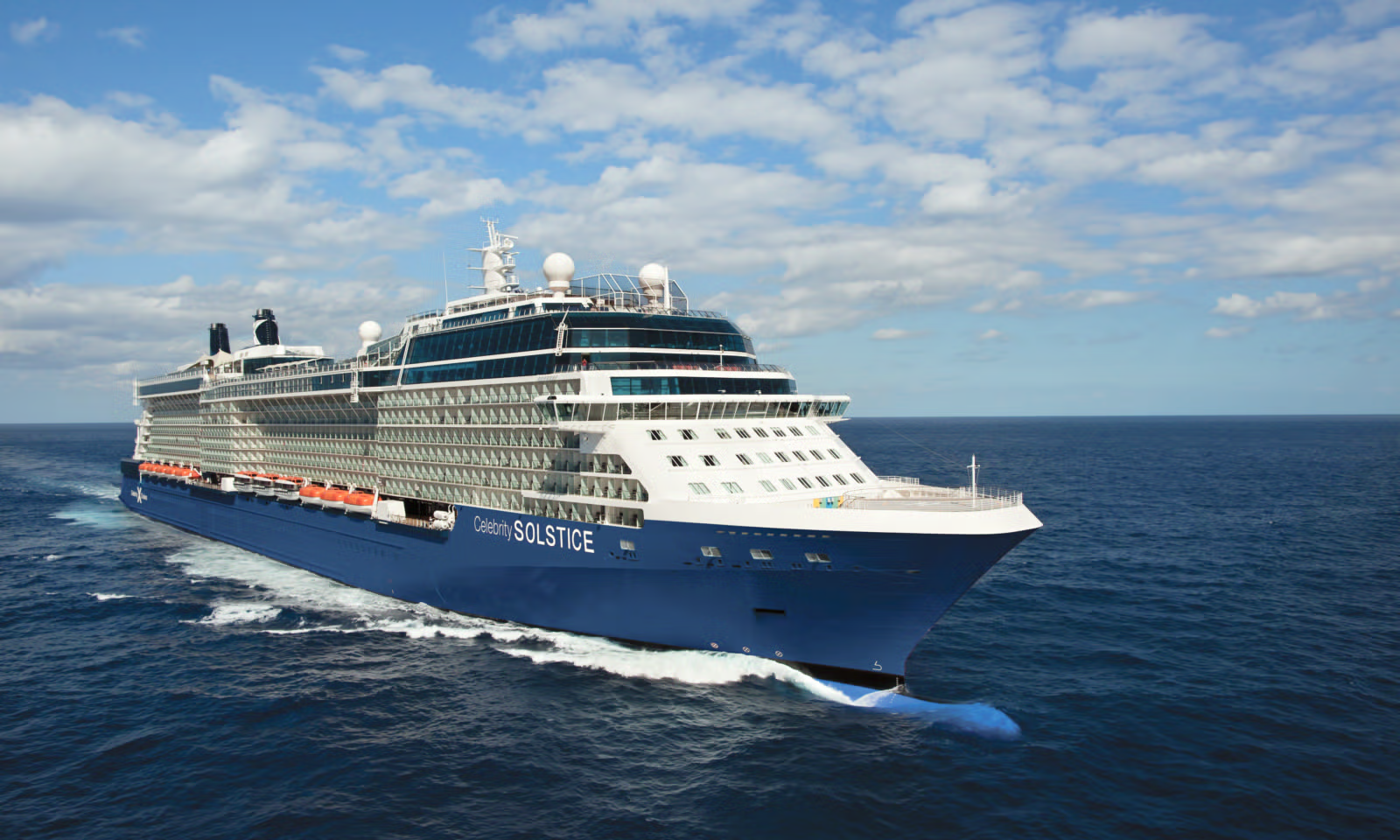
This is a serious time commitment, and the sailings sell out earliest, often 12 months in advance. But the per-night value is exceptional, and you get the rare experience of crossing the equator at sea (cruise lines still do the traditional King Neptune ceremony). Celebrity's larger ships have historically offered the strongest balcony pricing; booking through Celebrity Cruises during wave-season promotions in January and February tends to lock in the best perks.
5. South Pacific to U.S. West Coast (April-May)
The reverse of pattern 4. Ships that spent the Southern Hemisphere summer in Australia and New Zealand sail back north toward Vancouver or Seattle for the Alaska season. Routes typically run Sydney to Honolulu to Vancouver, with stops in the Solomon Islands, Fiji, and French Polynesia.
Norwegian runs this pattern reliably (you can browse their sailings through NCL), as do Royal Caribbean and Princess. These are long sailings, 18 to 25 nights, which is part of the value: few cruisers can take that much time off, so cabins price aggressively. Expect lots of formal nights, heavy enrichment programming (lecturers, cooking classes, wine tastings), and a passenger demographic skewed older and well-traveled.
6. Alaska to Australia via Asia (September-October)
A smaller but distinctive pattern. A handful of ships transition from Alaska to Asian and Australian markets via Tokyo, Shanghai, Hong Kong, or Singapore. Princess, Holland America, and Celebrity have all run versions. These itineraries stretch 25 to 35 nights and include a remarkable variety of ports: Anchorage or Vancouver at the start, then Japanese ports (Hakodate, Tokyo, Kobe), Chinese stops, Vietnam, and finally Sydney or Auckland.
These are the most expensive repositioning cruises in absolute terms but the cheapest on a per-port basis. The Asian segments alone, booked standalone, would cost more than the full repositioning fare. For travelers who want a slow cross-Pacific arc and don't mind being away for a month, nothing else compares. Consider travel insurance like World Nomads for sailings this long.
7. Mediterranean to South America (November-December)
European ships heading to the South American summer run transatlantic-then-south itineraries departing Barcelona, Lisbon, or Genoa and arriving in Rio de Janeiro, Buenos Aires, or Santos. MSC dominates this pattern, with Costa and occasional Royal Caribbean and Celebrity sailings filling out the calendar. Expect 14 to 18 nights with stops in the Canary Islands, Cape Verde, and Brazilian coastal ports.
The on-board experience leans European: Italian and German passengers on MSC, multilingual announcements, later dinner times, and a relaxed dress code. Pricing is consistently among the lowest per-night of any repositioning route, partly because the South American market is less saturated with U.S. travelers. If you can handle a flight home from Rio or Buenos Aires, the math works out favorably.
8. Adriatic and Northern Europe Closeout (October-November)
Ships finish their summer Northern European seasons and reposition south to the Mediterranean or west to the Caribbean. These are shorter than transatlantic crossings (7 to 12 nights) and heavily port-focused: Stockholm to Copenhagen to Hamburg to Southampton, or Venice through the Adriatic to Barcelona.
Norwegian, Royal Caribbean, and Holland America all run versions. The value is different from pure transatlantic plays: you're paying a small premium over a standard 7-night Caribbean to access cities that are otherwise expensive to visit (Reykjavik, Tallinn, Gdansk). Booking flights home from these ports can cost more than the cruise itself, so check one-way fare availability first. CheapOair is worth a look for one-way European flights out of smaller airports.
Tips for Booking a Repositioning Cruise
Book early for cabin selection, late for fare. The deepest discounts often appear 60 to 90 days before sailing, but by then most balconies are gone. If cabin location matters, book 8 to 12 months out. If you only care about the lowest fare, watch the 90-day mark.
Stack perks during wave season. January and February are when cruise lines run their biggest promotions. Repositioning sailings booked then often include free gratuities, $200 to $600 in onboard credit per cabin, discounted single supplements, and free upgrades.
Account for one-way airfare. A $799 transatlantic balcony is less of a bargain if the flight home costs $1,400. Use flexible-date search and consider open-jaw itineraries. Business-class transatlantic awards often have better one-way availability than round-trip, which makes repositioning cruises a natural fit for points users.
Check the demographic. Repositioning cruises skew older. Average passenger age can run 60 plus, and the pace is calmer than peak-season family sailings. If you want kids' clubs and water slides, these are not the right product. If you want quiet decks and serious wine programming, they are.
What to Expect On Board
Repositioning cruises have a different rhythm than port-heavy itineraries. With 8 to 14 consecutive sea days on some routes, the ship itself becomes the destination. Expect daily enrichment programming: guest lecturers, cooking classes, dance lessons, and art auctions. Specialty restaurant reservations are easier because passengers have time to spread dining across multiple nights. Spa treatments often discount on the port days that don't exist here.
Dress code skews more formal. Most lines have two to four "elegant" nights on a 14-night sailing, and participation is higher than on shorter itineraries. Pack a jacket. The casino runs longer hours, trivia and cards become social currency, and the deck chairs are almost always available.
Hidden Costs to Plan For
The cruise fare is just the start. Plan for:
- One-way airfare home, which can run $400 to $1,500 depending on route and class.
- Pre-cruise hotel if you arrive in the departure city a day or two early. For European departures, booking.com tends to have the strongest inventory and points integrations.
- Gratuities, typically $16 to $20 per person per day, sometimes waived as a booking perk.
- Specialty dining and drinks packages, which add $50 to $100 per person per day if you go all-in.
- Shore excursions, more expensive at exotic ports (Pacific islands, South American stops) than at familiar Caribbean ones.
- Travel insurance, non-negotiable on sailings longer than 14 nights. Repatriation costs from mid-ocean medical events can run five figures.
Best Picks for Different Traveler Types
The history traveler: Mediterranean-to-South America via Lisbon and the Canary Islands, or Adriatic closeouts out of Venice. Both deliver port quality with a long stretch of formal-leaning sea days.
The adventure traveler: Hawaii to Sydney, or the Alaska-to-Asia stretch. These routes reach Pacific islands and Asian ports that are otherwise difficult and expensive to access. If you enjoyed our coverage of Regent's Seven Seas Grandeur, premium versions of these routes scratch a similar itch on a longer timeline.
The budget traveler: Westbound transatlantic in November on Royal Caribbean or Norwegian. Interior cabins on these sailings have hit sub-$50 per night, the cheapest hotel-equivalent travel in the world for the quality of accommodation.
The luxury traveler: Panama Canal on Princess in a club-class mini-suite, or any Celebrity Edge-class transatlantic in a Sky Suite. The per-night cost is high but the value-to-experience ratio is hard to match. If you typically book adult-only sailings, our adults-only cruise guide covers complementary lines.
Planning Timeline
For a 2026 fall or 2027 spring repositioning cruise, the timeline that produces the best outcomes looks roughly like this:
12 months out: Pick your route pattern. Decide hemisphere, sailing length, and rough budget.
10 to 12 months out: Book the cabin. Watch for wave-season promotions in January and February.
6 months out: Lock in one-way airfare home. Award-seat inventory opens fully by this point on most carriers.
3 months out: Book pre-cruise hotel, specialty dining, shore excursions, and any spa appointments you want at specific times.
60 days out: Final payment is typically due. Confirm passport validity (six months past disembarkation for international ports), check visa requirements, and make sure your travel insurance is in force.
30 days out: Pack. Re-confirm flights. Print boarding documents if your line still uses them.
Conclusion
Repositioning cruises remain one of the genuinely underpriced corners of premium travel. The same ships and crews that command peak-season prices in summer and winter become accessible at fall-and-spring shoulder pricing twice a year, and the trade-off (sea days, one-way logistics) is exactly what makes the format appealing for travelers who actually want to use the ship.
The eight patterns in this guide repeat every cycle. Pick the route, book early for cabin choice or late for fare, stack the wave-season perks, and plan your flight home with the same care you plan the cruise. Your next big trip might just be a one-way ticket across an ocean, and it might cost less than your last round-trip beach vacation.
The Points Party may earn a commission from affiliate links in this article. This does not affect our editorial recommendations.
Some of the links in this article are affiliate links. We may receive a small commission at no extra cost to you if you apply through these links. This helps us keep the site running and continue creating free content.