

Kroger is the second-largest grocer in the country and runs about two dozen banner names you've probably shopped at without realizing they were the same company. Fred Meyer, Ralphs, Smith's, King Soopers, Harris Teeter, Mariano's, Fry's, QFC, City Market, and more. The loyalty program is unified across all of them, which means the same Kroger Plus card and the same Boost membership work whether you're in Atlanta, Seattle, or Phoenix. Most readers underestimate that. They also underestimate how much money is sitting on the table when they pay for $200 of weekly groceries with the wrong card.
This guide walks through the loyalty side (Kroger Plus, Boost, fuel points) and then layers on the card-strategy side, which is where most of the value lives. Kroger's own program gives you maybe 20 to 35 cents off per gallon. The card you pay with can hand you back 4% to 6% of every dollar. The two stack on the same swipe.
Key Points
- Kroger Plus is free and worth signing up for the fuel points alone, even if you only shop there occasionally.
- Boost membership pays for itself if you spend over roughly $50 per week at Kroger and ever buy gas at a Kroger fuel center or Shell station.
- The wallet-strategy decision is which card to swipe. Amex Gold, Blue Cash Preferred, and Citi Custom Cash all earn more on Kroger spend than any cashback credit Kroger itself can offer.
TL;DR
Sign up for free Kroger Plus, add Boost if you spend over $50 weekly, then pay with your highest-earning grocery card. As of May 2026, Amex Gold's 4x and Blue Cash Preferred's 6% are the top pairings.
What Kroger Plus actually is
Kroger Plus is the base loyalty card. Free, no annual fee, no commitment. You can sign up online at kroger.com or in-store at the customer service desk, and you'll get a physical card plus a digital version that lives in the Kroger app. The phone number tied to your account works at the register if you don't have either with you. Some banner stores call it by a different name (Fred Meyer Rewards, Ralphs Rewards Card, Smith's Rewards), but it's the same program under the hood.
What Plus gets you, in order of how often you'll actually use it:
- Personalized digital coupons loaded to your card through the app or website. These auto-apply at checkout when you buy the matching item. The selection is genuinely good if you shop the store regularly. Kroger uses your purchase history to surface offers on the products you already buy.
- Fuel points at 1 point per $1 of qualifying spend on groceries. Gift cards, alcohol in some states, tobacco, lottery tickets, postage stamps, and money services don't earn. Pharmacy purchases earn 1 point per $1 too, which most shoppers miss.
- Weekly digital sale pricing that requires the card to access the advertised price. The shelf tag shows the deal price with card, and without one you pay the regular price.
- Member-only specials, including occasional bonus-fuel-point promotions where you can earn 2x or 4x on specific products or your entire trip.
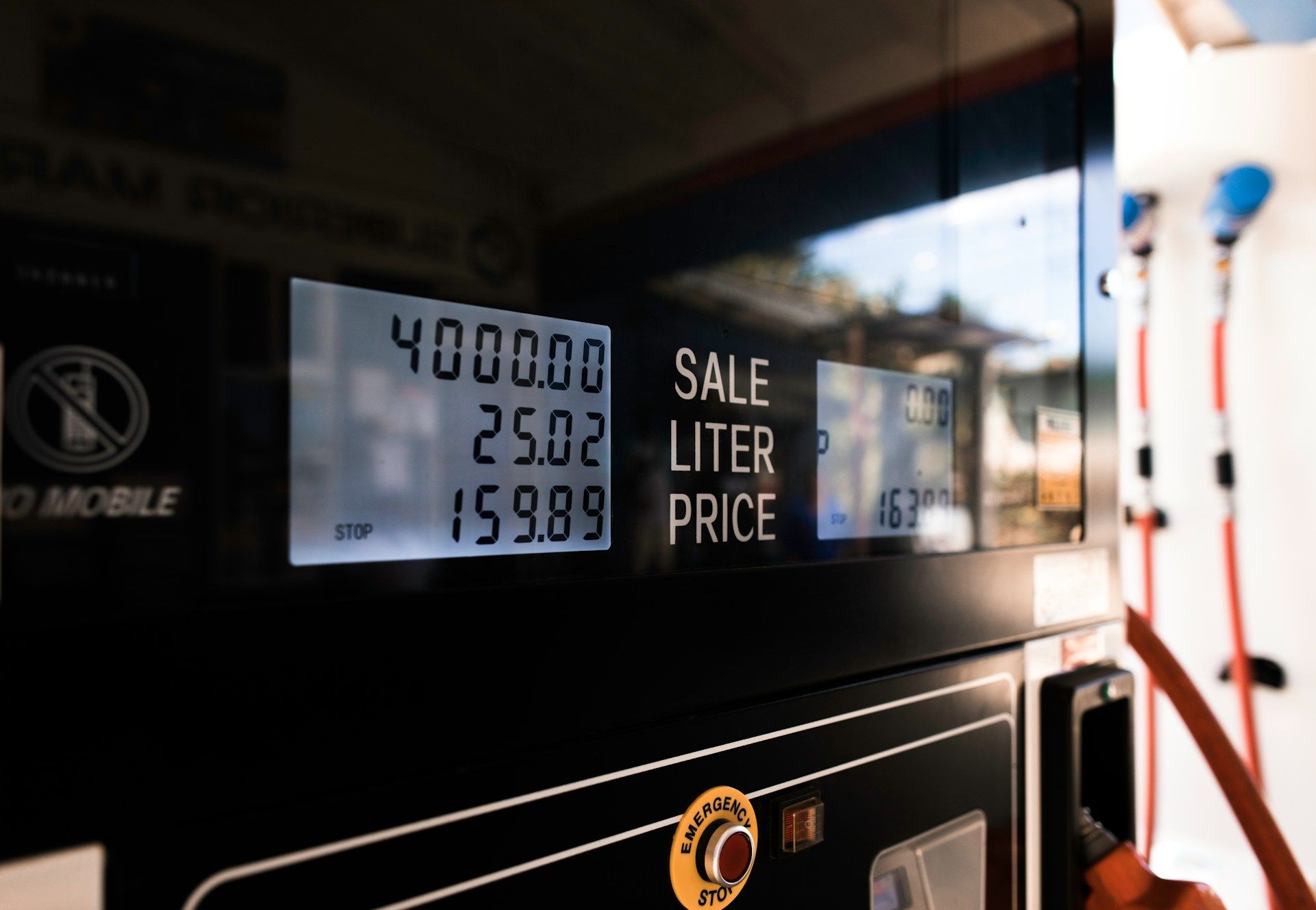
Fuel points redeem at Kroger Fuel Centers and at participating Shell stations. The standard math is 100 points equals 10 cents off per gallon, up to 1,000 points for $1.00 off per gallon, capped at 35 gallons per redemption. So if you've got 350 points sitting in your account, you save $12.25 on a single fill-up, and the meter resets, so you start earning from zero again. Points expire at the end of the month following the month you earned them, which means a Plus point earned in May expires June 30. Use them or lose them.
Boost membership and when it pays off
Boost is Kroger's paid loyalty tier. As of May 2026 it sits at $59 per year for the entry tier (Boost) and $99 per year for the premium tier (Boost+). Confirm the current pricing at sign-up, because Kroger has been quietly adjusting this and the tier names since launch. The headline benefits are:
- 2x fuel points on every qualifying purchase, automatically. This is the single most valuable Boost benefit for high-mileage households.
- Free delivery on orders over $35 (Boost+) or free pickup on any order (both tiers, no minimum).
- Member-only digital coupons that don't appear in the standard Plus offer feed.
- 6% back on Kroger Brand products for Boost+ members in select regions, returned as digital rewards.
The break-even math is simple. If your household spends $200 a week at Kroger, that's $10,400 a year of grocery spend. At 1 point per dollar you'd normally earn 10,400 fuel points. With Boost's 2x multiplier you earn 20,800. An extra 10,400 points is worth $364 in fuel savings if you redeem in full $1.00-per-gallon chunks across the year. Boost+ at $99 pays for itself roughly four times over at that spend level. The lower-spend cutoff is around $30 to $50 per week of Kroger groceries plus regular fuel purchases at Kroger or Shell. Below that, Plus alone is enough.
The tier you want depends on whether you use delivery. If you're a pickup-only shopper, the entry Boost tier is the better deal. If you're paying for delivery every week, Boost+ replaces what would otherwise be a separate Instacart or grocery-delivery subscription.
Now the wallet-strategy part: which card to actually swipe
This is where most Kroger shoppers leave money behind. Kroger Plus and Boost together max out at maybe 35 cents off per gallon plus some digital-coupon savings. A good supermarket credit card hands you 4% to 6% back on every dollar of grocery spend, and that runs in parallel with the fuel points. The two stack. The register doesn't know or care which credit card you used.
Here are the cards I'd actually carry to a Kroger run, ranked by how much they earn on grocery spend.
Amex Blue Cash Preferred. 6% back at US supermarkets, capped at $6,000 in annual spend, $95 annual fee (often waived first year). This is the highest grocery cashback rate available from a mainstream issuer, full stop. The cap is the real constraint. $6,000 a year is roughly $115 per week, so anything above that earns the base rate. For a household spending $200 weekly at Kroger, you'll max out the 6% cap in about 30 weeks and then need a backup card for the rest of the year. Net cashback at the cap: $360 minus the $95 fee equals $265 in year one (or $360 if the fee is waived). Above the cap, the card drops to 1%.
Amex Gold. 4x Membership Rewards points at US supermarkets, capped at $25,000 in annual purchases, $325 annual fee. The cap here is high enough that almost no household will hit it. At $200 a week, you'd earn 41,600 MR points per year on grocery spend alone. Those points are worth 2 to 2.2 cents each if you transfer to airline partners and book reasonably, which puts the value at roughly $830 to $915 a year. That's substantially more than the Blue Cash Preferred returns, if you use Membership Rewards points well. If you'd just take the cash back, Blue Cash Preferred wins below the $6,000 cap and Amex Gold wins above it. Dining credits and the Resy credit help offset the $325 fee for travelers; if you don't use those, the math gets tighter.
Citi Custom Cash. 5% back on your top spend category each billing cycle, capped at $500 of spend per cycle. This is the underrated option. If you dedicate this card to grocery use only, you'll consistently trigger the 5% on grocery as your top category and earn $25 per cycle, $300 a year, with no annual fee. The cap is the same problem here as with Blue Cash Preferred. $500 per billing cycle is about $115 per week. The no-fee structure means you keep all of it. Best as a complement to a Gold or Sapphire setup, not a primary card.
Capital One Savor (no annual fee version). 3% back at grocery stores, no cap, no annual fee. Easy floor. If you're a low-volume grocery shopper (under $50 per week) or you just want one card that handles everything in the kitchen and dining bucket without thinking about caps, this is it. Three percent on $5,000 of annual grocery spend is $150. Modest, but it's set-and-forget.
Bank of America Customized Cash Rewards. 3% on your chosen category, capped at $2,500 per quarter combined with the 2% category. Grocery is one of the six selectable categories. The $2,500 quarterly cap is generous (about $190 per week), and Preferred Rewards members can boost the rate to 3.75% or 5.25% depending on relationship balances at Bank of America and Merrill. For BofA/Merrill customers with significant assets there, this becomes one of the highest no-annual-fee grocery returns available.
Discover it Cash Back. 5% on rotating quarterly categories when grocery hits, $1,500 quarterly spend cap. Situational. Grocery shows up as a Discover rotating category roughly once or twice a year, so this isn't a year-round play. During the eligible quarter, the 5% on $1,500 (so $75 cashback) plus the Discover first-year match doubles to $150. Activate it the moment the quarter starts.
The combined play: a worked example
Say you spend $200 a week at Kroger and buy 40 gallons of gas a month. Without optimization, you pay $10,400 for groceries with a debit card and $1,800 for gas (at $3.75/gal) over the year. You get nothing.
Now optimize. You sign up for Kroger Plus (free) and Boost (entry tier, $59/yr). You pay for every grocery trip with Amex Gold. Here's what changes:
- Amex Gold earns 41,600 Membership Rewards on $10,400 of grocery spend. Conservative value at 2 cents per point: $832.
- Kroger Plus + Boost earns 20,800 fuel points (2x multiplier). Redeem in $1.00-per-gallon increments: $208 in fuel savings.
- Digital coupons across the year: realistically $150 to $300, depending on how diligent you are about loading them.
Subtract the $59 Boost membership and the $325 Gold annual fee. Net annual benefit: roughly $806 to $956, compared to $0 before. That's the gap between "I shop at Kroger" and "I shop at Kroger strategically."
If you'd rather take straight cash and skip the points-and-miles game, swap Amex Gold for Blue Cash Preferred. You'll cap out the 6% bucket at $6,000 ($360 cashback), then run the remaining $4,400 on a 1% card or switch to a second supermarket card. Net: about $470 in straight cash plus the same $208 fuel savings and $150 to $300 in coupons. Easier to think about, slightly less total value, but no transfer-partner research required.
Where this strategy stops working
Three places to watch out for. First, warehouse clubs don't count as supermarkets for any of the cards above. Costco doesn't accept Amex at all except the Costco Anywhere Visa. Sam's Club takes most cards but codes as a warehouse merchant, not a supermarket, so Amex Gold's 4x doesn't apply, and neither does Blue Cash Preferred's 6%. BJ's Wholesale Club has the same problem. If you're a warehouse shopper, you need a different card strategy (the Costco Visa for Costco, a flat-rate 2% card for Sam's and BJ's).
Second, Walmart and Target also don't code as supermarkets on most card networks. Walmart is its own merchant category and Target codes as a department store. Even though both sell groceries, the 6% Blue Cash Preferred rate and 4x Amex Gold rate don't apply at either. The Target RedCard handles Target at 5% off; for Walmart, a 2% flat-rate card is usually the right call unless they're running a Walmart+ promotion.
Third, third-party delivery services. If you order Kroger groceries through Instacart, the charge will often code as Instacart rather than as a Kroger supermarket purchase, which means you lose the supermarket bonus. If you want the 4x or 6%, order through Kroger.com or the Kroger app directly and use Kroger's own delivery or pickup. Boost+ includes delivery, which solves this problem cleanly.
How to actually run this
- Sign up for Kroger Plus at kroger.com or any Kroger family register. Free, takes two minutes.
- Decide on Boost. If you spend over $50 per week at Kroger or buy gas at a Kroger or Shell station twice a month, the entry tier pays for itself. Start with Boost (not Boost+) unless you want delivery.
- Open the Kroger app. Spend five minutes loading every digital coupon that looks relevant. This is the part most people skip, and it adds up.
- Choose your card. If you already carry Amex Gold or Blue Cash Preferred, you're set. If you don't, Blue Cash Preferred is the simpler entry point for a cash-focused household; Amex Gold makes more sense if you also want transferable points for travel.
- At checkout, scan your Plus card first (digital or physical), then pay with the card. Fuel points and credit card rewards both post on the same transaction.
- At the pump, enter your phone number or scan the app. The Shell pumps will prompt you for Kroger fuel points if your number is in the system.
The whole setup takes maybe twenty minutes to put in place and then runs itself. For a household spending real money at the grocery store, it's the closest thing to free money the card world offers.
This article contains affiliate links. If you apply through our links, we may earn a commission at no cost to you, which helps us continue sharing points and miles strategies with the community.
Some of the links in this article are affiliate links. We may receive a small commission at no extra cost to you if you apply through these links. This helps us keep the site running and continue creating free content.