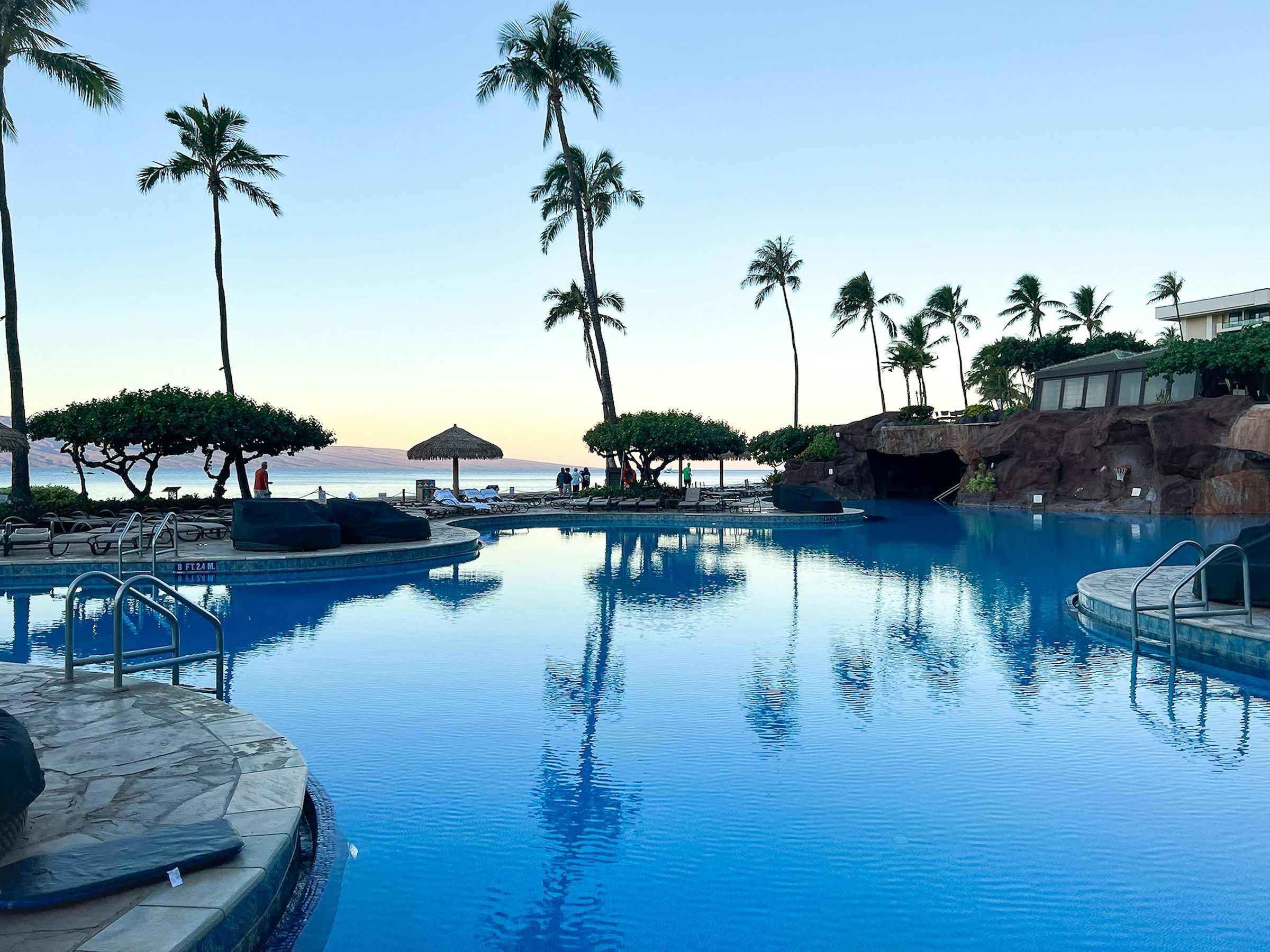
Hyatt's Unbound Collection is the part of the World of Hyatt portfolio most points travelers can't quite place. It's not Andaz. It's not Park Hyatt. It's not Joie de Vivre. It's a stable of independent luxury and lifestyle hotels that kept their original branding, kept their personality, and quietly slot into the standard Hyatt award chart. That's the reason to care: a property like Hotel del Coronado or Andaz Mayakoba (which sits in the Unbound family despite the name) can pull off the same Globalist benefits and the same Category-based redemption math as a flagship Hyatt brand, often with a more distinctive on-property experience.
The other thing readers ask me about Unbound: the recurring Amex Offer for Hyatt stays. Amex has been running some variant of "$25 back on $300" or "up to $100 back" at Hyatt properties two to four times a year for as long as I've been tracking it. Sometimes the offer specifies Unbound. Sometimes it covers all Hyatt brands. Either way, when it lines up with a stay you were going to book anyway, it stacks on top of points earning, status benefits, and Chase Sapphire Reserve's $300 travel credit. That's the strategy this guide is actually about.
Quick Answer
Unbound Collection redeems on the standard Hyatt award chart (3,500-45,000 points per night for standard rooms across Categories 1-8), earns 5 base points per dollar, and qualifies for full Globalist benefits including suite upgrades on paid stays. The smartest play is to book Unbound stays with a Hyatt cobranded card or Chase Sapphire Reserve, watch for the recurring Amex Offer for Hyatt (usually $25-100 back on a qualifying spend threshold), and stack the Reserve's $300 annual travel credit underneath. Don't book Unbound on Marriott Bonvoy Brilliant assuming you'll earn Marriott points. You won't.
What Unbound Collection Actually Is
Hyatt launched Unbound Collection in 2017 as its answer to Marriott's Autograph Collection and IHG Vignette. The pitch is the same across the three: independent hotels that keep their character but plug into the chain's loyalty program. As of 2026 there are roughly 45 Unbound properties globally, and the variety inside that footprint is wider than any other Hyatt brand. A historic boutique in downtown Austin sits in the same collection as a Riviera Maya resort and a 1888-built beachfront icon in San Diego.
How it differs from the rest of Hyatt:
- Andaz is Hyatt's lifestyle-luxury brand with consistent design DNA across properties. Every Andaz feels like an Andaz.
- Joie de Vivre is the boutique-lifestyle tier, mid-luxury, with a more casual personality.
- Park Hyatt is the flagship luxury brand, ultra-high category, polished and traditional.
- Unbound Collection is the "soft brand" tier. Each property is intentionally its own thing. No Hyatt logo at check-in in some cases. The point is that the building was already someone's vision before Hyatt got involved.
For a points traveler, the practical difference is variety in pricing and award category. Unbound spans Category 3 properties you can book for 12,000 points up to Category 7 and 8 trophy properties that price near the top of the chart.
Notable Properties Worth Knowing
A few Unbound names you'll see come up if you spend any time scrolling Hyatt's map:
- Hotel del Coronado (San Diego): The 1888 beachfront icon. Category 7, sometimes 8 in peak windows. Iconic enough that it shows up in award-chart "where do my points actually work hard" lists.
- The Driskill (Austin): Historic downtown property, Category 5-6 depending on season. A weeknight here on points is one of the more consistent values in the collection.
- The Confidante Miami Beach: Mid-Beach, oceanfront, Category 6 most of the year.
- Royal Palm South Beach Miami: Art Deco, walkable Lincoln Road, similar pricing band.
- Andaz Mayakoba (Riviera Maya): Yes, named Andaz, but operates under the Unbound umbrella in Hyatt's reporting. Category 7. One of the most-booked properties in the collection.
- Carmel Valley Ranch (California): Resort, Category 6, popular Globalist suite-upgrade target because the suite inventory is generous.
- Hotel Indigo Bali Seminyak: Indonesia, Category 4. The kind of property where a 100,000-point welcome bonus stretches into a real trip.
I'm not listing all 45. The point is that the brand is broad enough that "I want to use my Hyatt points at an Unbound property" can mean anything from a $200/night Austin weeknight to a $1,200/night peak-season Coronado room.
Earning Points at Unbound Properties
Unbound stays earn at the standard Hyatt rate:
- 5 base points per dollar on eligible room spend (room rate, food & beverage charged to the room, qualifying incidentals).
- Tier bonus: Discoverist +10%, Explorist +20%, Globalist +30% on top of base.
- Cobrand card bonus: World of Hyatt personal and business cards earn an additional 4 points per dollar at Hyatt properties (including Unbound), bringing the total close to 9 points per dollar before tier bonus.
- Bonus point promotions: Hyatt's quarterly point promos apply to Unbound the same way they apply to a Hyatt Place or a Park Hyatt.
The math at Globalist on a $1,000 Unbound stay paid with the personal Hyatt card: 5,000 base + 1,500 tier bonus + 4,000 cobrand bonus = 10,500 points. At 1.7 cents per point (my working valuation for Hyatt), that's $178 in points-back on a paid stay, before you even count the rest of the card's benefits.
Redeeming Points at Unbound
This is where Unbound starts pulling its weight. Standard room awards use the Hyatt off-peak / standard / peak chart:
- Category 3: 9,000 / 12,000 / 15,000
- Category 4: 12,000 / 15,000 / 18,000
- Category 5: 17,000 / 20,000 / 23,000
- Category 6: 21,000 / 25,000 / 29,000
- Category 7: 25,000 / 30,000 / 35,000
- Category 8: 35,000 / 40,000 / 45,000
A Category 7 Unbound property like Hotel del Coronado at 30,000 points standard often prices at $700-900 cash. That's a 2.3-3.0 cpp redemption. The Riviera Maya properties run similar math. Category 3-4 Unbound stays are where you find the boring-but-honest 1.3-1.5 cpp redemptions that still beat cash plus most cobrand earning.
Where Unbound disappoints: peak weekends at Category 8 trophy properties. The rate goes to 45,000 points and the cash rate doesn't always keep pace. If the property is pricing at $900 on a peak weekend, you're at 2.0 cpp. Still fine. Not the sweet spot.
Award nights at Unbound count for all the usual Hyatt benefits: free fifth night on point-only redemptions (use it), points + cash availability where shown, and confirmed suite upgrades for Globalists using their annual Brand Explorer-style rewards.
Globalist Benefits at Unbound
This is the part most readers underestimate. Unbound is full-participating in World of Hyatt status benefits. That means at Globalist tier you get:
- Suite upgrades at booking on paid rates (standard suites only, subject to availability) for stays up to seven nights.
- Breakfast for the Globalist and one guest, daily, regardless of rate booked. At a property like The Driskill or Hotel del Coronado, that's $40-60 of value per day.
- Late checkout to 4pm, guaranteed (not subject to availability).
- Club lounge access where the property has one. Several Unbound properties (Andaz Mayakoba, Carmel Valley Ranch in some configurations) have lounge offerings.
- Waived resort fees on award stays and paid stays for Globalists. At an Unbound resort property, this alone can clear $40-50 per night.
I make a habit of checking the suite inventory on Unbound properties before booking. The independent-luxury positioning often means more suite types than a standard Hyatt brand, which means better odds at the complimentary upgrade at booking.
Amex Offers for Hyatt: The Recurring Pattern
Amex has run some flavor of Hyatt offer roughly two to four times a year for the last several cycles. The pattern is consistent enough to plan around:
- Targeted offer. It appears in your Amex Offers section if eligible. Not every cardmember sees it on every card.
- Typical structure. Spend $300-500 at a participating Hyatt property, get $25-100 back as a statement credit. The 2024 Unbound-specific offer ($100 back on $400 at Unbound) was on the upper end.
- Stays-only. Almost always paid stays, not award redemptions, and almost always direct bookings rather than third-party.
- One per card. You'll add the offer to a single card, charge the stay to that card, and the credit posts after the stay completes.
The strategic move is to add every Hyatt offer that appears on every Amex card you carry. They cost nothing to add. If you have a Hyatt stay coming up, you'll use whichever card has the best offer attached. If you don't have a stay coming up, you've lost nothing.
For Unbound stays specifically, watch for offers that explicitly include the collection. Some Hyatt-branded Amex Offers exclude Unbound and other soft brands. Read the terms before you assume.
Best Cards for Unbound Stays
This is where it gets interesting. Three cards do most of the work for serious Unbound bookers:
World of Hyatt Personal and Business cards. These earn 4x at Hyatt properties (on top of the 5x base), help maintain Globalist with elite night credits, and stretch your status further than any other earning path. If you're booking Unbound regularly, one or both of these belong in the rotation. The business card welcome bonus has been running at 80,000-100,000 points in recent cycles, which is two free nights at a Category 7 property with change.
Chase Sapphire Reserve. The $300 annual travel credit pays for itself against any Hyatt stay. Sapphire Reserve also earns 8x on Chase Travel portal bookings, but for Hyatt I almost always book direct to preserve Globalist benefits and elite-night credit. The play with Reserve is the credit, the trip-delay protection, and the points-transfer pipeline to Hyatt at 1:1.
Amex Platinum. Worth carrying for Unbound stays only when the property is listed in Fine Hotels + Resorts (FHR). FHR participation among Unbound properties is uneven, but where it exists (Andaz Mayakoba is one of the regulars), the FHR benefits stack: room upgrade at check-in, $100 property credit, 4pm late checkout, breakfast for two. If you're already Globalist, the FHR breakfast is redundant but the $100 credit and the upgrade often aren't.
There's no clean "this is the only card you need" answer for Unbound. The reality is one cobrand for points earning and status credits, one Chase card for the transfer pipeline and travel credits, and an Amex Platinum only if you have FHR-eligible Unbound stays planned.
Stacking: Amex Offer + Sapphire Reserve $300 + Globalist
Here's the full stack on a paid $500 Unbound stay, assuming a $75-back Amex Offer is on the card you're charging:
- Base rate: $500
- Amex Offer credit: -$75
- Sapphire Reserve $300 annual travel credit (if not already used): -$300
- Net out-of-pocket: $125
- Globalist breakfast (two days at ~$50/day): -$100 of value
- Globalist waived resort fee (two nights at ~$40): -$80 of value
- Effective net cost on a $500 stay: roughly negative $55 of value
That math only works once a year per Amex Offer and only when the Sapphire Reserve travel credit hasn't been used elsewhere. But the framework is the point: Amex Offers don't replace Hyatt status benefits, and the Sapphire Reserve credit doesn't replace earning on the cobrand. They layer.
A note on what you can't stack: you can't use the Amex Offer on an FHR booking made through Amex Travel because the FHR rate often comes through a different billing path. Book direct with the Hyatt rate, use the Amex Offer on the cobrand or Platinum, and skip FHR if the property isn't worth the upgrade benefits over Globalist's.
Common Mistakes
A few patterns I see when people try to run this play for the first time:
- Adding the Amex Offer to a card and then booking on a different card. The offer only triggers on the card it's attached to. Add it to the card you're actually going to use.
- Assuming all Hyatt Amex Offers cover Unbound. Some explicitly carve out soft brands. Read the terms.
- Booking Unbound on Marriott Bonvoy Brilliant for the $300 dining credit. Wrong program, wrong points. Unbound earns Hyatt points only.
- Ignoring the FHR / Globalist overlap. If you're already Globalist, the FHR breakfast benefit is a duplicate. Compare the FHR $100 credit and room upgrade against the Globalist suite upgrade you'd get directly. Often the direct Hyatt rate + Globalist wins.
- Burning the Sapphire Reserve $300 credit on something else first. If you have a paid Unbound stay coming up, hold the credit for it. The credit is automatic on travel-coded charges, so timing matters.
- Not checking award category before booking. Hyatt republishes categories every March. A property that was Category 6 last year may be Category 7 this year. Check before you transfer points in.
What I'd Actually Do
If I'm planning an Unbound stay for 2026, here's the order I run it:
- Pick the property by what trip I'm taking, not by award category. Unbound's variety means there's usually one in or near where I'm going.
- Check award price versus cash price. Anything north of 1.7 cpp on points, I redeem. Anything below 1.5 cpp on a high-cash-price stay, I pay cash and earn.
- Check Amex Offers across every card. Add any Hyatt offer to the card I'll use for the stay.
- Book direct on Hyatt.com to preserve Globalist benefits and earn elite-night credit. Use the cobrand Hyatt card for paid stays, or pay with whatever card has the best Amex Offer attached if larger.
- Apply the Sapphire Reserve $300 travel credit against the stay if it hasn't been used.
- Confirm the suite upgrade and breakfast benefits with the front desk at check-in. Globalist benefits aren't always proactively offered.
The Amex Offer is the cherry. The cobrand earning, the Hyatt redemption rate, and the Globalist benefits are the cake. Stack the cake first.
This article contains affiliate links. If you apply through our links, we may earn a commission at no cost to you, which helps us continue sharing points and miles strategies with the community.
Some of the links in this article are affiliate links. We may receive a small commission at no extra cost to you if you apply through these links. This helps us keep the site running and continue creating free content.