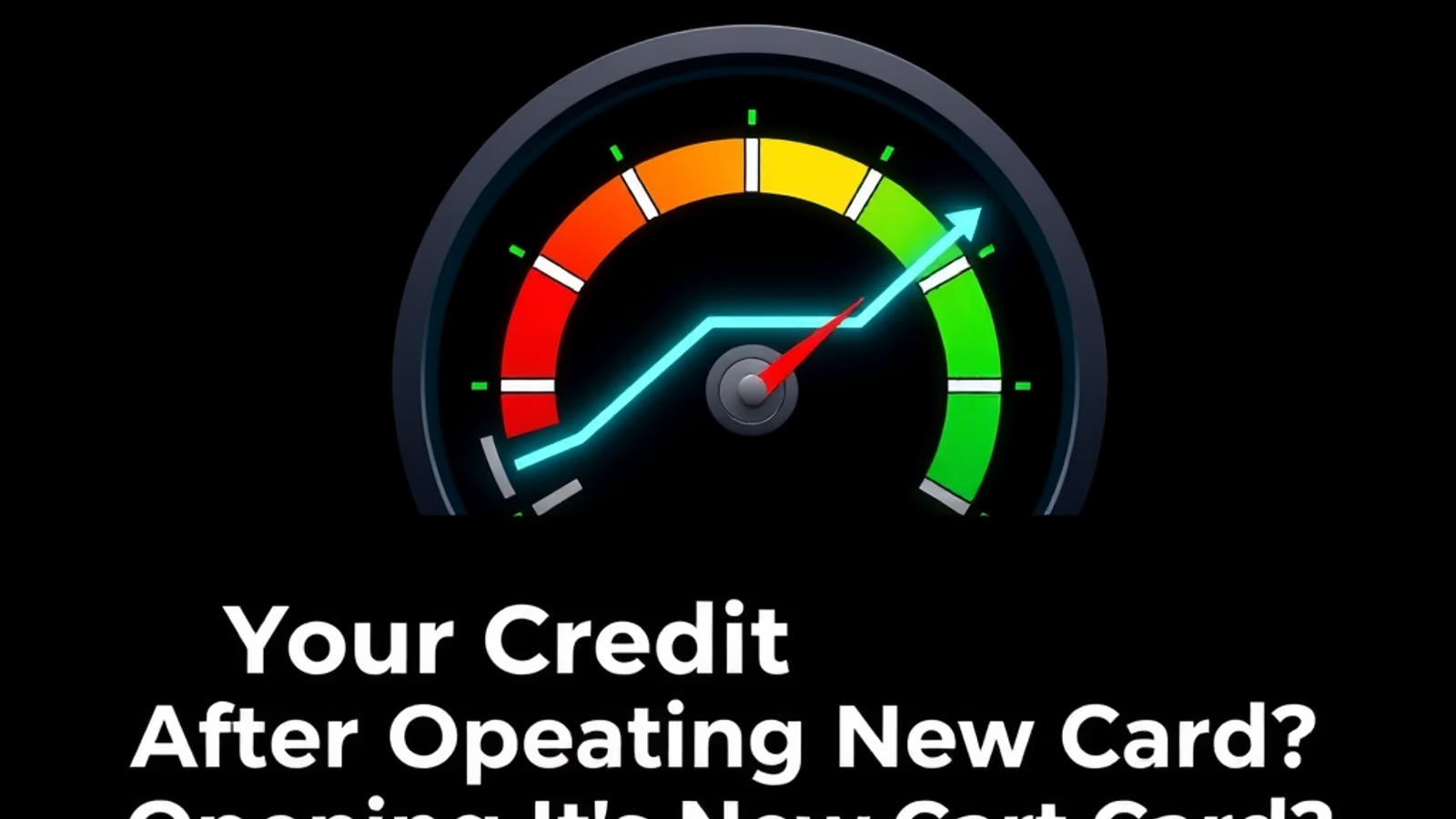
A score in the high 600s versus the low 700s can be the difference between mortgage approval and rejection, the difference between a 6.5% car loan and a 8.5% car loan, and the difference between getting approved for a premium travel card or seeing the dreaded "we are unable to approve your application at this time" letter. The frustrating part is that most of what people read about "fixing" credit scores is a mix of half-truths, multi-month timelines, and credit-repair pitches that promise overnight gains they cannot deliver. The score does move, and it can move quickly, but only if you push on the levers that actually matter to FICO.
This guide walks through what FICO is actually weighting, which actions move the score in 30 to 60 days, which take 90 days or longer, and which marketed "fixes" do nothing or actively backfire. If you are reading this because you have a mortgage application coming up, a car purchase, or you are eyeing a premium card with a 740-plus floor, you are in the right place.
What FICO Is Actually Weighting
The classic FICO score uses five inputs with the following approximate weightings, and these are public information that the model has held to for years. Payment history accounts for roughly 35% of the score, which makes a single 30-day late payment one of the most damaging single events you can put on a report. Amounts owed, which is dominated by credit utilization on revolving accounts, is roughly 30%. Length of credit history is roughly 15%. New credit, which is hard inquiries and recently opened accounts, is roughly 10%. Credit mix, the variety of installment versus revolving accounts, is the final 10%.
That weighting tells you immediately where the gains live. Roughly 65% of the score is payment history and utilization, so almost all of the fast movement happens by attacking utilization without missing a payment. Length, mix, and new credit move slowly and largely outside your direct control on a 30 to 90-day timeline.
The Fastest Movers: 30 to 60 Days
If you need score movement before a major application, these are the four levers that pay off inside one or two billing cycles.
Pay down revolving balances before the statement closing date, not the due date. This is the single most overlooked detail in the entire credit-score conversation. Utilization is calculated off the balance the issuer reports to the bureaus, and that balance is the statement balance, which posts on your statement closing date. You can pay your card in full every due date and still have 40% utilization showing on your report, because the statement balance was 40% of the limit before you paid. Fix this by paying down balances three to five days before the statement closing date so the reported balance is low. Aim for 1 to 9% utilization on individual cards and 1 to 9% across your total revolving limit. Zero on every card is actually slightly worse than 1 to 9%, because the model wants to see that you use credit, not that you abandoned it.
Ask for credit limit increases on existing cards, preferably with a soft pull. A higher limit with the same balance equals lower utilization, which the model treats as a positive change overnight once it reports. Chase, American Express, Capital One, and Discover all offer soft-pull credit-limit increase requests through their online portals or app, meaning the request does not generate a hard inquiry. Citi has historically pulled hard for CLIs, so check before requesting. Issuers typically want six months of on-time payments since the last limit change, and they like to see that you are using the card.
Become an authorized user on a long-history, low-utilization card belonging to a trusted family member. This is the most underused fast lever, and it is particularly effective for someone with a thin file. If a parent or spouse has a card opened 15 years ago with a $20,000 limit and a $400 balance, adding you as an authorized user can drop that entire account onto your report. The age contributes to your average age of credit, the limit boosts your total available credit, and the low utilization helps your aggregate utilization. The card itself does not need to come into your possession. Confirm with the issuer that they report authorized users to the bureaus, since a few do not.
Dispute legitimate errors on your credit reports. Pull all three bureau reports for free at annualcreditreport.com, sit down with each, and flag anything wrong. Closed accounts marked open, paid accounts marked delinquent, balances reported on cards that were paid off years ago, accounts that are not yours at all. Errors above roughly 5% of the file are common, especially after marriages, divorces, identity-theft incidents, or shared-name confusion. Dispute through the bureau directly, and the bureau has 30 days under the Fair Credit Reporting Act to investigate. Fixing a single mis-reported 90-day late can move the score 40 to 80 points.
The 30 to 90-Day Movers
These take a full cycle or two to register and matter most if you are working a slightly longer runway.
Pay every bill on time, every cycle. A new 30-day late drops the score 60 to 110 points depending on starting score, and stays on the report for seven years. The 35% payment-history weighting is also the most enduring damage you can do to a score, which is why setting up autopay for at least the minimum on every account is non-negotiable. The minimum prevents the late, even if you intend to pay in full manually.
Avoid new credit applications. Each hard inquiry takes roughly 5 points off the score and stays on the report for two years, though it only affects scoring for the first 12 months. Three or four inquiries in a 90-day window before a mortgage application is one of the ways people unintentionally tank their approval odds. The exception is rate-shopping for mortgages, auto loans, or student loans, where multiple inquiries in a 14 to 45-day window are bucketed as a single inquiry by FICO models.
Do not close old cards. This one is counterintuitive for people trying to "simplify." Closing a card with no balance removes that limit from your total available credit, which raises your utilization on whatever balances you carry on other cards. It also stops the account from aging, and once it eventually falls off the report 10 years after closure, your average age of credit takes a hit. Keep no-annual-fee cards open indefinitely and put a small recurring charge on them if you are worried about the issuer closing them for inactivity.
The Slower Movers: 6 to 12+ Months
Some inputs simply require time and there is no shortcut.
Building payment-history depth means continuing to pay on time for years, and the longer your clean streak, the more the model trusts you. Diversifying credit mix can help a thin file, but only do this if you actually need the credit. Opening a personal loan you do not need to "improve mix" is the kind of advice that gets people into trouble. Negative items also age off on a schedule. Late payments drop off seven years from the date of delinquency. Most bankruptcies fall off seven years from filing, with Chapter 7 staying ten years. The damage from a single late lessens noticeably after about two years even before it falls off.
What Does Not Work, or Actively Backfires
A few popular "fixes" deserve a closer look because they cost money and time without delivering. Credit-repair companies that promise overnight gains generally do one thing: dispute every negative item on your reports en masse, hoping some get removed for procedural reasons. You can do this yourself for free, and aggressive blanket disputes can actually annoy creditors into re-verifying the debt. The $79 to $129 monthly fee is the only certainty in the transaction.
Paying off old collections without first negotiating a "pay for delete" letter is the most common self-inflicted wound. Just paying a collection often does not improve the score, and in some scoring models it can actually hurt by updating the "last activity" date, which re-ages the account in the eyes of the model. Before sending money to any collector, send a written request asking them to confirm in writing that they will remove the account from all three bureaus in exchange for payment. Many will agree. Do not pay without that letter.
Closing a paid-off mortgage and expecting a boost does nothing useful. The model treats the closed installment account the same as the open one for several years, then it stops contributing to mix. Most homeowners are at neutral or slightly negative after a mortgage payoff in the short term, which surprises a lot of people.
The Points-and-Miles Angle
If your interest in credit scores has anything to do with eventually carrying a premium travel card, here is the approval-floor stack you are building toward. Mid-tier travel cards like the Chase Sapphire Preferred or the Capital One Venture typically want a 700 to 720 FICO, sometimes lower if the rest of the file is strong. Premium cards like the Chase Sapphire Reserve, the American Express Platinum, and the Capital One Venture X effectively require 740-plus and a clean recent file. Below those FICO thresholds, approval is possible but not the way to bet.
FICO is not the only gate. Chase enforces the 5/24 rule separately: if you have opened five or more cards across any issuer in the last 24 months, Chase will decline you regardless of your score. American Express has soft application limits, Capital One has its own internal scoring, and Citi looks at recent activity. A 760 score with five recent openings still gets a Chase decline. Plan card applications the way you would plan any other purchase, not impulsively.
If a mortgage is anywhere on your 12-month horizon, stop opening new credit entirely. Lenders look at recent inquiries during underwriting, and a single new card opened the month before application can push the rate up or trigger a manual review. The 12-month run-up to a mortgage is also when you want utilization on every card at 1 to 9%, every payment on time, and no balance transfers or new accounts.
Free Tools That Actually Help
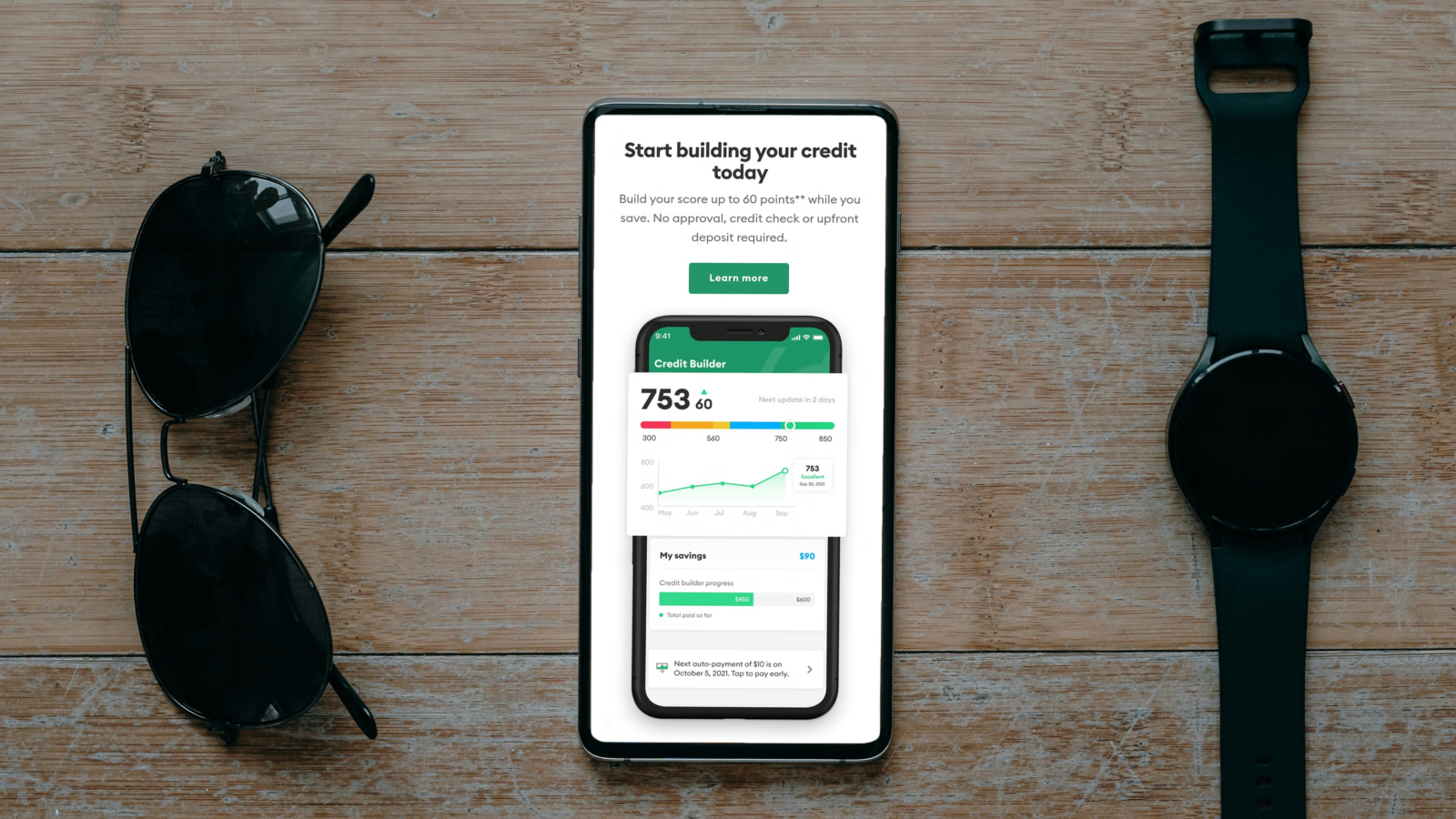
You do not need to pay for credit monitoring to track progress. Most major card apps now show your FICO score updated monthly: Discover, Capital One, Chase, and American Express all show it free inside the app. Experian's free tier gives you your Experian FICO 8 plus monthly updates. annualcreditreport.com gives you a full report from all three bureaus once per year, no credit-card required.
If you have a major application coming up in 30 to 60 days, the one paid tool worth considering is myFICO at roughly $30 per month, which shows you actual FICO scores from all three bureaus across multiple model versions, including the ones mortgage and auto lenders use. Subscribe for one or two months around the application, then cancel. The visibility into which model is being pulled and what number it shows is worth the small spend when a 0.25% rate difference on a 30-year mortgage is on the line.
A Realistic Timeline
If your starting score is in the mid-600s with high utilization and no recent lates, paying balances down to 1 to 9% before the next statement close and adding yourself as an authorized user on a long, clean account can move you 40 to 80 points in 30 to 60 days. If your score is dragged down by a single 30-day late or a small unpaid collection, the gains are more variable but a successful pay-for-delete or a goodwill removal can move things 30 to 50 points. If your file is thin with no derogatories, you are in the slow lane and looking at six to twelve months of clean payments to build score depth.
The score is not magic. It is a model with public weightings and predictable behavior, and the people who move it 60 to 100 points in three months do so by being deliberate about which lever they pull and when. Start with utilization before statement close, pull all three reports for errors, set autopay on everything, and stop opening new credit until your major application is done.
This article contains affiliate links. If you apply through our links, we may earn a commission at no cost to you, which helps us continue sharing points and miles strategies with the community.
Some of the links in this article are affiliate links. We may receive a small commission at no extra cost to you if you apply through these links. This helps us keep the site running and continue creating free content.