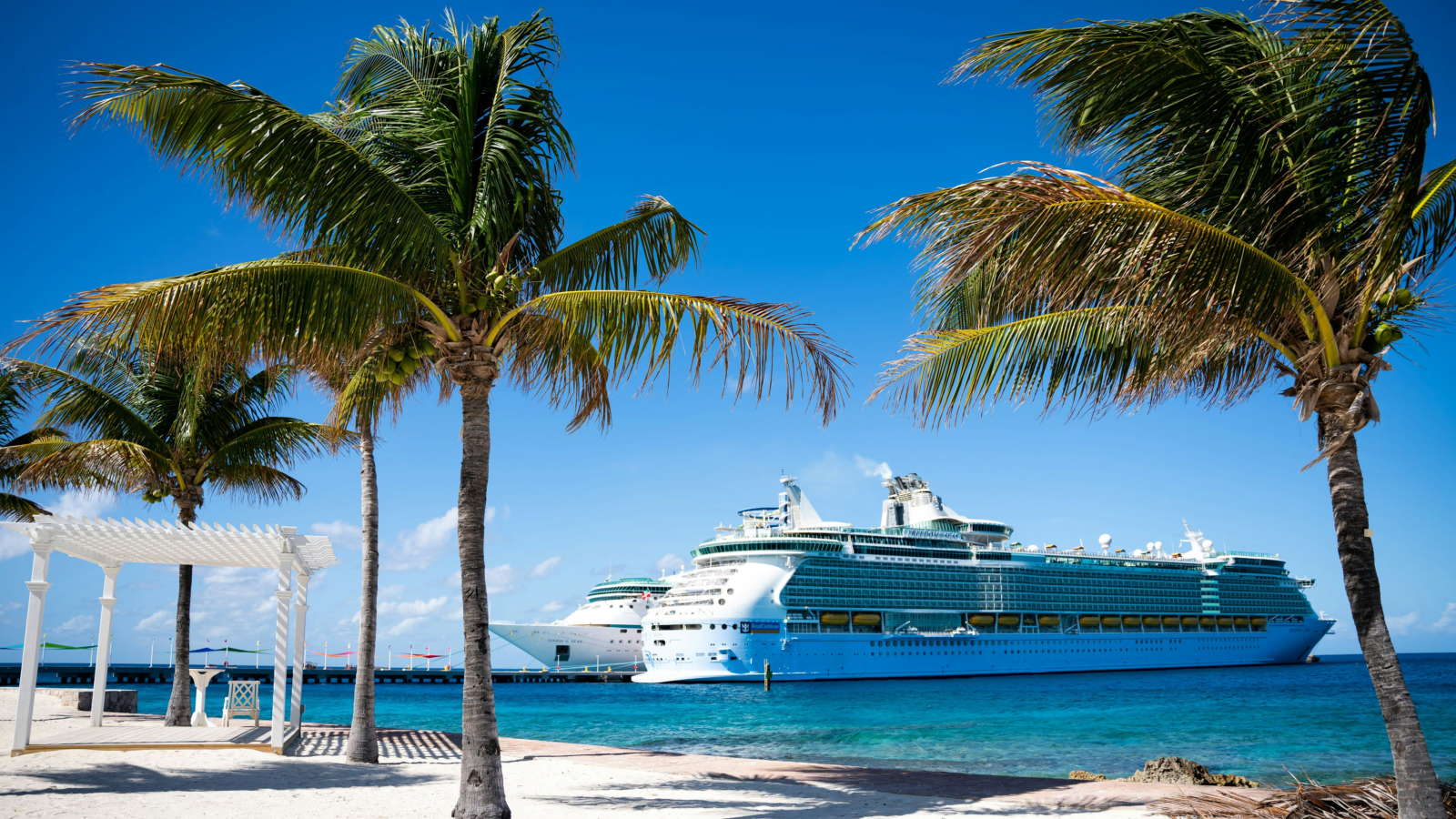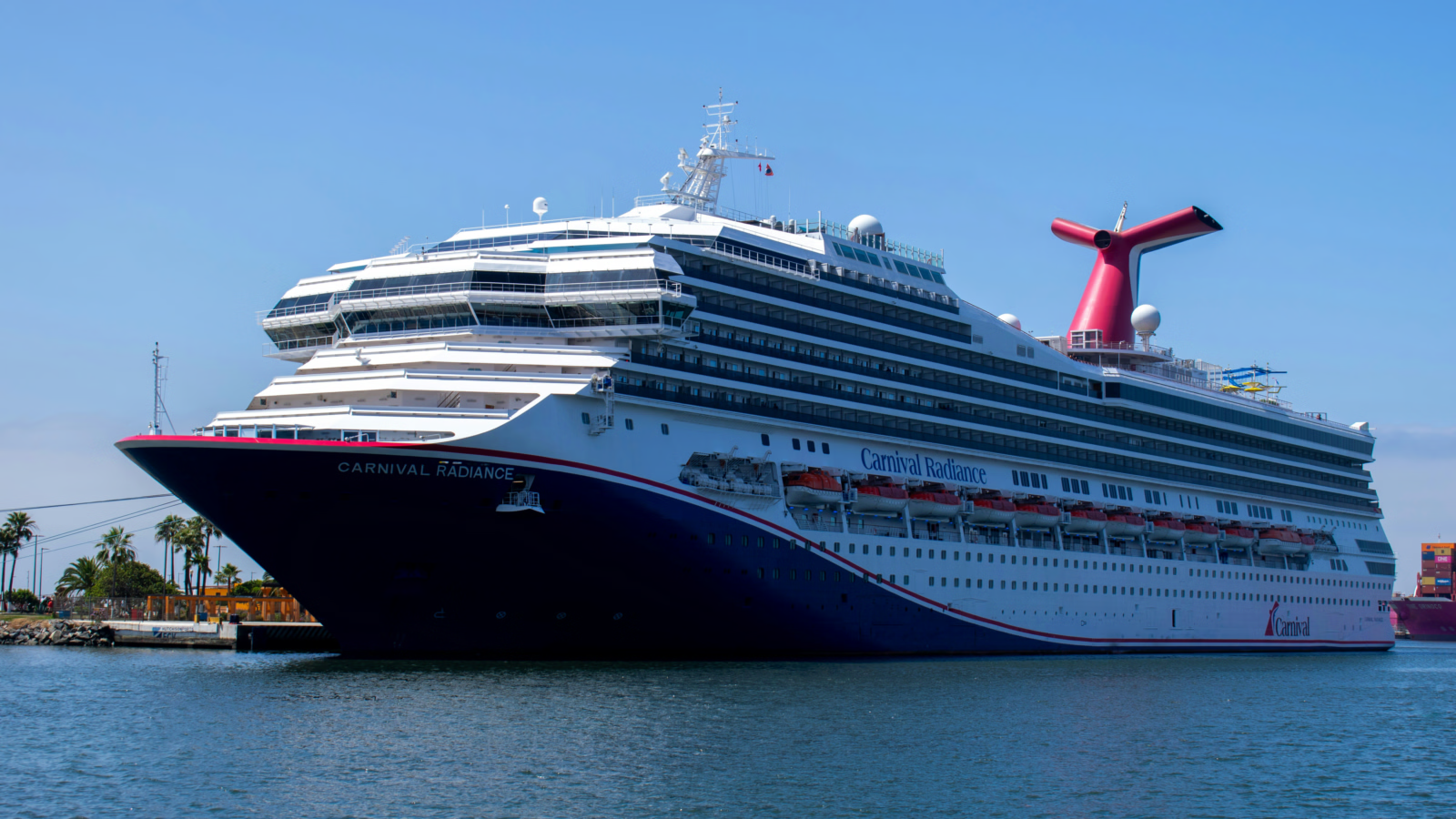
Wave Season 2026 wrapped up at the end of March, and the cruise industry is now reporting one of its strongest booking quarters on record. The Caribbean remains the dominant region, capturing roughly 72% of U.S. cruise bookings, and demand for late-2026 and 2027 sailings is still pulling forward at a clip that surprised most analysts. For points-and-miles travelers, that combination matters: cash prices held firmer through Wave Season than they did in 2024 and 2025, which changes the math on which redemption methods actually deliver value.
Here is what worked during Wave Season, what is changing, and how to book a Caribbean cruise with points the rest of 2026.
What Wave Season 2026 Looked Like
Cruise lines used the January through March window for the usual promotional cycle, including reduced deposits, onboard credits, and free third- and fourth-guest fares. But discounting was noticeably shallower than in prior years. Royal Caribbean and Carnival both entered Wave Season with 2026 inventory already 70 to 80% booked, according to public earnings commentary from Royal Caribbean Group and Carnival Corporation in their Q1 calls.
That tightness mattered for points bookings in one specific way: when cash fares stay high, fixed-cent-per-point portal redemptions get worse on a dollars-per-point basis. A $1,200 inside cabin at 1 cent per point still costs 120,000 transferable points whether or not Royal Caribbean is offering a $200 onboard credit alongside it.
The takeaway is not that Wave Season failed. Booking volume confirmed it didn't. The standard advice of "wait for Wave Season pricing to maximize point value" simply did less work this year than usual.
The Booking Methods That Still Make Sense
Transferable points through travel portals. This remains the most flexible option for most readers. The mechanics changed this year in one important way: Chase Travel now allows cruises to be booked end-to-end online, with no required call to a cruise specialist. More than 40 cruise lines and 20,000 itineraries are searchable in the portal, and points redeem at 1 cent each for most cardholders. Amex Travel and Capital One Travel work similarly at 1 cent per point.
A seven-night Caribbean cruise in an inside or ocean-view cabin runs roughly $800 to $2,000 per person during shoulder months. That puts a two-person booking at 160,000 to 400,000 transferable points, which is achievable on one or two welcome bonuses.
Co-branded cruise line cards. The Royal Caribbean Visa Signature card is in the middle of a transition. Bank of America and Royal Caribbean Group launched the new Royal ONE Visa Signature in early 2026 and will begin converting legacy cardholders starting June 2026. Unused MyCruise Rewards points transfer at the same value, and existing redemption rules, including the $100 onboard credit on seven-night sailings, carry over for now. New applicants are being routed to the Royal ONE card directly.
Carnival's Mastercard and Norwegian's co-branded card haven't changed materially. Both make sense for cruisers who sail the same line two or more times a year and will actually use the onboard credit. Neither makes sense as a first travel card.
Marriott Bonvoy for Ritz-Carlton Yacht Collection. Still the only way to redeem hotel points for a cruise fare. The redemption rate works out to roughly 0.56 cents per Bonvoy point, which is below most third-party valuations. Useful only if you already have a large Bonvoy balance and specifically want the Ritz-Carlton Yacht product.
Cash booking with stacked credit card benefits. Often the highest total value for travelers with premium cards. Pay with a card earning bonus travel points, then layer in Chase Sapphire Reserve travel credits, Amex Platinum Fine Hotels + Resorts credits for the pre-cruise hotel, and Capital One Venture X credits for airfare to the port. Onboard credits from a co-branded card cover gratuities and specialty dining.
What Changes for the Rest of 2026
Two things to watch.
First, hurricane season runs June through November, with peak activity August through October. Caribbean sailings still operate. Most disruptions are itinerary swaps, not cancellations. But trip-delay and trip-cancellation coverage from a premium travel card is non-optional for these dates. Chase Sapphire Reserve, Amex Platinum, and Capital One Venture X all provide it for trips paid for with the card.
Second, late-spring and early-fall shoulder windows historically discount 30 to 40% off Wave Season pricing. Given how full 2026 inventory already is, expect those discounts to be shallower than usual. Specific sailings to watch: late April through early May, and September through early October. These are when fixed-cent-per-point portal redemptions start to look better, because the cash price is the input.
For 2027 sailings, Wave Season 2027 in January through March will still be the most reliable promotional window. Cruise lines will release more inventory and pricing transparency in late Q3 2026.
Practical Takeaway
If you have specific Caribbean dates in mind for the rest of 2026, book now. Inventory is the constraint, not pricing.
If you are flexible on dates, target shoulder-season sailings in late April or early May, or September or early October. Book through the Chase, Amex, or Capital One travel portals once cash prices drop. Pair the booking with a co-branded cruise card for the onboard credit and a premium travel card for the trip protection.
For 2027 Caribbean planning, wait for Wave Season 2027. The pricing math should work in points-redeemers' favor more than it did this year.
This article contains affiliate links. If you apply through our links, we may earn a commission at no cost to you, which helps us continue sharing points and miles strategies with the community.
Some of the links in this article are affiliate links. We may receive a small commission at no extra cost to you if you apply through these links. This helps us keep the site running and continue creating free content.