Best Credit Cards for Booking Cruises in 2026
Key Points
- Cruise co-branded cards make sense only if you sail with the same line at least twice a year, otherwise a flexible-points card wins.
- Booking cruises through Chase Travel, Capital One Travel, or Amex Travel often beats cruise-line co-brands because portal multipliers stack on top of base earn rates.
- Most cruise co-brands have $0 annual fees and modest welcome bonuses, but they lock you into a single loyalty currency you may not use again.
TL;DR
For most travelers, a flexible-points card like the Chase Sapphire Preferred booked through Chase Travel earns more than any cruise co-brand. Cruise-line cards only pay off if you sail twice a year with the same line.
Introduction
Booking a cruise is one of the bigger single charges most travelers run through a credit card all year. A balcony cabin for two on a seven-night Caribbean sailing lands somewhere around $3,000 to $5,000 once taxes and gratuities settle in. So picking the right card for that swipe matters, and the answer most people land on (the cruise line's own co-branded card) is usually the wrong one.
The cruise-card landscape is small and a little stagnant. There's a Carnival card, a Royal Caribbean card, a Norwegian card, a Princess card, and that's most of it. Earn rates are modest, welcome bonuses are middling, and the points only work back at the same cruise line. Compare that to a flexible-points card booked through the issuer's travel portal, and the math usually points the other way. Here's how to think about it.
The Cruise Co-Brand Landscape in 2026
Four cards make up nearly the entire cruise co-brand category, and they share a similar profile: $0 annual fees, modest welcome offers, and earn rates that look reasonable until you compare them to a flexible-points card.
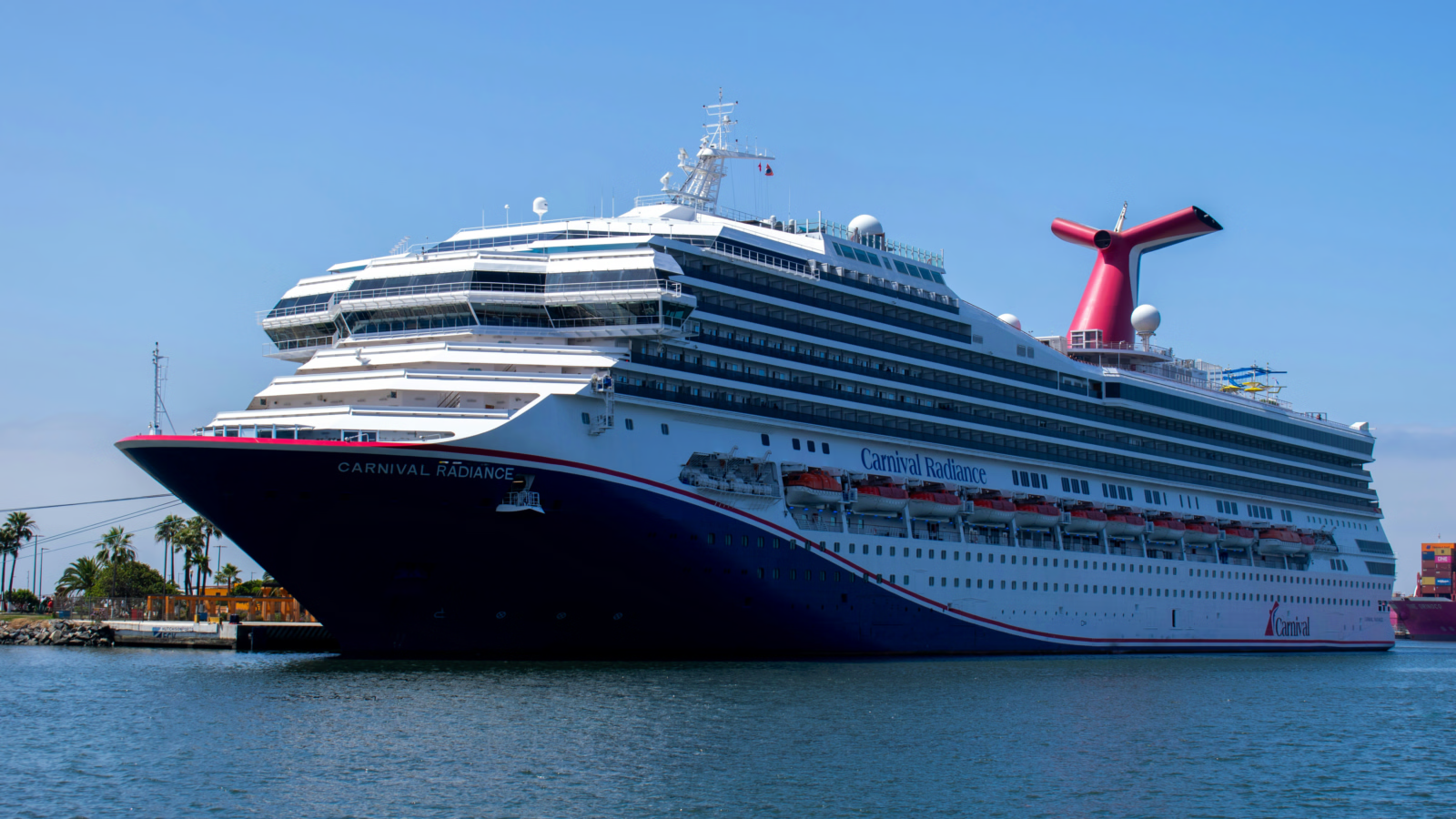
Carnival World Mastercard (Barclays). Earns 2x FunPoints on Carnival purchases (cruise fare, onboard spending, Carnival.com bookings) and 1x on everything else. FunPoints redeem for statement credit against Carnival purchases at 1 cent each, or for onboard credit and gift cards. Welcome bonuses on this card have historically run in the 20,000 to 25,000 FunPoint range, worth $200 to $250 in statement credit toward a future Carnival sailing.
Royal Caribbean Visa (Bank of America). Earns 2x MyCruise points on Royal Caribbean, Celebrity, and Silversea purchases and 1x elsewhere. MyCruise points redeem at 1 cent each toward future cruises with those three brands. The welcome offer typically lands in the 10,000 to 25,000 point range. There's also a tiered version that bundles onboard credits, but the no-fee version is the one most readers will see.
Norwegian Cruise Line World Mastercard (Bank of America). Earns 3x WorldPoints on NCL purchases, 2x on dining and gas, and 1x on everything else. Points redeem for statement credit toward NCL bookings or for cash back at lower rates. Welcome offers have ranged from 20,000 to 30,000 points.
Princess World Mastercard (Barclays). Earns 2x Princess Plus points on Princess purchases and 1x on everything else. Points redeem against future Princess sailings at 1 cent each. Welcome bonuses typically run 25,000 points.
Note: welcome bonus amounts on cruise co-brands shift frequently. Always check the issuer's current offer page before applying.
Why Most Cruisers Skip the Co-Brand
Three structural problems keep cruise co-brands from being the right answer for most readers.
The currency is single-purpose. FunPoints work at Carnival. MyCruise points work at three Royal Caribbean Group brands. Princess points work at Princess. If your travel plans change, those points don't follow you. A Chase Ultimate Rewards point or a Capital One mile transfers to a dozen airline and hotel partners, or books any cruise line through the issuer's portal.
The earn rate looks better than it is. A 2x point on Carnival sounds like a 2 percent rebate, and that's what it is: 1 cent per point times 2x equals 2 percent. A flexible-points card earning 2x on travel that books cruises through a portal with a 5x multiplier earns 5 percent toward any future travel. The cruise co-brand loses on rate and on flexibility at the same time.
The welcome bonus rarely justifies the slot. A 25,000 FunPoint welcome offer is worth $250 in Carnival credit. A Chase Sapphire Preferred welcome offer of 60,000 Ultimate Rewards points is worth $750 toward travel through Chase Travel, or substantially more transferred to Hyatt or airline partners. If you're going to burn a 5/24 slot or a Bank of America application on a card, the math has to work.
The exception: if you sail with the same cruise line two or more times a year, the cardholder rates, onboard credits, and tiered loyalty benefits can flip the math. For everyone else, the flexible-points route is cleaner.
The Flexible-Points Approach (Better for Most)
The strategy that wins for the majority of cruisers is straightforward: book your cruise through your card issuer's travel portal, and pay with a card that earns a portal multiplier on those bookings.
Chase Sapphire Preferred via Chase Travel
The Chase Sapphire Preferred earns 5x Ultimate Rewards points on travel booked through Chase Travel, which includes most major cruise lines. On a $4,000 cruise, that's 20,000 Ultimate Rewards points. Transferred to Hyatt or to airline partners like United or Air France/KLM, those points are commonly worth $400 or more.
Compare that to the Carnival World Mastercard: $4,000 in Carnival spend earns 8,000 FunPoints, worth $80 in Carnival statement credit. The Sapphire Preferred wins on the earn rate by a factor of about five and earns a currency you can spend anywhere.
The Sapphire Preferred also brings cruise-relevant protections most cruise co-brands don't: trip cancellation coverage up to $10,000 per person, trip delay reimbursement after 12 hours, and primary auto rental coverage if you're road-tripping to your departure port. The annual fee is $95, which the welcome bonus alone offsets several times over in the first year.
For more on this card, see our Chase Sapphire Reserve review for the premium-tier comparison, or our breakdown of the best premium travel rewards credit cards for the full landscape.
Capital One Venture and Venture X via Capital One Travel
The Capital One Venture earns 2x miles on every purchase and 5x miles on cruises booked through Capital One Travel. The annual fee is $95. The Venture X (annual fee $395) earns 10x miles on cruises booked through Capital One Travel, plus a $300 annual Capital One Travel credit and 10,000 anniversary miles that effectively offset most of the fee for active travelers.
Capital One Travel also offers a price-match guarantee on its bookings: if Capital One Travel finds the same booking cheaper within 24 hours of purchase, you get the difference back as a travel credit. That's not nothing on a multi-thousand-dollar cruise.
For the full Venture X breakdown, see our analysis of whether the Capital One Venture X is worth it.
Amex Platinum via Amex Travel
The Amex Platinum earns 5x Membership Rewards points on flights booked directly with airlines or through Amex Travel, and 5x on prepaid hotels through Amex Travel. Cruises booked through Amex Travel through the Cruise Privileges Program earn 1x to 2x depending on the booking, but they often come with onboard credit perks ($100 to $300 depending on cruise length and category) plus the occasional dinner-for-two or specialty restaurant credit on participating lines.
The Platinum's $695 annual fee is harder to justify on cruises alone. But for travelers who already carry it for the lounge access and travel credits, the Cruise Privileges Program adds onboard credit on top of whatever earn rate you'd get from booking direct.
Real-World Math: Where the Numbers Land
Three scenarios, same $4,000 cruise fare, different cards.
Scenario 1: $4,000 Carnival cruise.
- Carnival World Mastercard: 8,000 FunPoints = $80 toward future Carnival cruise.
- Chase Sapphire Preferred booked through Chase Travel: 20,000 Ultimate Rewards points = roughly $250 to $400 in transferred-partner value.
- Capital One Venture booked through Capital One Travel: 20,000 miles = $200 toward any travel, more if transferred to airline partners.
Winner: Sapphire Preferred or Venture, by a factor of three to five over the co-brand.
Scenario 2: $6,000 Royal Caribbean balcony.
- Royal Caribbean Visa: 12,000 MyCruise points = $120 toward future Royal Caribbean booking.
- Chase Sapphire Preferred via Chase Travel: 30,000 Ultimate Rewards = roughly $375 to $600 in transferred-partner value.
- Venture X via Capital One Travel: 60,000 miles = $600 toward any travel.
Winner: Venture X, with the Sapphire Preferred a close second.
Scenario 3: Frequent Royal Caribbean cruiser, two sailings a year, $5,000 each.
- Royal Caribbean Visa: 20,000 MyCruise points annually = $200 in cruise credit, plus tiered onboard credits and cardholder-only fares that can run $50 to $200 per sailing.
- Sapphire Preferred via Chase Travel: 50,000 Ultimate Rewards = $625 to $1,000 in flexible value.
Even here, the Sapphire Preferred earns more in raw points value. The cruise co-brand only wins if the cardholder rates and onboard credits add more than $400 to $700 in value across the two sailings, which is possible but not automatic. Run the actual numbers on your specific itinerary before deciding.
Booking Strategy Beyond the Card
The card is only part of the picture. A few practical moves stack on top of whichever card you choose.
Pay deposits and final payments on the same card. Cruise lines typically take a deposit at booking and the balance 60 to 90 days before sailing. Both charges earn rewards, both qualify for trip cancellation coverage, and keeping them on one card simplifies any chargeback situation.
Pre-pay gratuities. Most cruise lines let you pre-pay gratuities at booking. That moves another $200 to $500 onto your rewards card instead of being charged onboard, where the cruise line's own folio system may not earn portal bonuses.
Don't book a cruise to hit a welcome bonus you can't otherwise spend toward. This sounds obvious. It happens anyway. If a $4,000 cruise booking would push you over a $4,000 welcome-bonus threshold, great. But don't add a sailing you weren't already planning just to chase the bonus.
Watch the foreign transaction fee on onboard spending. Many ships are flagged in foreign countries, which means onboard charges sometimes settle through foreign processors. A card with a 2.7 to 3 percent foreign transaction fee adds $54 to $90 on a $2,000 onboard tab. The Sapphire Preferred, Venture, Venture X, and Platinum all have $0 foreign transaction fees. The Carnival World Mastercard does too. Check before sailing.
Skip the cruise-line travel insurance if your card already covers it. Cruise-line trip protection runs $200 to $400 for two people on a typical sailing. The Sapphire Preferred, Sapphire Reserve, and Venture X all include trip cancellation and interruption coverage that overlaps significantly with what the cruise line sells. Read your card's benefits guide before adding the upsell.
For more on whether cruise and airline co-brands earn their slot, see our analysis of whether airline credit cards are worth it. The same logic applies to cruise co-brands.
Common Mistakes Cruisers Make
A handful of errors come up repeatedly and quietly cost real money.
- Booking the cruise on a flat 1 percent cash-back card. A $5,000 cruise on a card with no travel bonus earns $50. The same booking on the Sapphire Preferred through Chase Travel earns 25,000 Ultimate Rewards, worth roughly $313 to $500. That's a $260 to $450 mistake on a single charge.
- Using a card with foreign transaction fees for onboard spending on internationally-flagged ships. Even small daily charges add up: a $1,500 onboard tab plus a 3 percent fee is $45 in pure waste.
- Forgetting to check whether the cruise line offers a direct-booking bonus. Some cruise lines occasionally run promotions where booking direct earns onboard credit that exceeds what the issuer portal gives you. Compare both.
- Burning a 5/24 slot on a cruise co-brand for a 25,000-point welcome bonus. Chase 5/24 is a real constraint. A $250 cruise credit isn't a great trade for a slot you could spend on a Sapphire Preferred or Ink Business card welcome offer.
- Treating cruise points like flexible points. They aren't. Plan your redemption assuming you'll sail with that line again, and if you might not, don't open the card.
Who Each Card Actually Fits
The Carnival, Royal Caribbean, Norwegian, or Princess co-brand fits you if: you sail with that line at least twice a year, you've already locked in the next two sailings, you're at or near a top tier in the loyalty program, and you've checked that the cardholder rates and onboard credits clear $200 to $400 of annual added value beyond what a flexible-points card would deliver.
The Chase Sapphire Preferred fits you if: you take one or two cruises a year with no strong loyalty to a specific line, you want trip cancellation coverage and primary rental car insurance, and you'll use Chase Travel or transfer partners for other travel through the year.
The Capital One Venture fits you if: you want simple 2x earning on everything plus 5x through Capital One Travel, no foreign transaction fees, and a clean redemption interface. The Venture X fits you if you'll use the $300 Capital One Travel credit and the 10,000 anniversary miles to offset the $395 fee.
The Amex Platinum fits you if: you already carry it for lounge access and the Saks, Uber, and travel credits, and the Cruise Privileges Program onboard credits stack on top of that existing value. Don't open the Platinum just for cruise booking. The math doesn't work.
The Bottom Line
For most cruisers, a flexible-points card booked through the issuer's travel portal earns three to five times what a cruise co-brand earns on the same fare, and the points work for non-cruise travel too. Cruise-line co-brands have a narrow sweet spot (frequent, brand-loyal cruisers with two or more sailings a year on the same line), and outside that sweet spot, they're outclassed by the Chase Sapphire Preferred, Capital One Venture, or Venture X for almost every reader.
If you're booking your first cruise of 2026 and you don't have one of those flexible-points cards yet, the Chase Sapphire Preferred is the cleanest first move. Apply, hit the welcome bonus on the cruise booking itself, book through Chase Travel for the 5x earn rate, and use the trip cancellation coverage as a free overlay on your sailing. That's a stronger setup than any cruise co-brand offers in 2026.
This article contains affiliate links. If you apply through our links, we may earn a commission at no cost to you, which helps us continue sharing points and miles strategies with the community.
Some of the links in this article are affiliate links. We may receive a small commission at no extra cost to you if you apply through these links. This helps us keep the site running and continue creating free content.