
Alaska is one of the few destinations where a cruise genuinely beats a land-based trip on both cost and experience. The ports themselves (Skagway, Juneau, Ketchikan) are tiny, the roads are limited, and the most photogenic parts of the state (Glacier Bay, Tracy Arm, the Inside Passage) are only accessible by water. A cruise turns logistics that would otherwise cost a small fortune into a single fare.
Per-person pricing runs $800 on the low end for an inside cabin in shoulder season, and climbs past $5,000 for a balcony on a luxury line in peak July. The reason this is one of the best points-funded vacations on the calendar: 40-70% of that total cost is reducible with a basic points strategy. Cruise fare itself usually doesn't transfer well to airline miles, but the airfare to Seattle, Vancouver, or Anchorage, the pre-cruise hotel, and the post-cruise land tour all do.
I've sailed Alaska twice. Once on a 7-night Inside Passage round-trip from Seattle, once on a Gulf of Alaska one-way that ended in Whittier. The second trip cost less out of pocket because of how the points layered together, and it was the better trip. The strategy below is what I'd do if I were booking 2026 right now, with the season just starting.
Route types
There are three Alaska itineraries that matter, and they're priced differently because they offer different things.
Inside Passage round-trip is the standard 7-night sailing from Seattle or Vancouver. The ship stays in protected waters between the islands, which means smoother sailing and more shoreline scenery. Typical ports are Juneau, Skagway, Ketchikan, plus a glacier viewing day (usually Tracy Arm or Endicott Arm). Seattle departures avoid the cross-border logistics; Vancouver departures cost slightly less and skip the Jones Act stop in Victoria that Seattle sailings have to include. If this is your first Alaska cruise, this is the route.
Gulf of Alaska one-way runs 7 nights between Vancouver and Whittier (the port for Anchorage), in either direction. You see the Inside Passage on one half and the open Gulf on the other, with Hubbard Glacier or College Fjord as the marquee day. Pricing is comparable to the round-trip, but you're now buying two one-way flights instead of a round-trip to a single city, which can actually work in your favor when you're using points, because you can route through different hubs. The catch: post-cruise Anchorage logistics. You'll need a hotel night in Anchorage and a flight home from ANC, which usually means an Alaska Airlines redemption or a domestic United award.
Small-ship expedition is the third category. Think UnCruise, Lindblad, Alaskan Dream Cruises. Ships hold 40-150 passengers, sail into bays the big ships can't reach, and replace casino-and-buffet days with kayaking and skiff tours. Pricing starts around $4,500 per person for 7 nights and goes up fast. These don't take points for the fare itself, but the airfare-and-hotel layer still applies, and the cabins are usually all-inclusive (drinks, excursions, gear), which changes the apples-to-apples math.
Best month to cruise: cost vs experience
Alaska's cruise season runs May through September. Each month trades a different thing.
May is the cheapest. Lower light, snow still on the mountains, fewer crowds, and balcony cabins that would be $2,800 in July run $1,400-1,600. The trade-off: some excursions don't start until June (helicopter glacier landings, certain bear-viewing flights), and the weather is a coin flip. Beautiful one day, gray and 45 degrees the next. If you've got a flexible schedule and the goal is "see Alaska without spending peak prices," May is the value play.
June is the balance month. Long daylight (18+ hours), wildflowers, all excursions running, and pricing roughly 15-20% below July peak. Whales are arriving but salmon haven't started running yet, so bear viewing isn't at its best. This is the month I'd recommend to most first-timers.
July is the peak. Best weather odds, all wildlife active, all ports fully operational, and pricing 30-40% above shoulder season. Cabins sell out 6-9 months ahead. If you have school-age kids and July is the only window you have, just accept the premium and book early.
August brings the salmon run, which means bear-viewing flights are at their best. Bears congregate at known stream locations and the success rate on flightseeing trips is near 100%. Crowds taper after mid-August, prices come down with them. If wildlife is your priority, this is the month.
September is shoulder season again, with northern lights becoming visible in late-season Whittier departures and pricing back near May levels. Rain is more frequent. Pack layers.
Best ships by traveler type
The right ship depends more on who you are than on what Alaska offers, because every major ship in Alaska is going to roughly the same ports. The difference is onboard.
Norwegian Bliss is the value pick. She's purpose-built for Alaska with a glass-walled observation lounge that wraps the bow, Norwegian's Freestyle dining model (no fixed seating times), and the most flexible drinks-package promotions in the market. Per-person fares typically start around $1,100-1,300 for an inside cabin in shoulder season. Best for: travelers who want a modern big ship without paying premium-line prices.
Seabourn Encore is the luxury answer. All-suite ship, included drinks and excursions on shore, crew-to-guest ratio near 1:1, and a guest count of 600 versus 4,000 on Bliss. Per-person fares start around $5,500. Best for: travelers who've sailed Caribbean luxury before and want Alaska handled the same way.
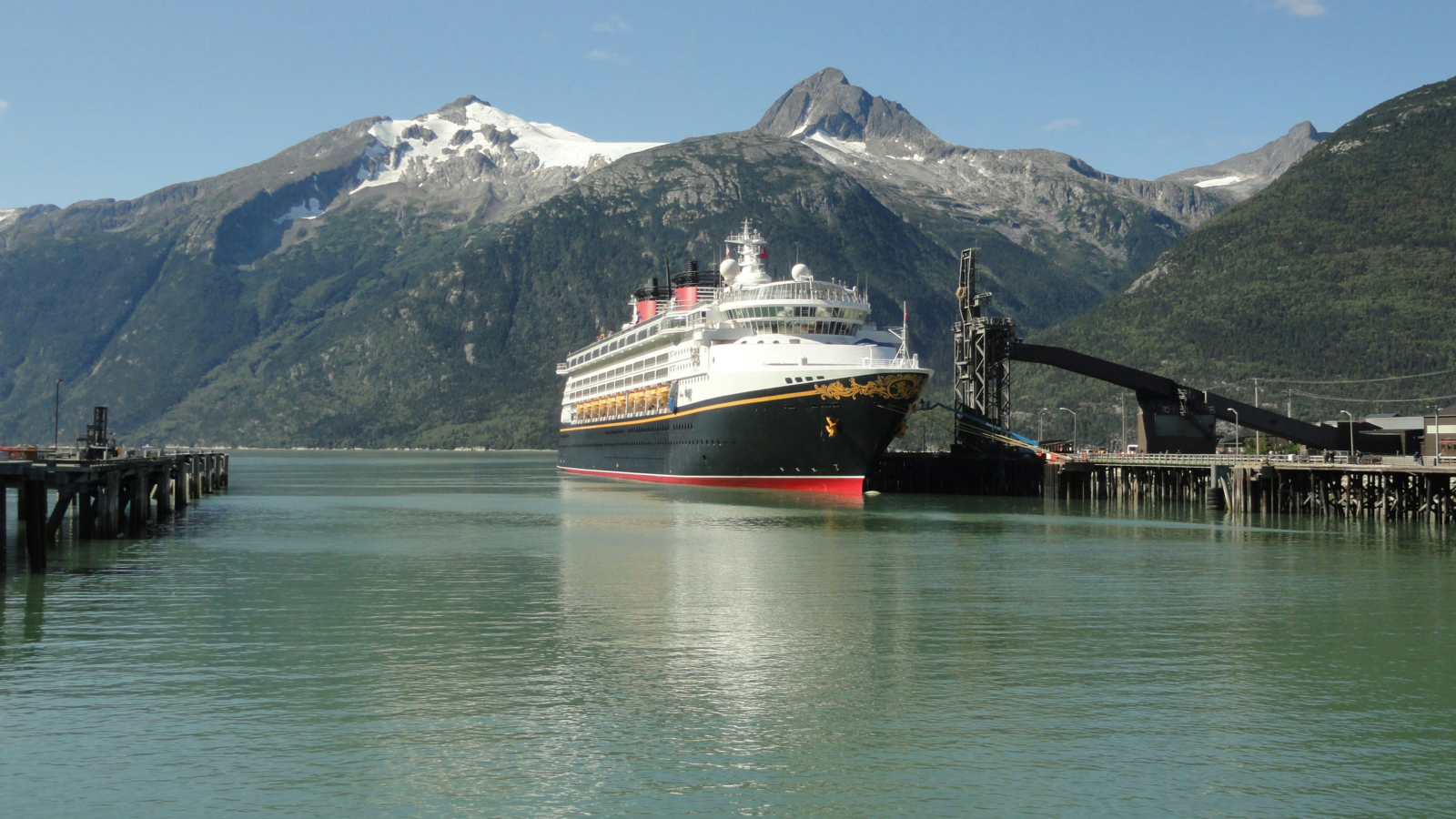
Disney Wonder is the family pick. Disney runs Alaska sailings May through August with the Wonder, with kids' clubs that genuinely entertain children (not just supervise them), character meet-and-greets, and adult-only spaces that keep parents sane. Pricing is premium (expect 30-40% above comparable big-ship sailings), but the trade is that the kids are happy for seven days. Best for: families with kids ages 4-12.
Royal Caribbean Anthem of the Seas is the first-time cruiser pick. Big-ship amenities (FlowRider, North Star observation pod, climbing wall), Royal's loyalty program if you might cruise again, and itineraries from Seattle that don't require a passport for U.S. citizens. Pricing sits between Norwegian and Disney. Best for: someone whose partner is skeptical about cruising and needs the ship to be the entertainment.
Holland America Nieuw Amsterdam is the cruisetour pick. Holland America has run Alaska longer than anyone, and they own the Westmark hotel chain inside Alaska, which lets them run land-tour extensions (Denali, Fairbanks, the Yukon) as a single package. A 7-night cruise plus a 5-night land tour comes in around $3,500-4,500 per person, all-in, and they handle every transfer. Best for: travelers who want to see the interior, not just the coast.
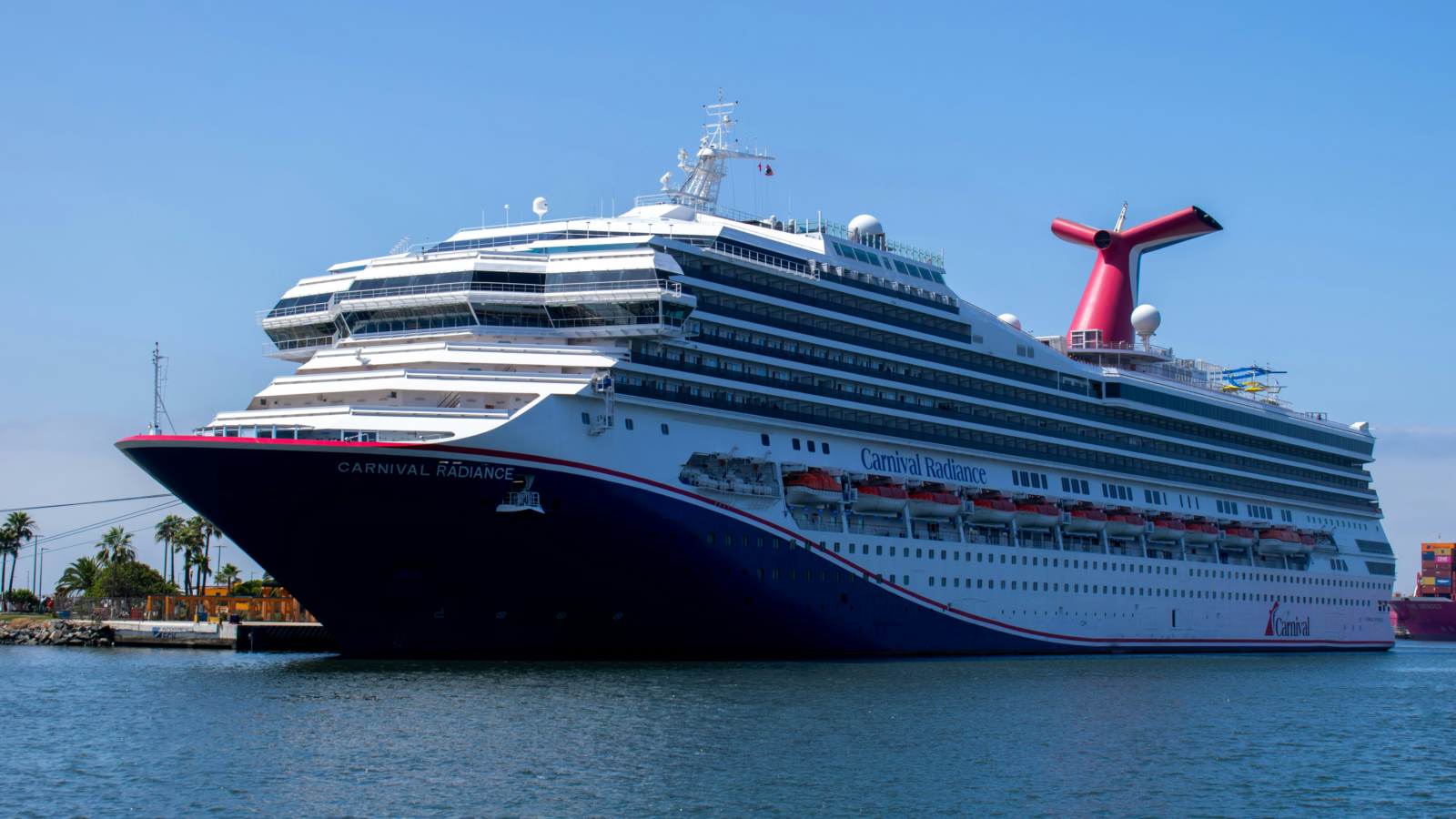
Virgin Voyages Brilliant Lady is the new arrival. Virgin is debuting Alaska sailings in summer 2026 with the Brilliant Lady: adults-only ship, included gratuities, included Wi-Fi, included essentials drinks, and a heavily-female-and-female-couple guest demographic that's distinct from any other line sailing Alaska. Pricing is competitive with premium lines, and the inaugural-season pricing for late 2026 sailings has been moving fast. Best for: adults who want a non-traditional cruise feel that's closer to a boutique hotel than a Carnival ship.
Points and miles strategy
The single biggest mistake I see is people booking cruise fare with points. Cruise fare usually redeems at 0.6-0.8 cents per point, which is half what those points are worth elsewhere. Use points on the parts that redeem well, pay cash on the parts that don't.
Chase travel portal at 1.5 cents per point. If you hold the Chase Sapphire Reserve, points redeem at 1.5 cpp through the Chase Travel portal, and the portal sells cruise fare. A $4,000 cruise costs 267,000 Ultimate Rewards points through the portal versus 333,000 at the standard 1.2 cpp rate on the Sapphire Preferred. The Reserve's $550 annual fee starts to make sense if you're booking a cruise large enough to absorb it.
Capital One Travel at 5x on cruises. Capital One Venture X earns 10x on hotels and rental cars booked through Capital One Travel, and 5x on Capital One Travel cruise bookings. The 5x effectively makes the booking worth 5 cents per dollar in future redemption value, which is a strong return. The card's $395 annual fee is offset by a $300 Capital One Travel credit and 10,000 anniversary miles, so the effective net is around $95.
Capital One eraser play. Capital One miles can be used to "erase" any travel purchase at 1 cent per mile, including cruise charges that show up coded as "travel" on your statement. This is the slowest redemption, but it's the most flexible. Book the cruise direct with the cruise line (getting line loyalty perks), then erase the charge afterward.
Wave-season stacking. January through mid-March is wave season, when cruise lines push the deepest promotions of the year: reduced deposits, free upgrades, onboard credit, included drinks packages. Book during wave season for the promotional perks, pay with a card that earns well on the booking (Venture X through Capital One Travel, or Sapphire Reserve direct), then take delivery of points in the same statement cycle. This is how the math gets to 40-70% off.
Cabin selection
Three rules I'd hold to.
A balcony is worth it for the scenery days. Glacier viewing day on a 7-night Alaska cruise is 6-10 hours of slow cruising past calving ice. A balcony lets you watch it in pajamas with coffee. On the Caribbean I'd skip a balcony to save money. On Alaska, the balcony pays for itself in glacier hours alone. Budget about $400-700 per person extra over an oceanview.
Mid-ship and low is the steadier ride. Alaska's Inside Passage is protected, but the Gulf of Alaska crossing on one-way sailings can get rough. A cabin mid-ship on a low deck minimizes motion. If anyone in your party gets seasick, this is the cabin to pick, not the highest deck with the best view.
Guarantee cabins are fine if you're flexible. Most lines sell guarantee categories. You book a category (interior, oceanview, balcony) without a specific cabin assignment, and the line assigns one closer to sailing. You usually save $100-300 per person, with the trade-off being that you might get the worst cabin in the category. For solo travelers and budget-focused couples, this is the right move.
Excursions budget
Excursions are where Alaska cruise budgets get destroyed. A family of four can drop $2,000 on shore tours across three port days without paying attention. The high-value ones are worth every dollar; the low-value ones are tourist traps.
High value: flightseeing and helicopter tours. A floatplane flight from Juneau to a remote glacier lake costs $300-450 per person and shows you Alaska from a perspective no cruise day-tour will match. A helicopter glacier landing in Skagway runs $500-650 and lets you walk on a glacier. These are the once-in-a-lifetime line items, and they don't exist on a land-based trip without serious cost.
High value: bear-viewing flights. A flight from Ketchikan or Sitka to a known bear-viewing area runs $700-900 per person and, in August, has near-100% success rates. Expensive, but unmatched.
Low value: generic port tours. "Skagway city tour," "Ketchikan totem pole walking tour," "Juneau hop-on-hop-off bus." These are $60-90 per person for things you can do for free by walking off the ship. Skagway is 4 blocks wide; you don't need a tour to see it.
Independent exploration. In Juneau, take the $35 round-trip Mendenhall Glacier shuttle and walk the trails yourself. In Ketchikan, walk Creek Street. In Skagway, take the White Pass railway (this one's worth booking at about $130, and it's a genuine experience). You'll spend a fraction of what the ship's excursion desk charges and have the same experience.
What to pack
The packing problem is layering, not insulation. A 60-degree sunny port day with a 45-degree morning glacier viewing window happens in the same 24 hours.
A waterproof shell, a fleece mid-layer, a light insulating layer (down sweater or similar), and a long-sleeve base layer cover most days. Add waterproof pants if you're doing a kayak or rainforest excursion. Waterproof hiking shoes are non-negotiable; sneakers are a mistake. Binoculars matter more than you'd think. Whales, bears, and eagles are often a quarter-mile from the ship, and the difference between "I saw something move" and "I watched it for ten minutes" is a $150 pair of 8x42s.
A daypack for excursions, a refillable water bottle, and sunglasses (the glare off the water is significant) round out the kit. Skip the umbrella; the rain is sideways.
Common mistakes
Three mistakes that cost real money or real experience.
Wrong itinerary type for your goals. Booking a 7-night Inside Passage round-trip when you really wanted to see Denali means you saw the coast and missed the interior. The cruisetour exists for a reason. If you want to see Alaska's interior, book Holland America or Princess with a 4-7 day land extension before or after the cruise, not a round-trip cruise alone.
Over-booking excursions. First-time Alaska cruisers tend to book a tour at every port and end the week exhausted. Pick one premium excursion (flightseeing, glacier helicopter, or White Pass railway) and one or two free walking days. Build in a rest day on the at-sea glacier viewing. You'll be on the balcony for 6+ hours anyway.
Missing the points booking window. Welcome bonuses on cards like the Chase Sapphire Preferred, Sapphire Reserve, and Capital One Venture X take 60-90 days to post after meeting the minimum spend. If you want to use the welcome bonus on your cruise, the card application needs to happen 4-5 months before booking, not 4-5 weeks. The most expensive Alaska cruise is the one where the points landed two weeks too late to use.
A points-funded Alaska cruise is genuinely achievable. Pick the right month for your priorities, the right ship for who's going, and the right cards 4 months ahead. Then enjoy the glacier.
This article contains affiliate links. If you apply through our links, we may earn a commission at no cost to you, which helps us continue sharing points and miles strategies with the community.
Some of the links in this article are affiliate links. We may receive a small commission at no extra cost to you if you apply through these links. This helps us keep the site running and continue creating free content.