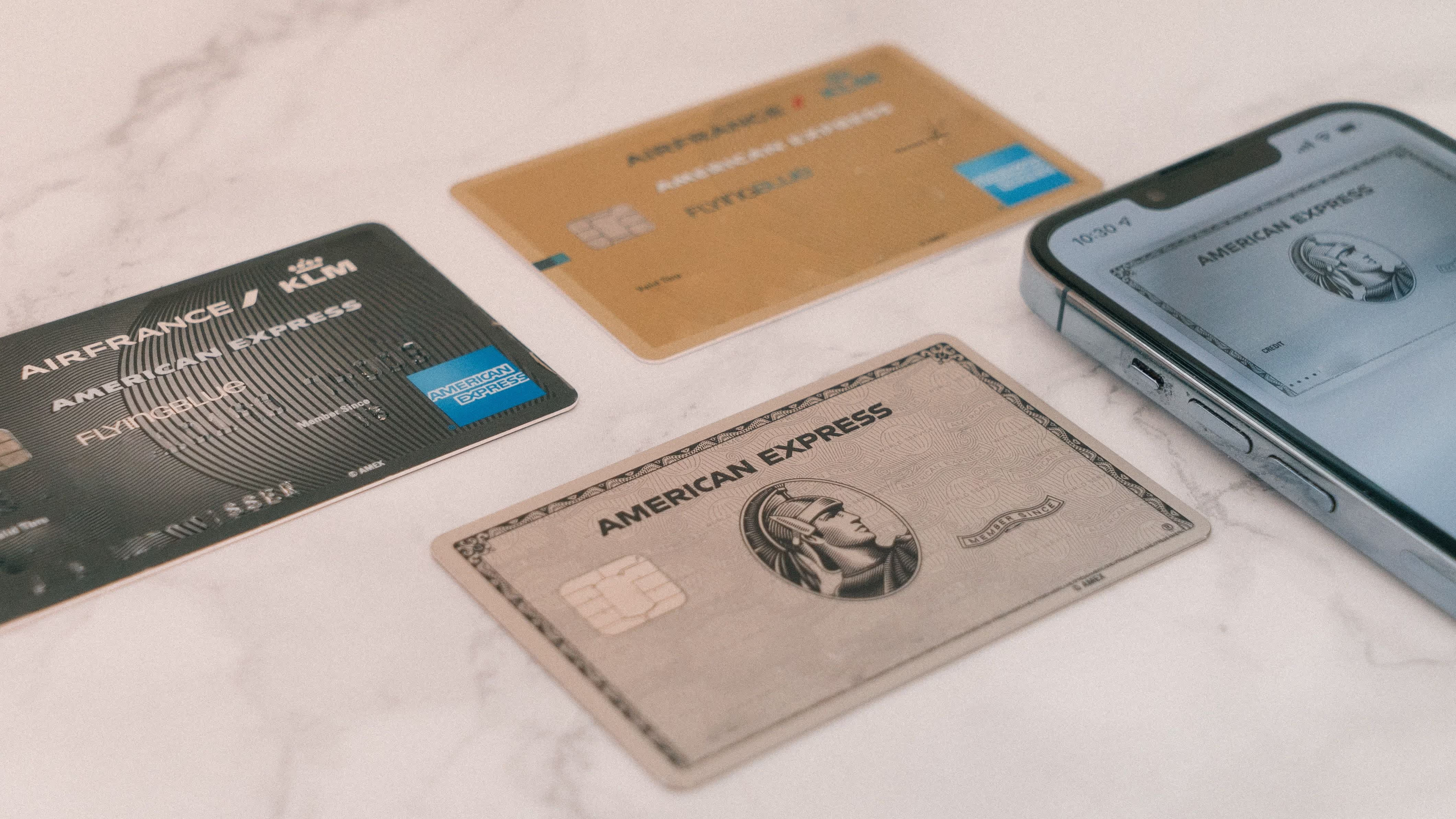
Membership Rewards is the most flexible transferable currency in the U.S. market. Seventeen airline partners spanning every major alliance, three hotel programs, and a transfer engine that runs faster and more reliably than its peers. That's the structural advantage. The strategic advantage comes from knowing which programs price the same metal at half the rate of the operating carrier, and which transfer bonuses are predictable enough to plan around.
A few ground rules before we get into rates. Sweet-spot pricing in this guide reflects 2025 award charts. As of mid-2026, dynamic pricing has crept into more programs (Aeroplan's distance bands hold; Flying Blue and Delta do not), and a handful of partners have published new charts. Treat every cents-per-point figure as a 2025 anchor and verify the current rate before you transfer. Points move one way and they don't come back.
Quick Answer
Amex Membership Rewards transfers to 17 airlines and three hotels at mostly 1:1 ratios, with Hilton at a favorable 1:2 and JetBlue at a punitive 1:0.8. Most airline transfers land instantly. Hotel transfers can take up to 48 hours. Booked through partner sweet spots, points return 2-5 cents each, roughly five times the value of Amex Travel cash-equivalent redemptions.
Why Transfer Partners Beat the Travel Portal
Amex Travel values your points at roughly 1 cent each on cash bookings. That's the floor. Transfer the same points to ANA, Aeroplan, or Virgin Atlantic and book business class to Asia, and you're looking at 4-9 cents per point on real-world fares. A $7,000 retail ANA business-class round-trip to Tokyo at 75,000-88,000 miles is the redemption that anchors the whole program.
The other reason transfer partners matter: alliance coverage. Membership Rewards reaches all three major alliances (Star, Oneworld, SkyTeam) plus several non-aligned carriers like Virgin Atlantic and Emirates. For broader context on how alliance pricing works across programs, see our airline partner awards guide.
One more framing point. Cash value matters less than option value. A 75,000-point ANA business-class fare isn't valuable because it "saved you $7,000." Most people would never spend $7,000 in cash on that flight. It's valuable because for a roughly $80 cash co-pay, you boarded a flat-bed seat in a premium cabin you otherwise wouldn't have flown. The whole transfer-partner discipline is about converting flexible Amex points into specific experiences that retail outside your normal spend.
The 17 Airline Partners, Grouped by Region
Best overall value
ANA Mileage Club. 1:1, instant. Distance-based chart, round-trip-only awards, exceptional rates to Japan. The 2025 anchor: 75,000-88,000 miles round-trip in business class U.S.-Japan. No fuel surcharges on ANA-operated flights. Verify current pricing in the chart before transferring. ANA's award space is also more generous to ANA members than to partners, so for the absolute best availability, transferring to ANA directly often beats booking via Virgin Atlantic.
Air Canada Aeroplan. 1:1, instant. Predictable distance-based pricing, no surcharges on most partners, mix-and-match partner awards on a single itinerary. The most flexible Star Alliance currency. Aeroplan also runs Amex transfer bonuses several times a year, typically 20-30%. The 2020 program rebuild kept the program flexible while most competitors went fully dynamic, and the result is one of the few stable award charts left.
Avianca LifeMiles. 1:1, instant. The go-to for Star Alliance awards without fuel surcharges. 87,000 miles one-way for Lufthansa First Class (released to partners 15 days out) and 45,000 miles for Turkish business class to Europe are the headline rates from the 2025 chart. LifeMiles also runs mileage sales several times a year at 30-50% off, and stacking a sale with a transfer bonus can drop premium-cabin costs to absurd levels.
Europe
British Airways Executive Club. 1:1, instant. Heavy surcharges on BA metal, which is why nobody books BA First with Avios. But the distance-based Avios chart shines for short hauls on American and Alaska, where 4,500 Avios covers flights under 650 miles. New York to Boston, Los Angeles to San Francisco, Dallas to Austin: pay 4,500 Avios plus around $6 in taxes instead of $200-plus cash.
Air France-KLM Flying Blue. 1:1, instant. Dynamic pricing now, but the monthly Promo Rewards still cut 25-50% off select routes. Often cheaper than transferring to Delta for Delta-operated flights, since Flying Blue's pricing on Delta metal sometimes undercuts SkyMiles' own dynamic chart. Check both before transferring.
Virgin Atlantic Flying Club. 1:1, instant. The 2025 sweet spots: 47,500 points one-way for Delta One to Europe, 47,500-57,500 for ANA business class to Japan, and competitive rates for Air France and KLM partner awards. Availability is thin and award space sometimes shows when it shouldn't, so always confirm with Delta or ANA before transferring. Virgin Atlantic remains one of the most-bonused Amex partners, with bonuses appearing roughly quarterly.
Asia-Pacific
Singapore Airlines KrisFlyer. 1:1, instant. Singapore Suites first class is the bucket-list redemption. Rates aren't cheap but availability for KrisFlyer members is materially better than for partners. Suites availability on the A380 route is often only released to KrisFlyer, which is why direct transfers (rather than booking through a partner program) are the play here.
Cathay Pacific Asia Miles. 1:1, up to 48 hours. Cathay's own redemptions have gotten pricier, but the multi-carrier Oneworld awards remain a niche sweet spot for complex multi-stop itineraries. If you want to fly Cathay First, Qantas, Japan Airlines, and British Airways in one booking, this is the program that prices it.
Qantas Frequent Flyer. 1:1, up to 48 hours. Useful for Emirates partner awards and intra-Australia routes that other programs can't book. Qantas First Class on the A380 is another aspirational redemption, though availability outside elite-member windows is rare.
Middle East
Emirates Skywards. 1:1, instant. The Emirates first-class shower-suite redemption starts around 90,000 miles one-way and runs heavy fuel surcharges. The product justifies the cash co-pay for the occasional aspirational trip. The Skywards co-pay can run $1,500-2,500 on a first-class long-haul, so factor that in before transferring.
Etihad Guest. 1:1. Devalued over the years. Still works for Etihad-operated flights and a few partner sweet spots, but no longer the headline program it was five years ago.
Americas
Aeromexico Club Premier. 1:1, up to 48 hours. Reasonable rates within Mexico and to Latin America. Often better award availability than Delta on the same routes, because Aeromexico releases more space to its own members.
Delta SkyMiles. 1:1, up to 48 hours. Pure dynamic pricing. The right move is almost always to book Delta-operated flights through Virgin Atlantic or Flying Blue instead. Transfer to Delta only when nothing else works, and even then check whether the same itinerary is bookable through Korean Air SkyPass or Air France Flying Blue at a lower mileage price.
JetBlue TrueBlue. 1:0.8, instant. The only unfavorable ratio. Revenue-based pricing gives points a fixed value, so it's only useful when cash fares are high and partner availability is gone. See our JetBlue partners guide for the full picture on Mosaic status and partner booking.
Specialty
Hawaiian Airlines HawaiianMiles. 1:1, up to 48 hours. Best path to the islands for points members on the West Coast. The JetBlue partnership opens East Coast connections via JFK, making a bi-coastal Hawaii itinerary feasible on points.
Iberia Plus. 1:1, instant. Off-peak transatlantic awards are extraordinary, with 17,000 Avios one-way East Coast to Madrid in economy. Surcharges are lower than BA on the same metal, which matters because Iberia and BA share the same Avios currency but apply different fees.
Aer Lingus AerClub. 1:1, instant. Off-peak economy to Dublin from the East Coast at 13,000 Avios one-way is the lowest transatlantic award rate at any Amex partner. The flight is a pleasant 6-7 hours and connects to most of Europe via Dublin.
For a head-to-head against the other major flexible currency, our Chase Ultimate Rewards transfer partners breakdown covers exactly what each program does better.
The Three Hotel Partners
Hilton Honors. 1:2, up to 48 hours. The headline ratio. Individual Hilton points aren't worth much (roughly 0.5 cents each, depending on category and property), so the math arrives at roughly par with airline transfers in raw value terms. The case for transferring is the transfer bonus. During a 1:2.5 or 1:3 promotion, aspirational properties like the Conrad Bora Bora, Waldorf Maldives, and Conrad Koh Samui become genuinely attractive. Hilton runs Amex bonuses every few months, so patience pays.
Marriott Bonvoy. 1:1, up to 48 hours. The 1:1 isn't compelling given Marriott's high award rates, but coverage is unmatched at 30-plus brands and 8,000-plus properties. Use during transfer bonuses or for high-end Ritz-Carlton and St. Regis properties when cash rates are absurd. Marriott points are also useful for the rare 5-night award discount, where you pay the cost of four nights to get five.
Choice Privileges. 1:1, up to 48 hours. Underrated. Nordic Choice properties in Scandinavia are the standout sweet spot, with category-1 rates around 8,000 points per night for hotels in Oslo, Stockholm, and Copenhagen. Our Choice Privileges guide covers the redemption math in detail.
For more on which Amex card earns the most Membership Rewards, see our Amex Platinum review.
How Transfers Actually Work
The mechanics are simple. The pre-flight checks are what save you.
Before you transfer:
- Confirm award space exists on the partner site or via a search tool like Point.me. Never transfer speculatively.
- Check transfer speed (table below) against your booking timeline.
- Link your loyalty account in the Amex transfer portal.
- Confirm whether a transfer bonus is live. Amex runs them constantly and a 30% bonus changes the math entirely.
The transfer itself. Log in, go to Membership Rewards, select Transfer Points, choose the partner, enter the amount (1,000-point minimum, often in increments specific to the partner), confirm, submit. Screenshot the confirmation in case of a dispute.
Speed by partner:
- Instant (minutes): Aeroplan, ANA, Avianca, British Airways, Emirates, Etihad, Flying Blue, Iberia, JetBlue, Singapore, Virgin Atlantic, Aer Lingus
- Up to 48 hours: Aeromexico, Asia Miles, Delta, Hawaiian, Qantas, Choice, Hilton, Marriott
If you're building a multi-currency setup, our Chase Sapphire comparison covers how Chase Ultimate Rewards complements Amex.
Sweet-Spot Redemptions (2025 anchors)
These rates held through 2025. Verify before transferring in 2026, since dynamic pricing has hit several programs.
Business class
- ANA business class to Japan: 75,000-88,000 miles round-trip via ANA, or 47,500 one-way via Virgin Atlantic. Cash equivalent: $5,000-7,000.
- Air France business class to Europe: 50,000 points one-way via Flying Blue from major U.S. hubs (LAX, SFO, JFK), where carrier-imposed surcharges are minimal.
- Turkish Airlines business class to Europe: 45,000 miles one-way via Avianca LifeMiles, no fuel surcharges.
First class
- Lufthansa First: 87,000 miles one-way via Avianca LifeMiles. Award space releases to partners 15 days before departure. One of the best premium-cabin redemptions in the program, both for the rate and for the Frankfurt First Class Terminal experience.
- Emirates First: 90,000-plus miles one-way via Skywards. High surcharges. Product is worth it for the rare splurge.
- Singapore Suites: rates vary by route and class of suite, but expect 130,000-plus KrisFlyer miles one-way. The double-bed configuration on the A380 is the bucket-list version.
Economy
- BA Avios short-haul on American and Alaska: 4,500-7,500 Avios for flights under 1,150 miles. Outrageous value on routes like JFK-MIA when cash is $400-plus.
- Aer Lingus and Iberia off-peak transatlantic: 13,000-20,000 points one-way. Shoulder-season-only, but the cheapest way across the Atlantic on points.
- Aeroplan short-haul: 6,000-10,000 miles within North America under 500 miles, useful for last-minute domestic routes where cash spikes.
Seats.aero is the search tool to use for tracking premium-cabin availability across partners in near-real-time. One tool is enough. Layering three search platforms doesn't find more space, it just creates noise.
Transfer-Bonus Strategy
Amex's bonus cadence is predictable enough to plan around. Rough 2025 patterns held into early 2026:
- Virgin Atlantic: 20-30% bonus, roughly quarterly
- Hilton: 25-30% bonus, every two to three months
- British Airways and Iberia: 25-40% bonus, two to three times a year
- Avianca LifeMiles: 15-25% bonus, irregular but frequent
- Flying Blue: 20-25% bonus, two to three times a year
- Aeroplan: 20-30% bonus, occasional but predictable around holiday travel
A 30% bonus on a 50,000-point transfer means you only need to move 38,500 points to fund the same award. That's the difference between a 75,000-point ANA business-class fare costing 58,000 Amex points versus 75,000. Meaningful at scale.
When to transfer during a bonus without a specific booking in mind. Rarely, and only if (1) you have a trip planned within 12 months, (2) the bonus is 40% or higher, and (3) the target program has a stable, published award chart (Aeroplan and ANA qualify; Delta and Flying Blue do not). Speculative transfers into dynamic programs are how good points get incinerated by a devaluation.
Six Mistakes That Burn Points
- Transferring without confirmed award space. Transfers are irreversible. Always book within the same session as the transfer, and ideally confirm space twice (once before you transfer, once after the points land).
- Ignoring fuel surcharges. A 60,000-point BA award can carry $800 in carrier-imposed fees. The points cost is half the story. Always price the full out-of-pocket co-pay before pulling the trigger.
- Missing the 48-hour window. If you spot a cash fare and need to transfer to Hilton or Marriott, the sale may end before the points arrive. Either confirm award availability that holds for 48 hours, or use a program with instant transfer.
- Chasing elite status with transferred points. Transferred miles almost never count toward status qualification. If status is the goal, fly or spend on a co-brand card.
- Hoarding points indefinitely. Devaluations happen with little notice. Use Membership Rewards within 18-24 months unless you're sitting on a specific high-value plan.
- Phantom space on Virgin Atlantic. Flying Club routinely shows Delta and ANA availability that the operating carrier doesn't actually hold. Call Virgin to confirm before transferring, especially for ANA business class.
Amex vs. Chase, Citi, and Capital One
vs. Chase Ultimate Rewards. Amex has more airline partners (17 vs. 11) and broader international coverage. Hilton at 1:2 is a unique Amex advantage. Chase counters with Hyatt (the most valuable hotel transfer partner of any U.S. program), United, and Southwest. Most serious points players hold both Amex and Chase cards.
vs. Citi ThankYou Points. Amex transfers faster and has more reliable IT systems. Citi has Turkish Airlines as a direct partner (not just via LifeMiles) and frequently runs aggressive transfer bonuses to Air France-KLM and Etihad.
vs. Capital One Miles. Amex wins on partner count and program maturity. Capital One has been adding partners (including Virgin Red and Choice Privileges) and offers simpler portal redemptions plus the purchase-erase feature. For a rewards-first cardholder, Amex still has the deeper bench.
The honest answer: Membership Rewards is the broadest network, Chase is the deepest value for hotels, Citi has the niche international partners, and Capital One is the simplest. Owning two of the four covers nearly every redemption case.
Earning More Membership Rewards
The earning side is straightforward. The big three personal and business cards:
- Platinum Card. 5x on flights booked direct with airlines (up to $500,000 annually) and 5x on prepaid hotels through Amex Travel. Welcome bonuses typically run 80,000-150,000 points.
- Gold Card. 4x at restaurants worldwide and 4x at U.S. supermarkets (capped at $25,000 annually). The best everyday-spend card in the lineup for points earners.
- Business Platinum. 5x on flights and prepaid hotels, plus 1.5x on purchases of $5,000 or more. Welcome bonuses often exceed 100,000 points.
Holding two of these covers most categories. Adding a Business Gold or the no-fee Blue Business Plus (2x on all spend up to $50,000 annually) fills any remaining gap. The Blue Business Plus is the secret pairing for high-volume non-bonus spend, since 2x on everything beats most bonus categories on a per-dollar basis.
What to Watch in 2026
A few moving pieces worth tracking:
- Aeroplan's distance bands have held through 2025 but the program adjusts pricing annually. Verify before transferring.
- Flying Blue continues full dynamic pricing. Promo Rewards remain the bright spot but the regular chart is now functionally untrustworthy for planning.
- Hilton category creep affects effective point values. The 1:2 transfer ratio still works, but only if you know what the cash room rate is on the property you're targeting.
- Virgin Atlantic has been expanding the partners it lets you book. ANA business class via Virgin is still bookable but the rate has crept up.
- LifeMiles' Lufthansa First sweet spot remains at 87,000 miles one-way as of early 2026. This is the single most-valuable redemption in the Amex ecosystem if you can find space.
For the rolling Amex updates, our transfer partners overview tracks bonus and chart changes through the year.
Action Plan
Three steps to make Membership Rewards work:
- Pick two or three target programs based on the routes you actually fly. ANA, Aeroplan, and Virgin Atlantic cover most aspirational redemptions for U.S.-based travelers.
- Link those accounts in your Amex transfer portal now, before you need them. First-time linking can take 24 hours and you don't want that delay when a transfer bonus expires at midnight.
- Search award space first, transfer second, always. Confirm twice for partners that take 48 hours.
The transferable-currency model only pays off when you treat points as a means to a specific booking, not a number to maximize. The cardholders who consistently get 2-5x cash value do it by knowing exactly which award they're booking before they touch the transfer button. The ones who don't typically end up redeeming through the Amex Travel portal at a penny apiece and wondering why points feel like a bad deal.
The Points Party may earn a commission from affiliate links in this article. This does not affect our editorial recommendations.
Some of the links in this article are affiliate links. We may receive a small commission at no extra cost to you if you apply through these links. This helps us keep the site running and continue creating free content.